
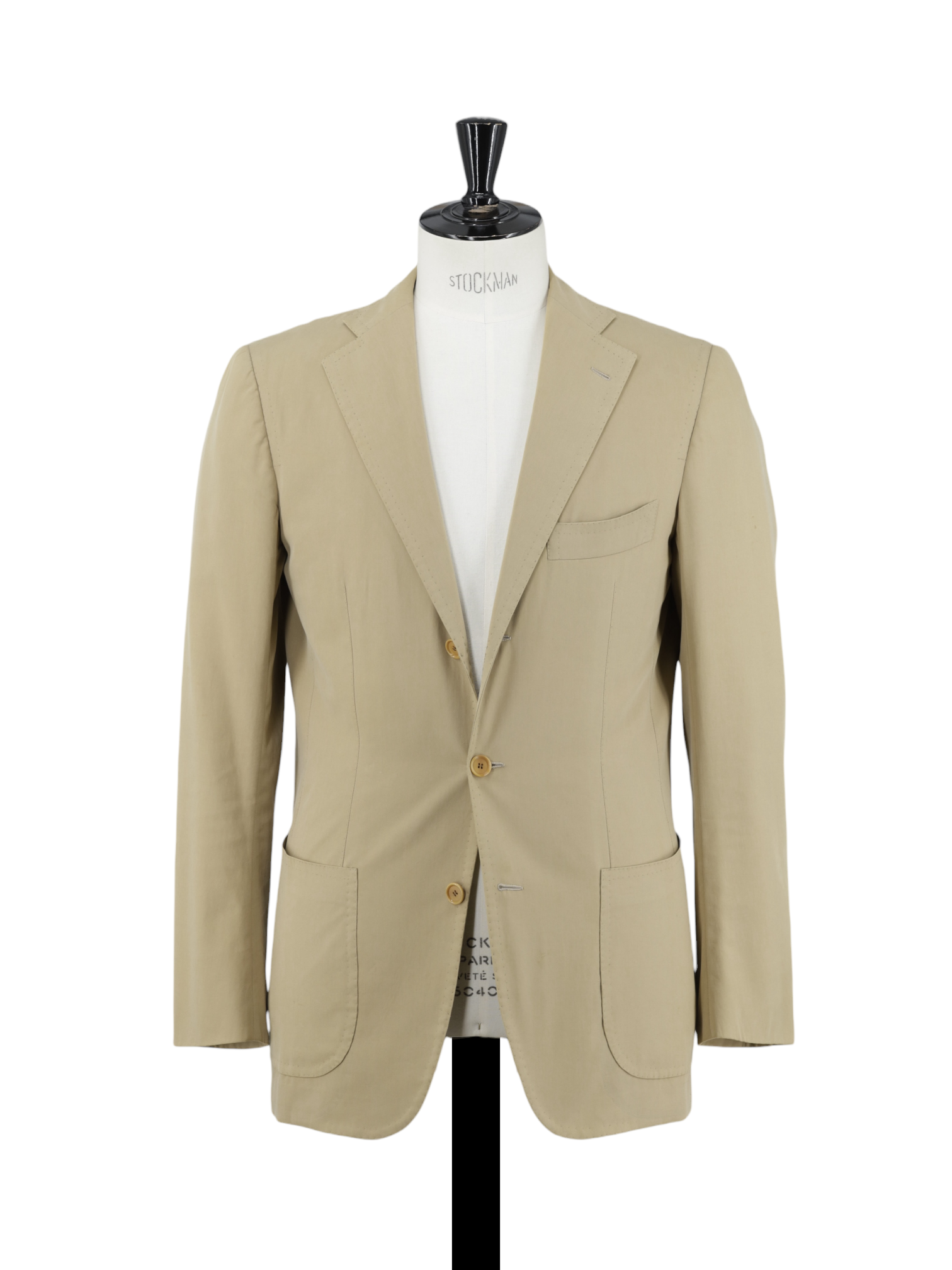
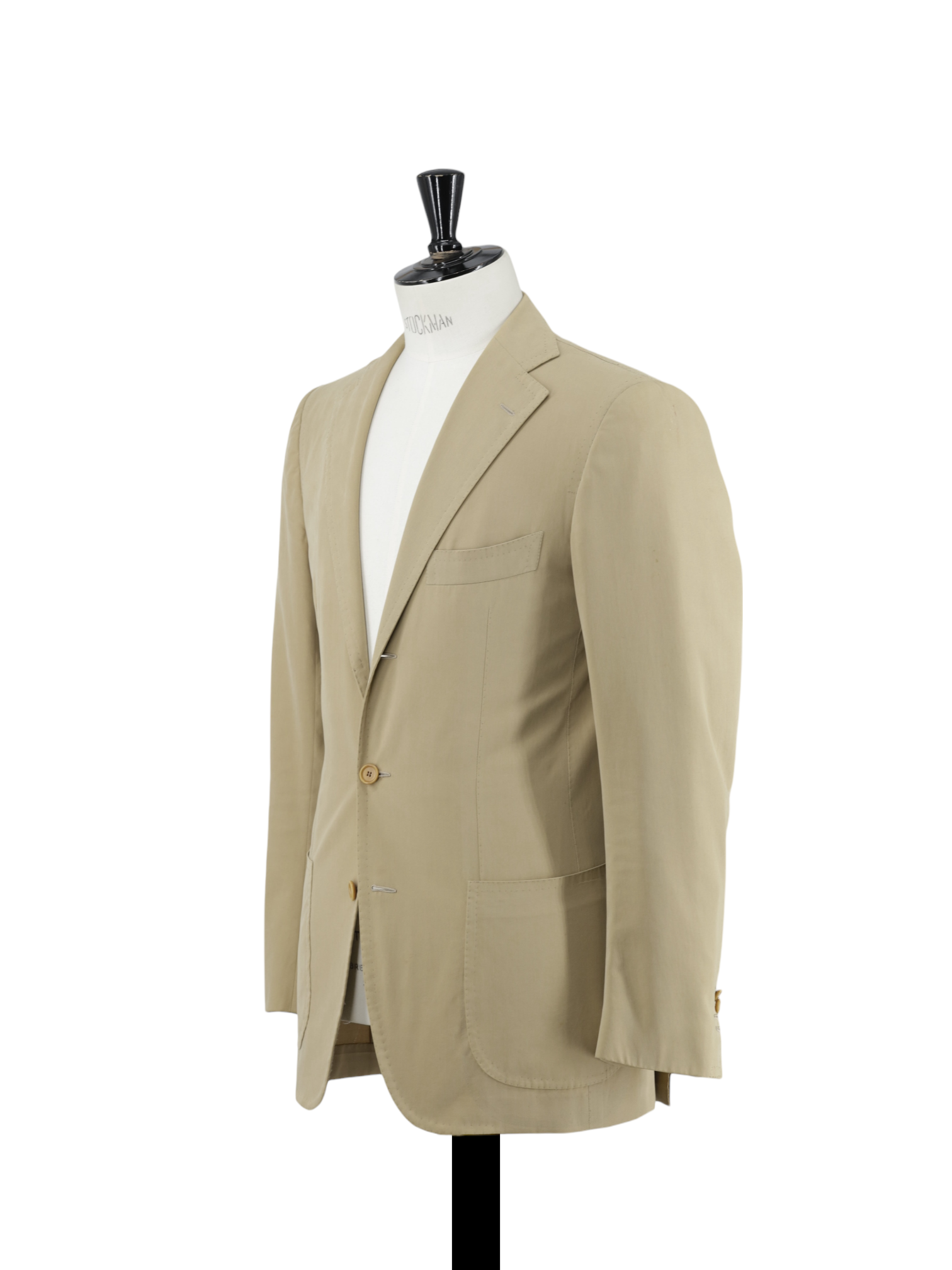
Cesare Attolini Khaki Pure-Cotton Sartorial Summer Suit
48 IT / 38 US / Medium
 Curator's Description
 Curator's Description
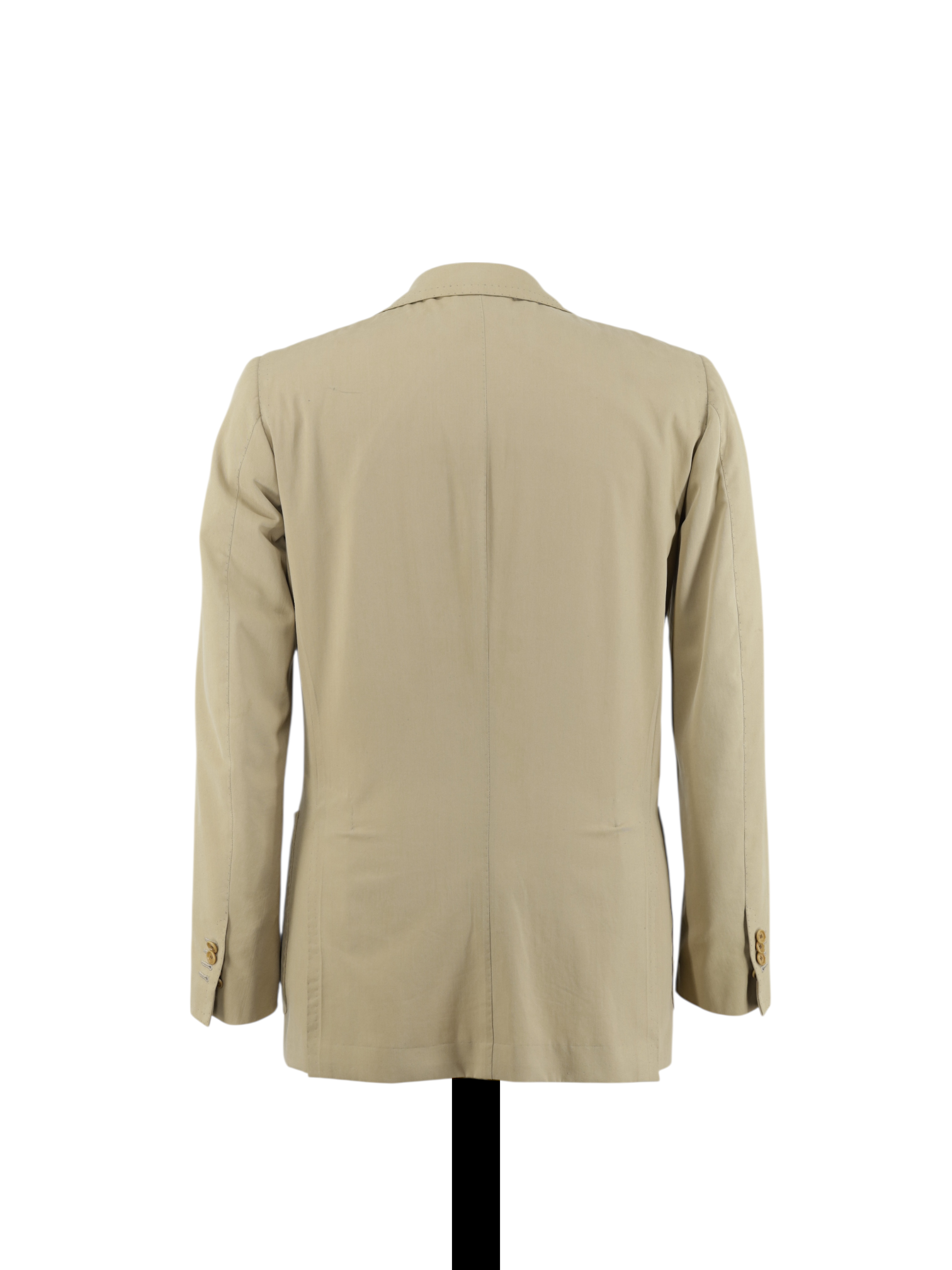
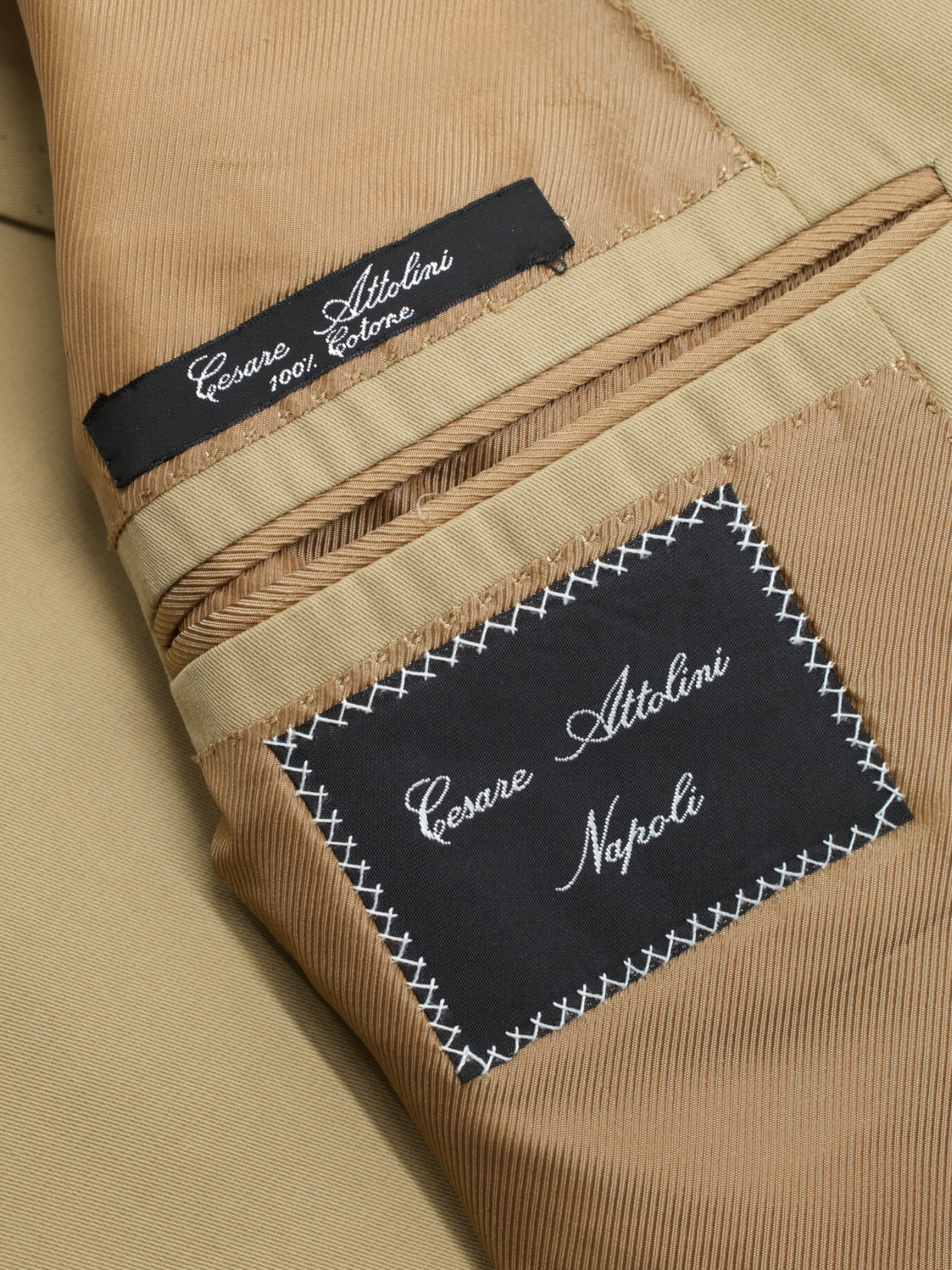
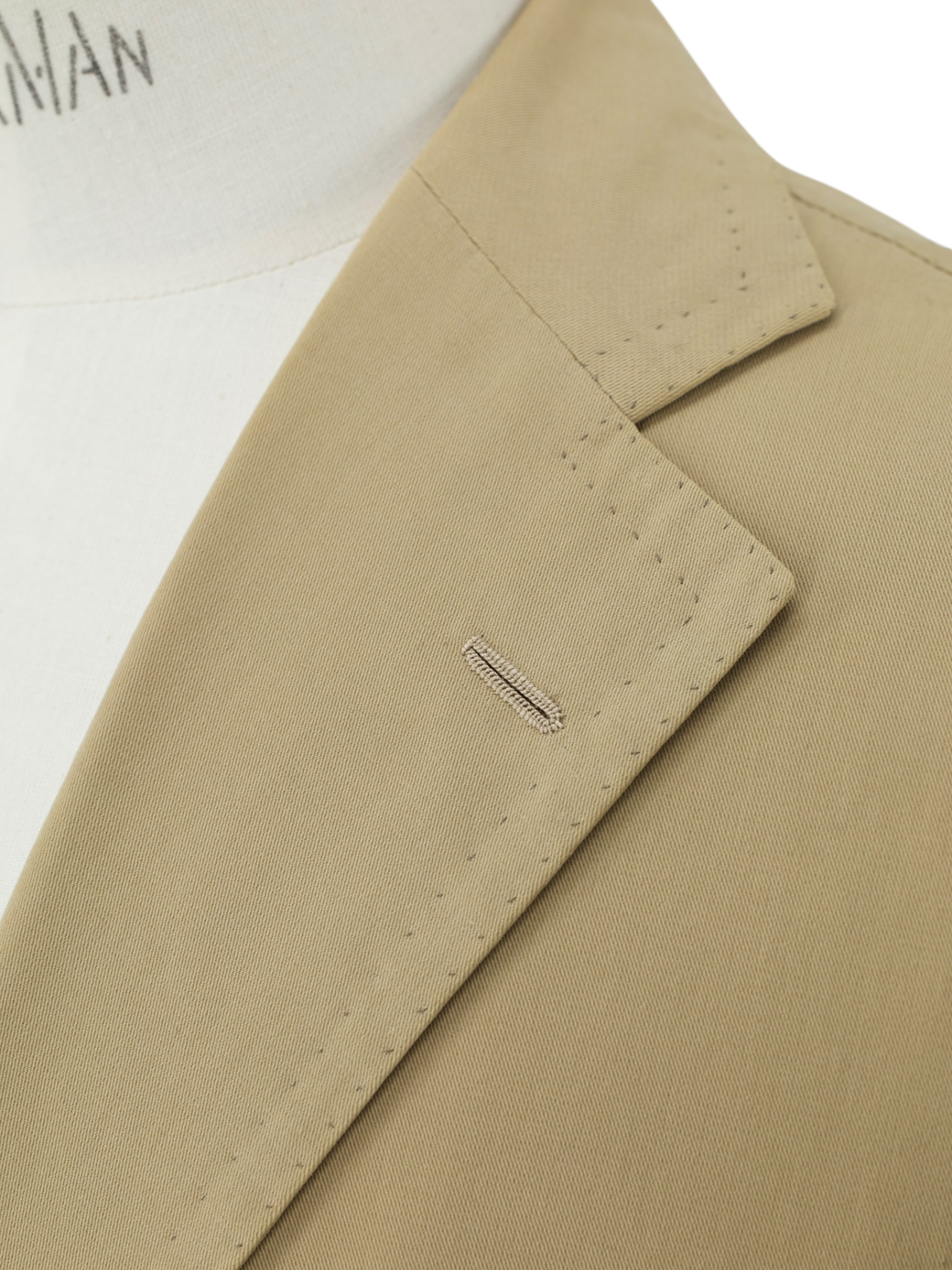
Discover the Cesare Attolini Khaki Pure Cotton Sartorial Summer Suit, a refined warm weather staple that captures the effortless elegance of Neapolitan tailoring. Crafted from pure cotton in a versatile khaki tone, the fabric offers breathability and a crisp, natural structure that is ideal for summer wear. The jacket is styled with classic notch lapels and a fully lined interior, allowing the silhouette to maintain a clean and composed drape even in lighter cloth. Subtle doppio impuntura pick stitching traces the lapels and edges, a discreet hallmark of Attolini’s meticulous sartorial finishing.
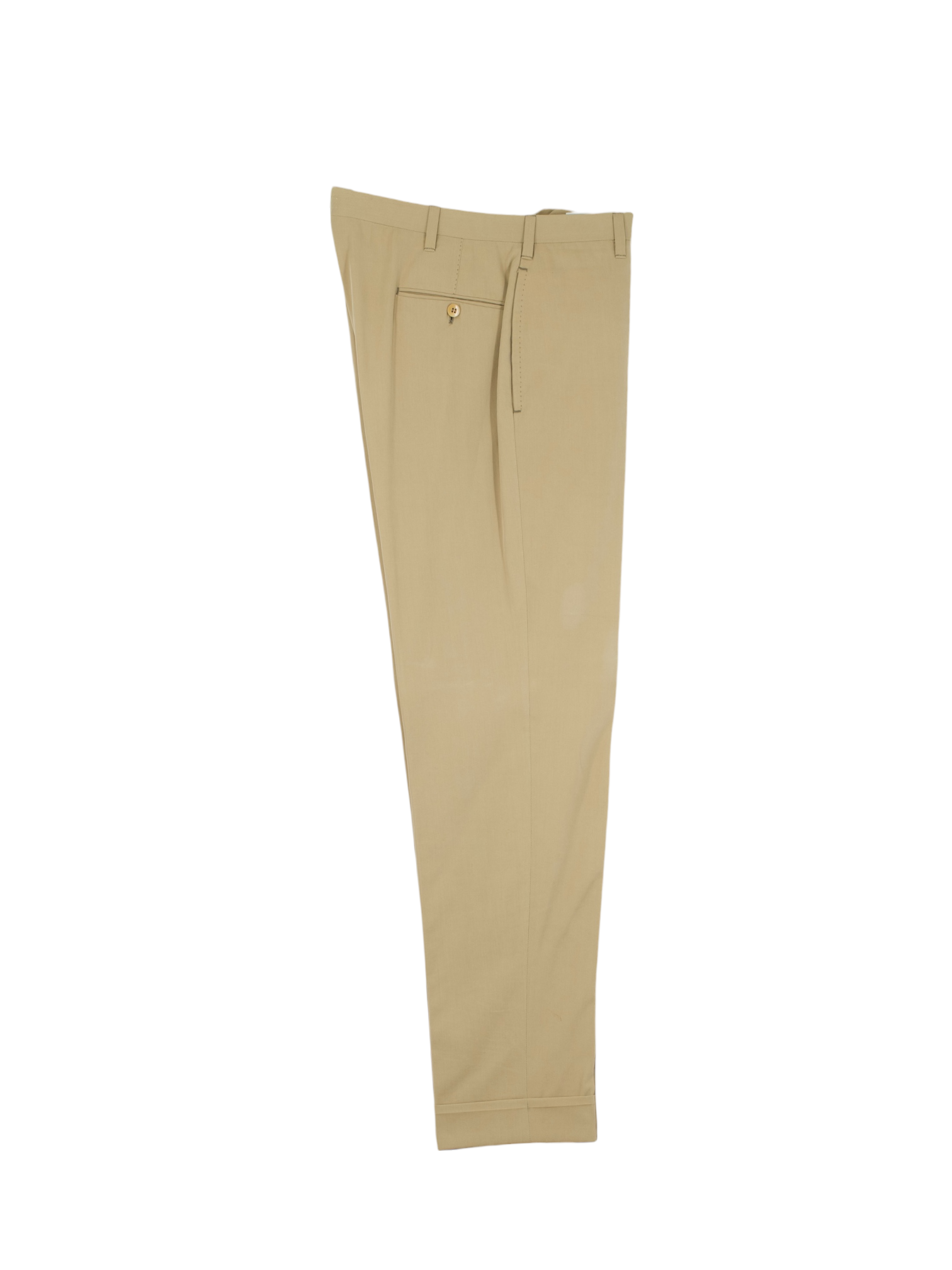
The accompanying trousers are cut with a flat front for a clean, streamlined profile and finished with turn ups that lend a traditional tailored touch. Handmade in Naples, the suit reflects Cesare Attolini’s uncompromising dedication to craftsmanship, where each garment is shaped through careful handwork and precise attention to proportion. The result is a summer suit that feels both relaxed and polished, perfectly suited to warm days that still call for true sartorial elegance. Discover the elaborated sartorial details below.
 Materials
 Materials
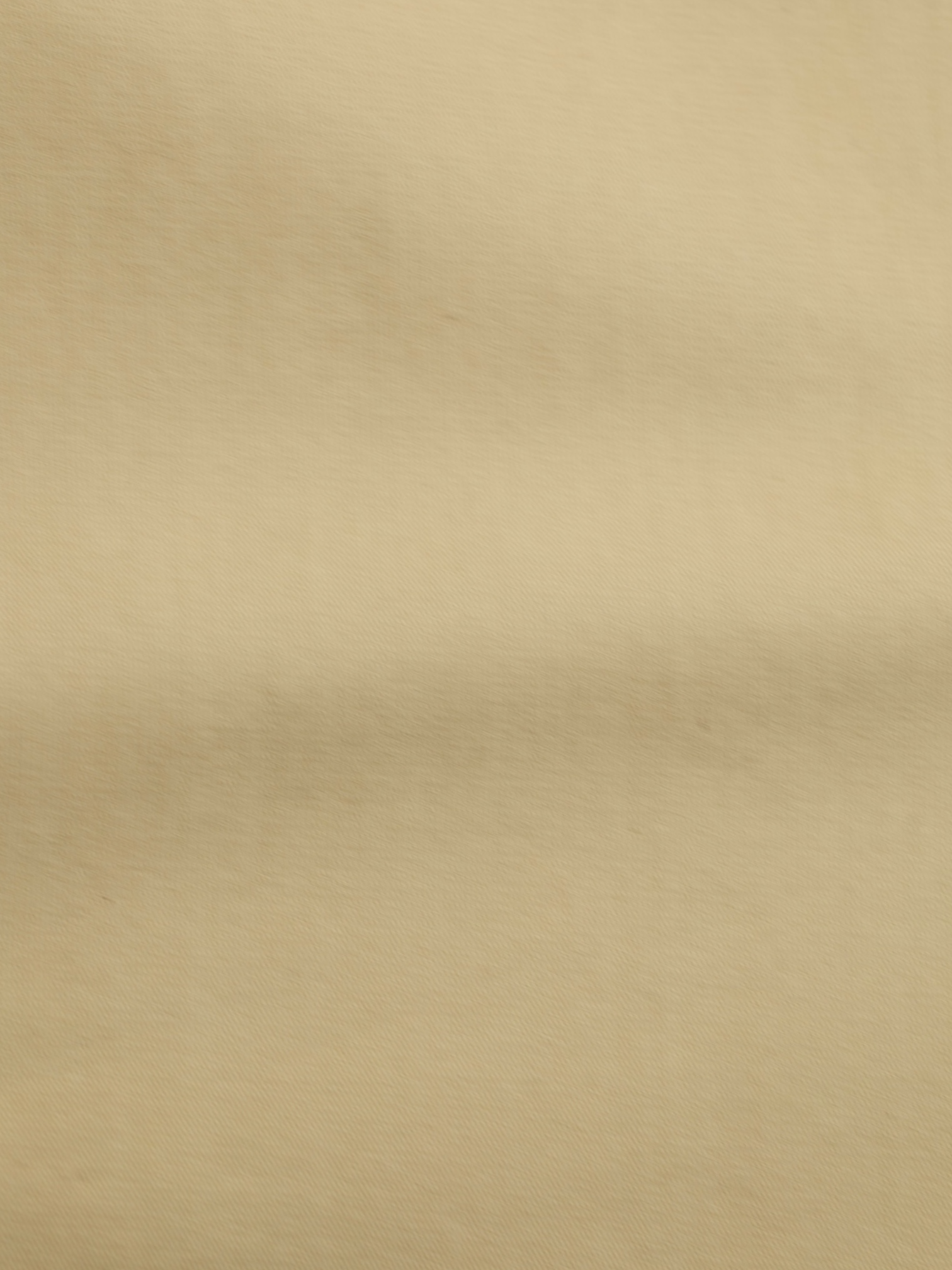
Composition: 100% Cotton
Color: Khaki
Pattern: Keperbinding
 Measurements
 Measurements
See how we measure our sartorial items
Discover the customization possibilities by visiting our tailor alteration guide
Shipping
• Complimentary shipping on orders over €200 (Netherlands), €500 (EU), and €1,000 (rest of world
• Orders below these thresholds are charged based on destination
• All items ship directly from Amsterdam, The Netherlands
• Customs duties and import fees outside the EU are the customer’s responsibility
Returns
EU customers have the right to withdraw within 14 days of delivery.
• Return shipping is at the customer’s expense
• Items must be returned unworn and in original condition
• Any use beyond indoor fitting may result in a diminished refund
Orders outside the European Union are exported goods and considered final sale (no returns).
Altered or tailored items are final sale.
Please review measurements and quality control comments carefully before ordering. As a small independent boutique we encourage thoughtful purchasing. For any questions, feel free to contact us before placing your order.
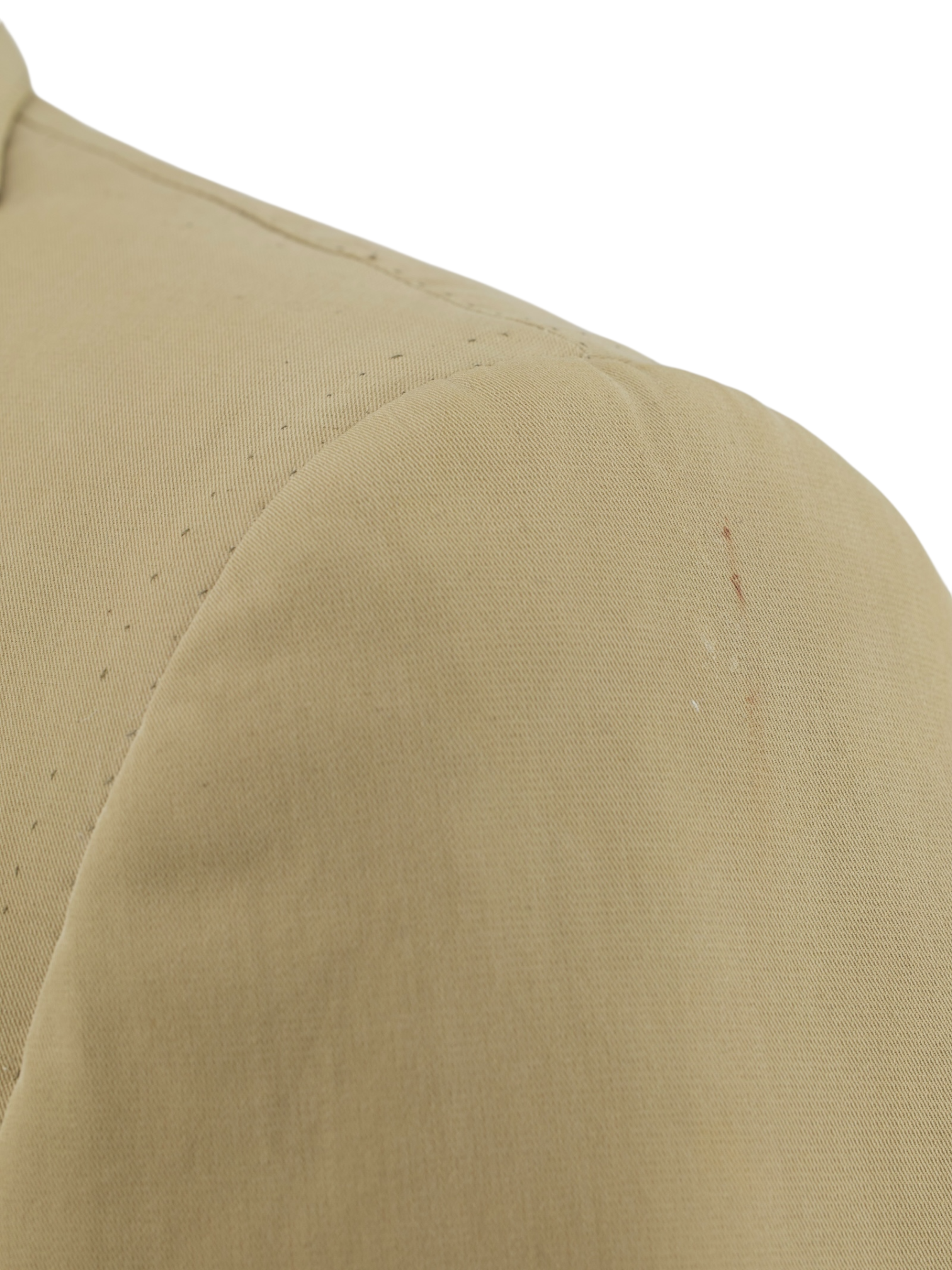
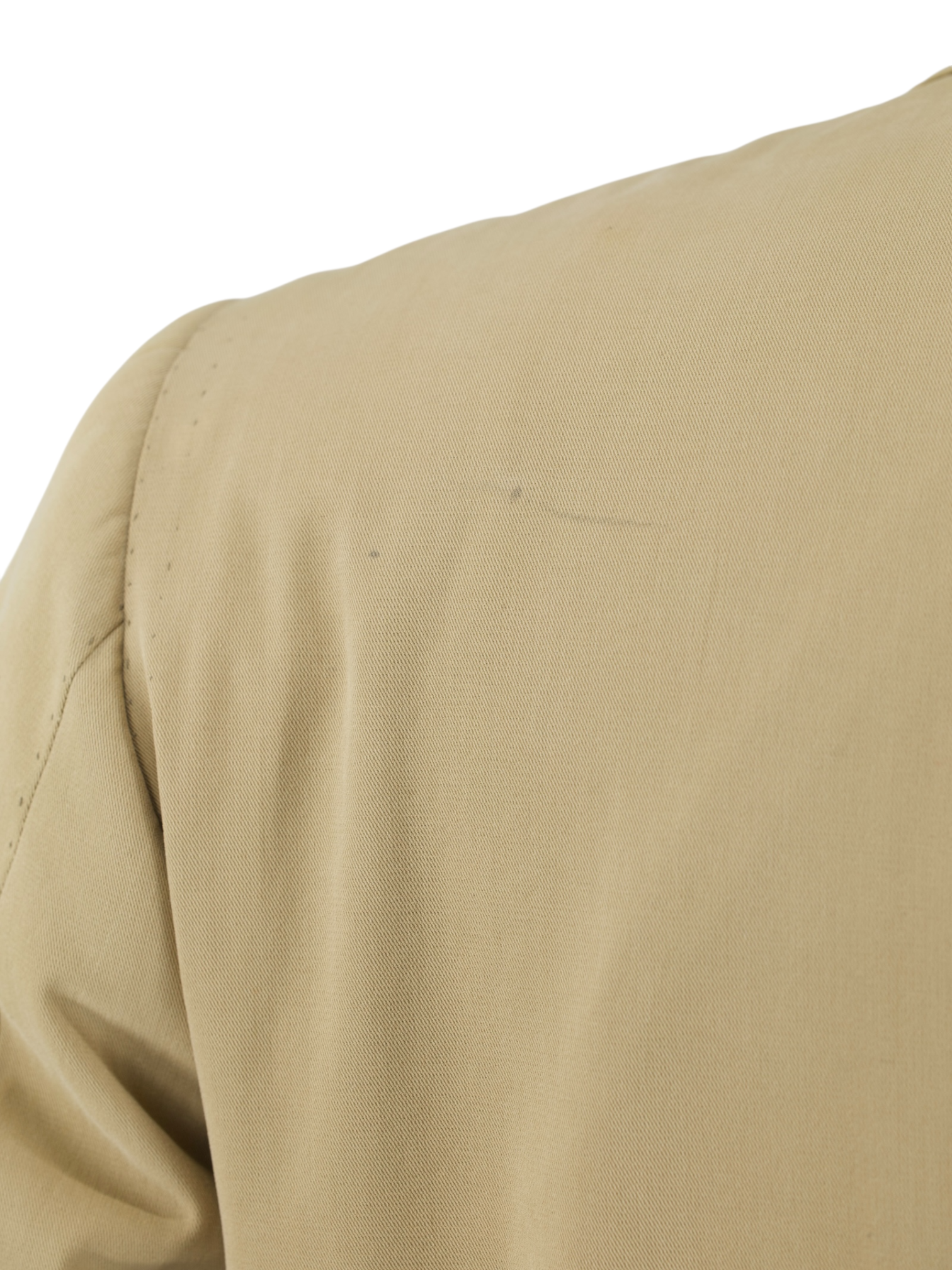
General Note: While we inspect each item to ensure its quality, please note that minor imperfections may be present due to the preloved nature of the garments. We strive to represent every item accurately, but subtle signs of wear may sometimes go unnoticed. We appreciate your understanding and commitment to sustainable luxury.
Opties kiezen
Discover the
Sartorial Details
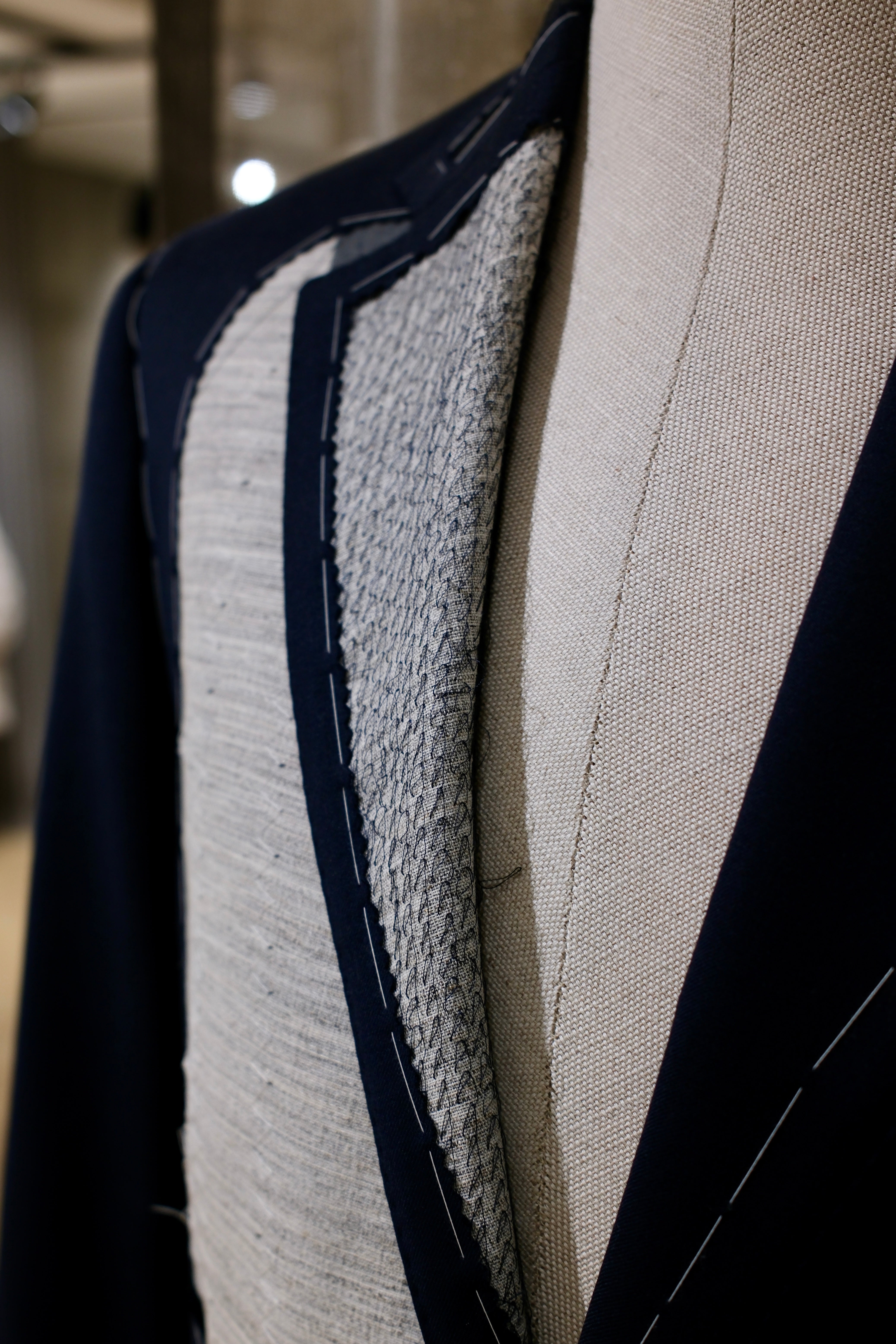
Full Canvas Construction
A sartorial jacket - or coat - needs an interlining that will help give it shape and mold it. Canvas gives the item a tailored and crafted look. In short, it breathes life into it. Purely technical, canvas is made from either horsehair, wool, mohair or camel hair. It could also be a mix of them all, with varying thickness and weight. The canvas is stitched to the jacket, often by hand, thus making the canvas pieces 'floating' in the middle of the inner and outer cloth. This gives the jacket added flexibility. The canvas runs from the upper parts, all the way down to the end of the jacket. After you wear your canvassed suit for a while, it will begin to take your shape and look incredibly natural.
La Spalla Camicia
"Spalla Camicia" vertaalt zich ruwweg naar 'overhemd mouw' in het Italiaans en is een schouderstijl gecreëerd en populair gemaakt door Neapolitaanse kleermakers. De naam 'overhemdmouw' werd zo genoemd vanwege het karakteristieke gerimpelde effect dat te vinden is bij de kop van de mouw, waar de volheid van de grotere mouw in elkaar zakt. In plaats van de kop van de mouw naar achteren te vouwen en binnenstebuiten te stikken, wordt de kop ondergeschoven en langs de bovenkant gestikt.
Handgemaakt Knoopsgat
Handgemaakte knoopsgaten worden gemaakt met behulp van een ketting van geknoopte lussen, genaamd festonsteken, die ze sterk en visueel onderscheidend maken. Het duurt ongeveer vijf seconden om met een machine een normaal knoopsgat te naaien - een enkel handgemaakt knoopsgat kost ongeveer 10 minuten om te naaien.
PICK STITCHING: DOPPIO IMPUNTURA
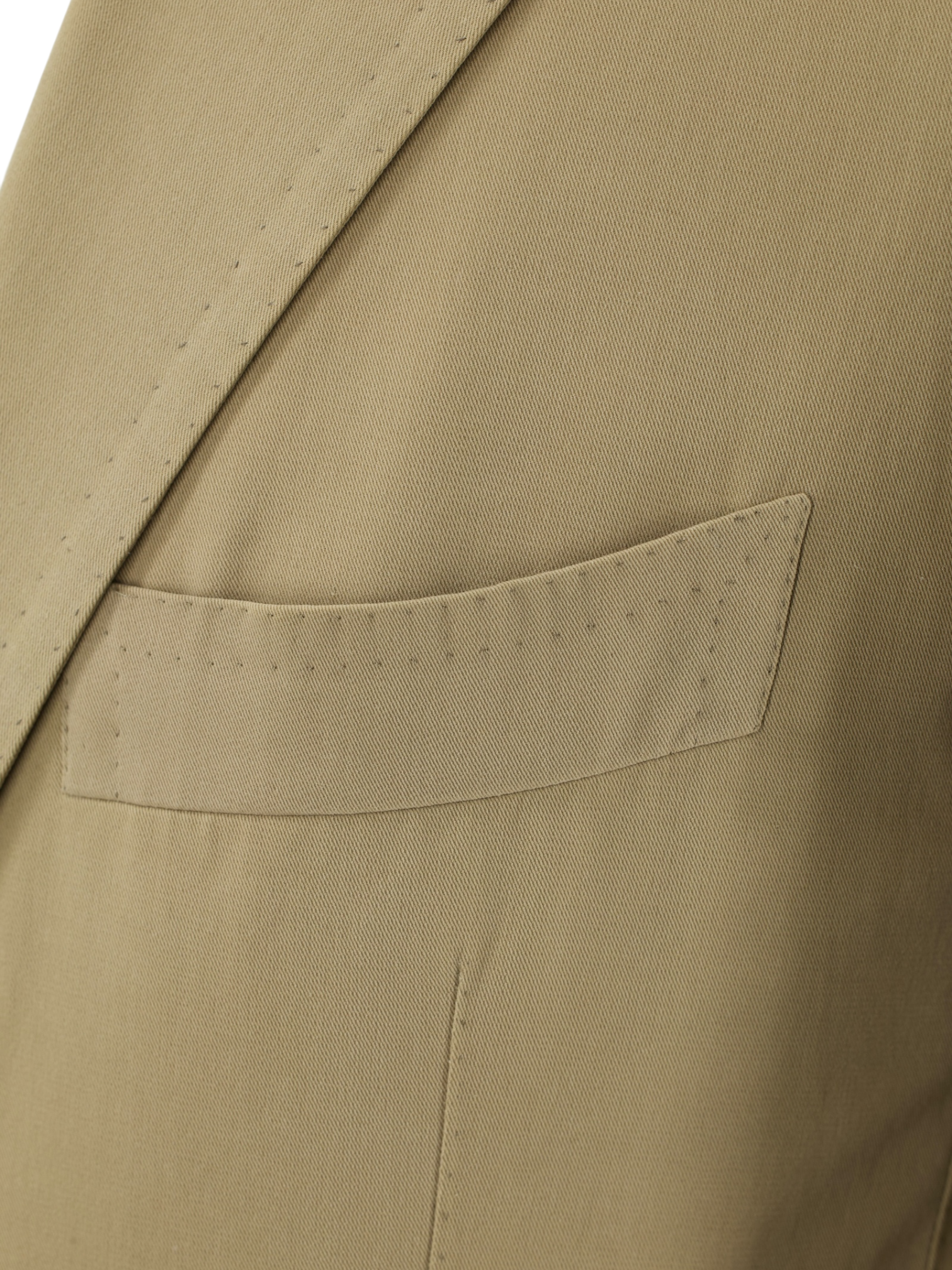
The doppio impuntura or ‘double pick stitching’. It is made as a backstitch, which is a highly time consuming process that looks like a little dot on the surface of the fabric. The doppio impuntura runs throughout the sides of the lapel, collar, pockets and shoulder seam. As a visible detail of handwork, it can be seen as the ultimate touch of elegance.
2.5 Knoops Sluiting
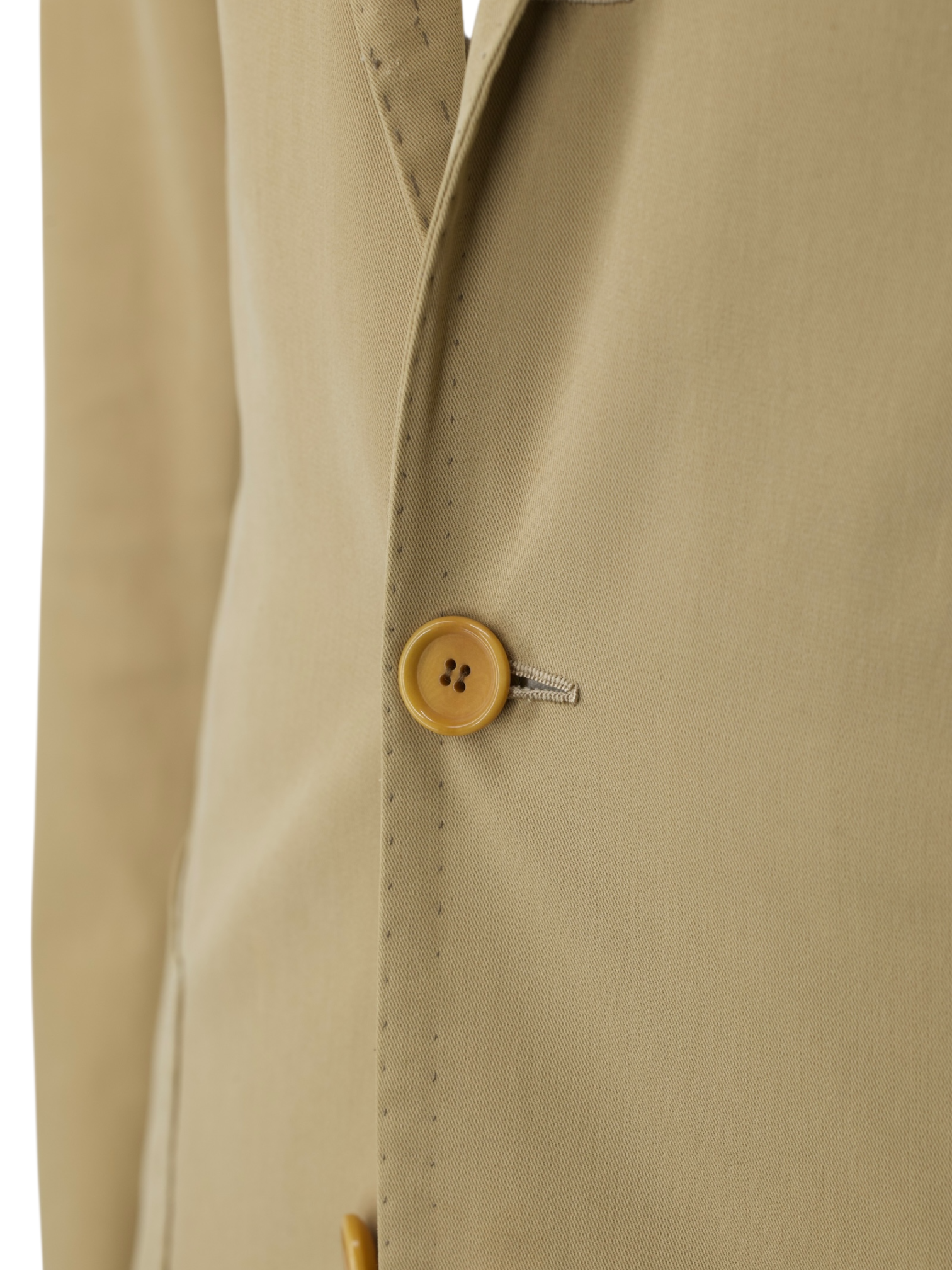
De 'tre bottoni stirato a due', ook bekend als de drie rollend op twee reversstijl, is misschien wel het meest beruchte kenmerk van het Neapolitaanse stijl jasje. De bovenste knoop en knoopsgat zijn decoratief, dus blijven ongeknoopt. Terwijl de revers omlaag rolt, vouwt het elegant over de bovenste knoop en stopt net 4 cm boven de tweede knoop, wat de kenmerkende rol van de revers creëert waar de stijl om bekend staat. Omdat het bedoeld is om ongeknoopt te blijven, wordt het bovenste knoopsgat eigenlijk binnenstebuiten gemaakt, zodat de mooie kant nog steeds zichtbaar is.
Barchetta Borstzak
De barchetta-zak wordt vaak beschouwd als een kleermakersdetail dat exclusief uit Italië komt. Het woord "barchetta" is Italiaans voor "bootje". Het beschrijft hoe de zak op de borst zweeft, lichtjes omhoog gericht, zoals de boeg van een zeilboot.
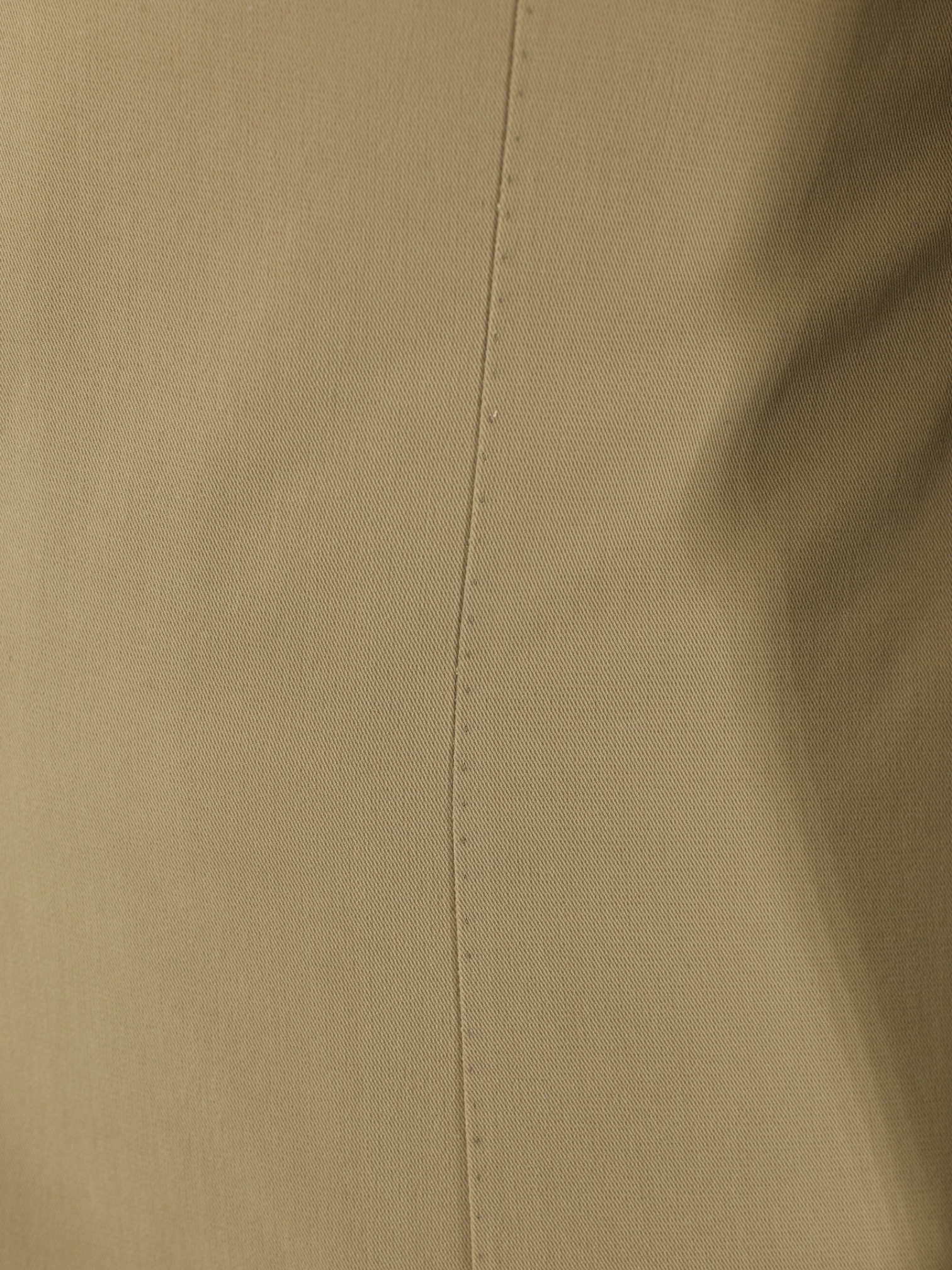
Napolitaanse Naden
Napolitaanse meestervakmannen voegen twee figuurnaden toe - denk aan ze als ingeknepen naden - om ervoor te zorgen dat het lichaam van het jasje een slank silhouet krijgt. Het proces, genaamd "mezzo punto riprese", wordt volledig met de hand uitgevoerd.
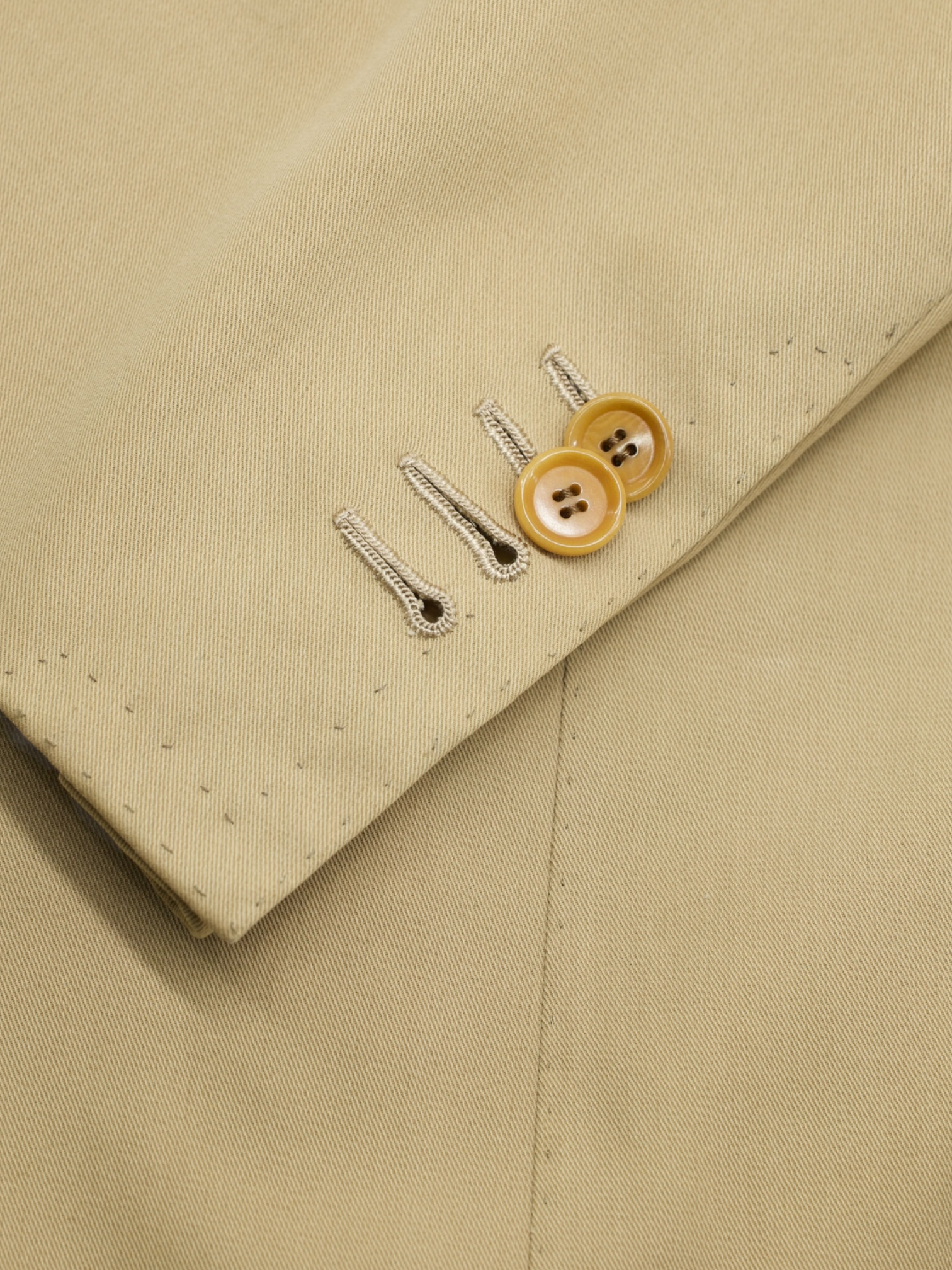
Kissing Buttons en Handgemaakte Knoopsgaten
Ook bekend als 'stacked buttons' of 'waterfall buttons', worden 'kissing buttons' geassocieerd met Italiaans kleermakerswerk, aangezien Italiaanse kleermakers hun jasjesmouwknoopjes in de 'kissing'-stijl maken. In deze stijl raken de knoopjes elkaar en overlappen ze elkaar. Handgemaakte knoopsgaten; Zelfs deze stap, schijnbaar de eenvoudigste, wordt behandeld met een overvloed aan details. Het bevestigen van de knoopjes is een klus die geduld vereist en perfectie moet worden afgerond.
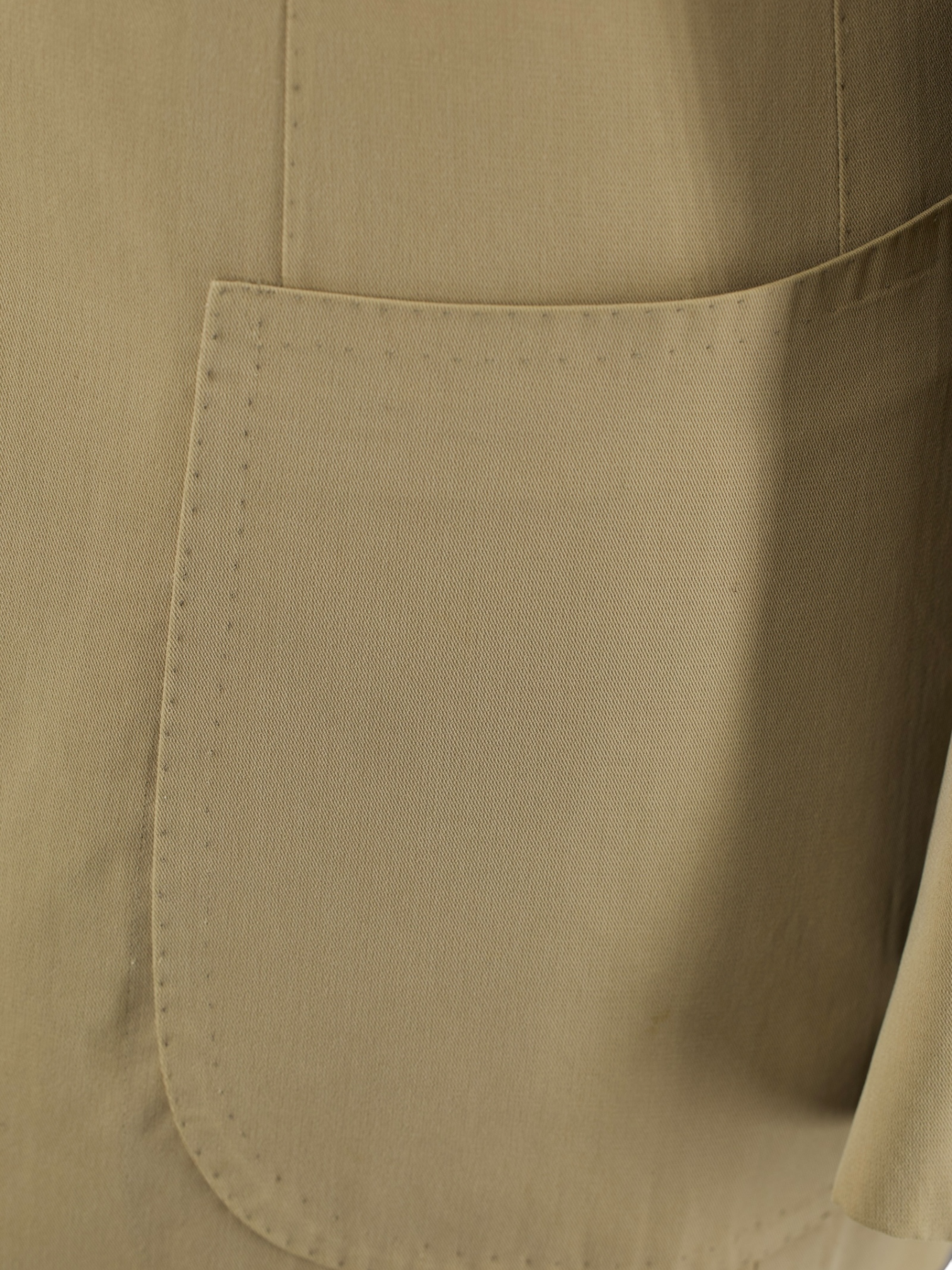
Tasca a Pignata Patch Pocket
Opgestikte zakken, met hun robuuste functionaliteit, werden niet verrassend overgenomen door het leger voor zowel overhemden als jassen. De lagere opgestikte zakken op een Napolitaans jasje zijn gemodelleerd naar de tasca a pignata-stijl, en wanneer ze in hun zuiverste vorm worden uitgevoerd, zijn ze gemakkelijk herkenbaar aan de afgeronde onderkant en de unieke vorm.
the details of
the trousers
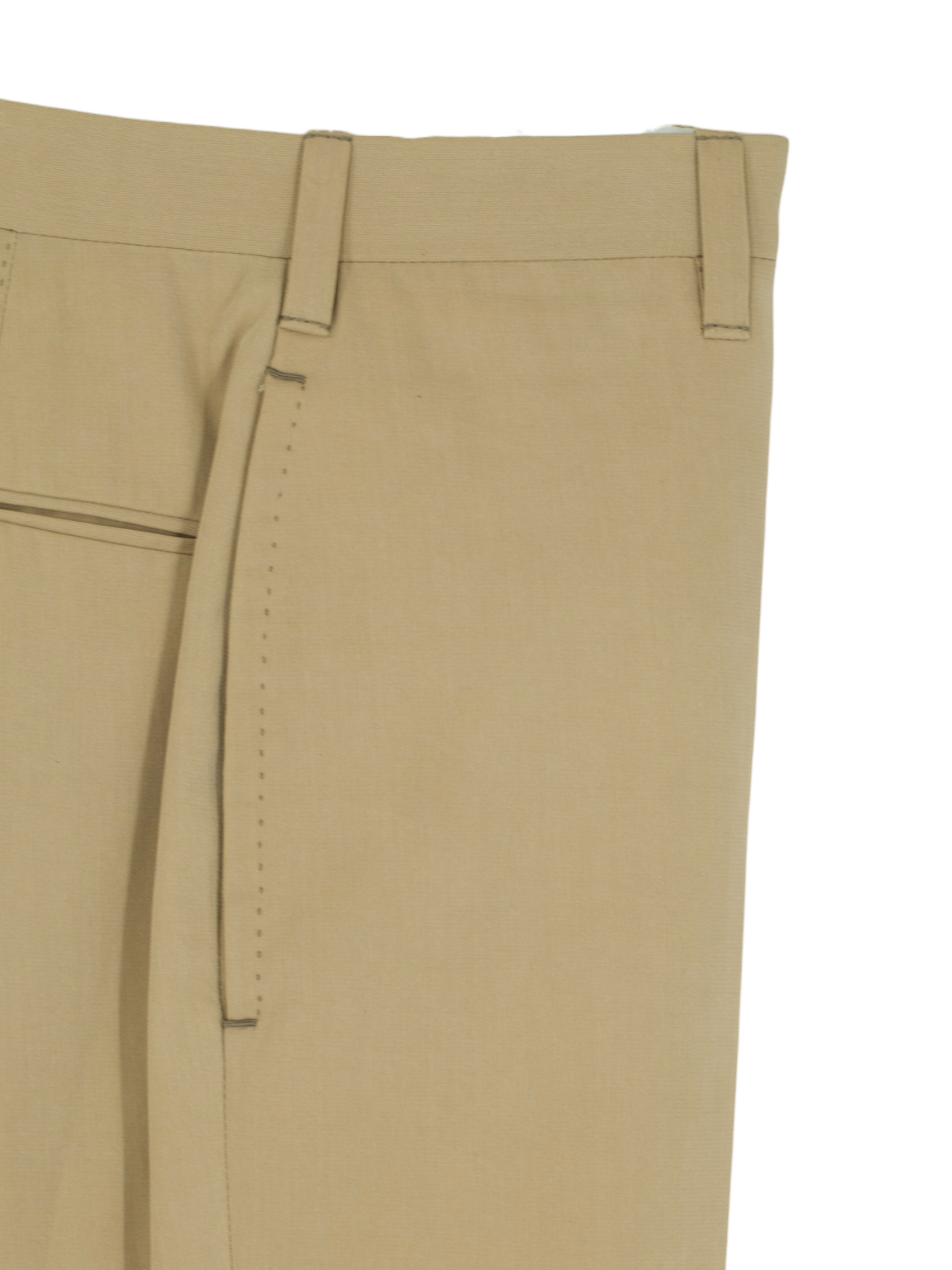
Single Pleated Front
Single-pleat trousers are a great mix of style and comfort. They became fashionable in the early 20th century and really took off after World War II. With a single pleat, these trousers offer a bit more room without losing that sharp look. They’re ideal for both formal and semi-formal occasions, providing a classic yet slightly modern appearance. Perfect for professional settings, they offer a comfortable fit while keeping things polished and elegant, balancing tradition with a touch of modern flair.
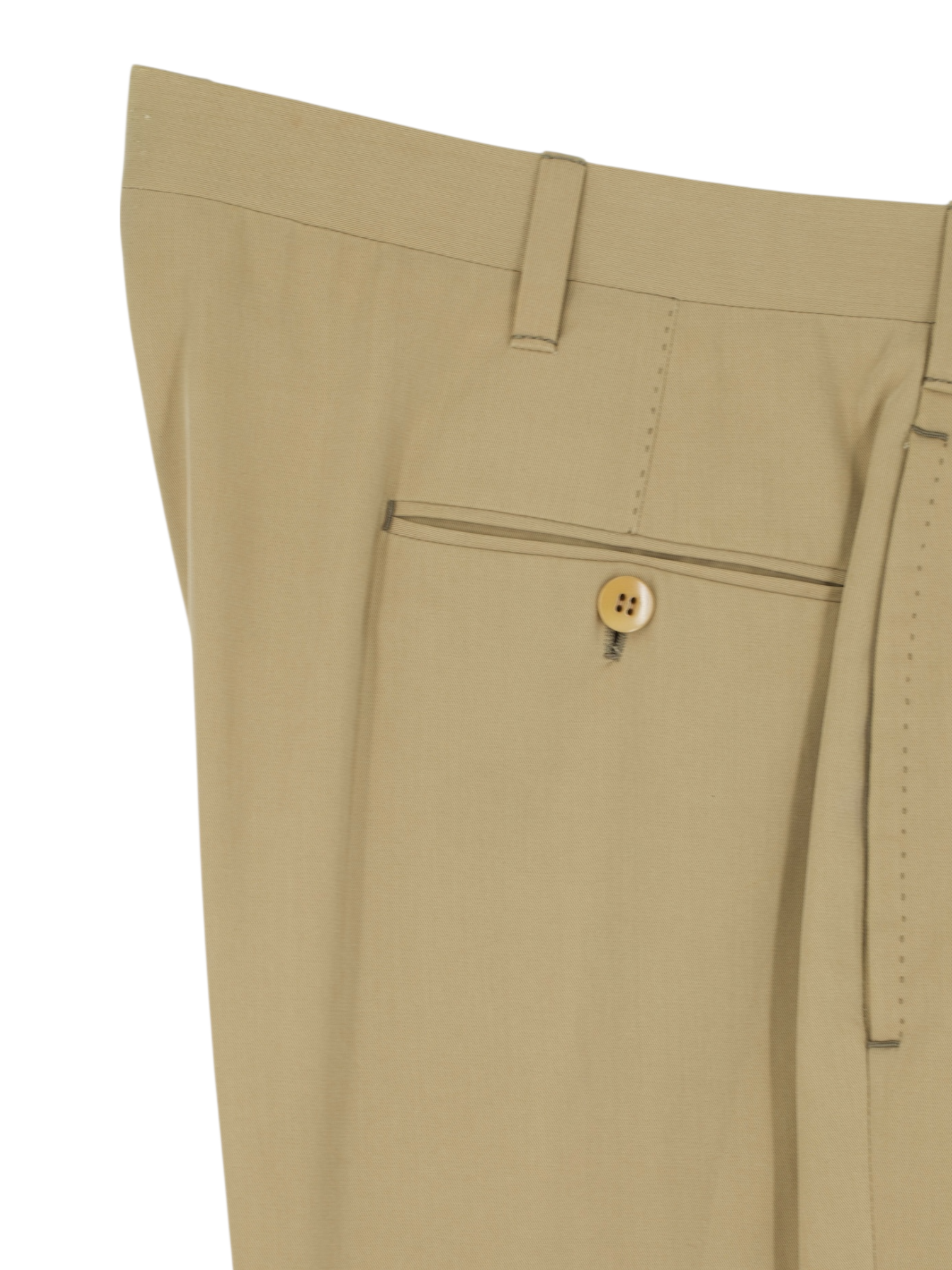
Belt Loops
Belt loops are the most common type of waistband found on trousers, providing the option to wear a belt for both style and practicality. Typically spaced evenly around the waistband, belt loops are a versatile feature that can accommodate a wide range of belt styles and sizes. This traditional waistband design is found in everything from casual jeans to formal dress pants, making it a timeless and adaptable option for any wardrobe. Belt loops offer the flexibility to customize your look while ensuring a secure fit.
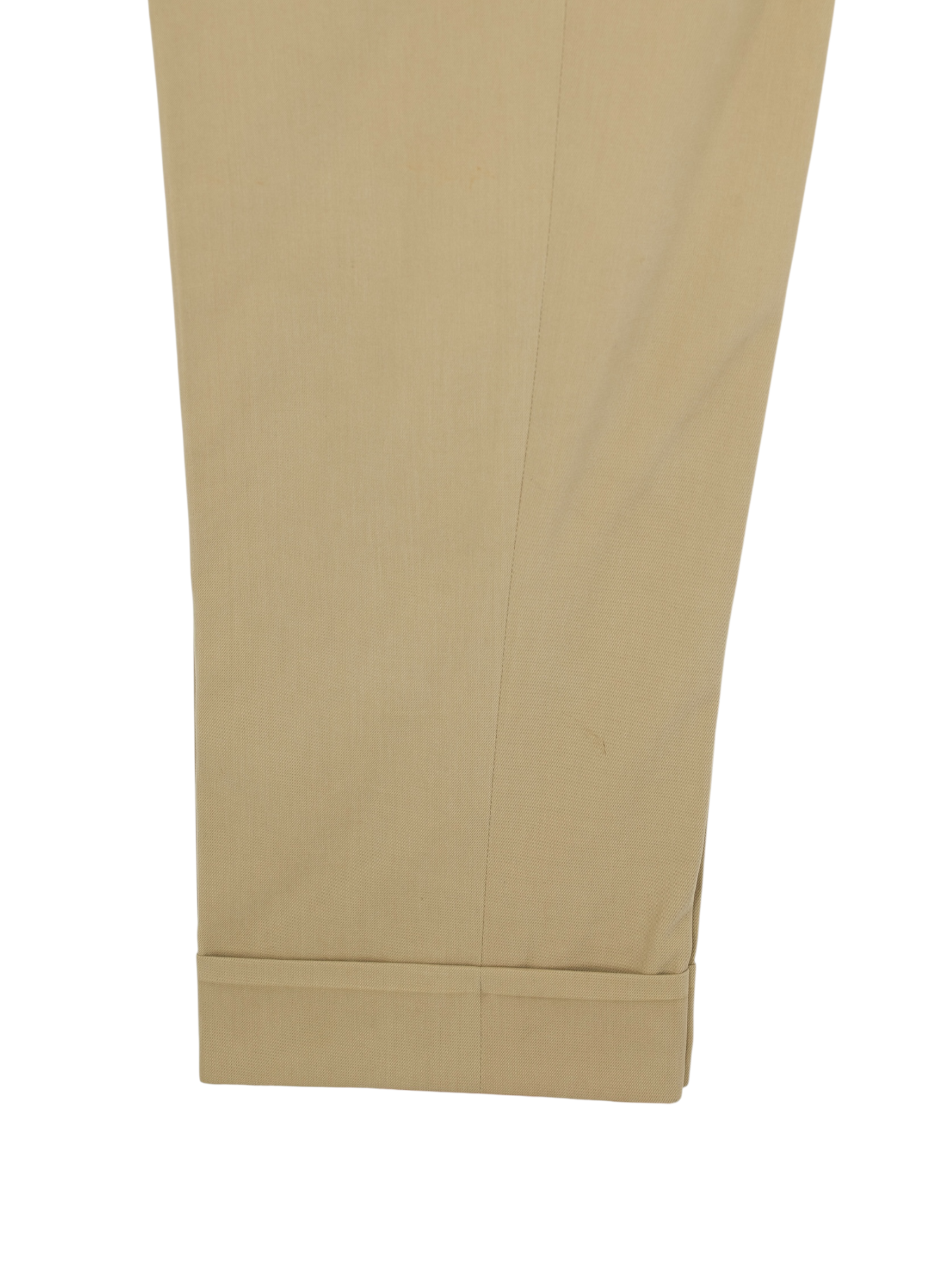
Turn-Up (Cuffed) Hem
The turn-up hem, or cuffed hem, is a classic style where the fabric at the bottom of the trousers is folded outward to create a visible cuff. This style originated with Edward VII in the late 19th century, who had his trousers tailored with cuffs to prevent them from getting muddy, sparking a trend among the fashionable elite. In the 1920s and 1930s, turn-ups became a symbol of wealth and sophistication, as having extra fabric was seen as a luxury. This association continued after World War II when wearing turn-ups subtly indicated affluence in an era of fabric rationing. Today, turn-up hems are a nod to their historical roots, offering a touch of classic elegance and enhancing the overall appearance of formal and tailored trousers.
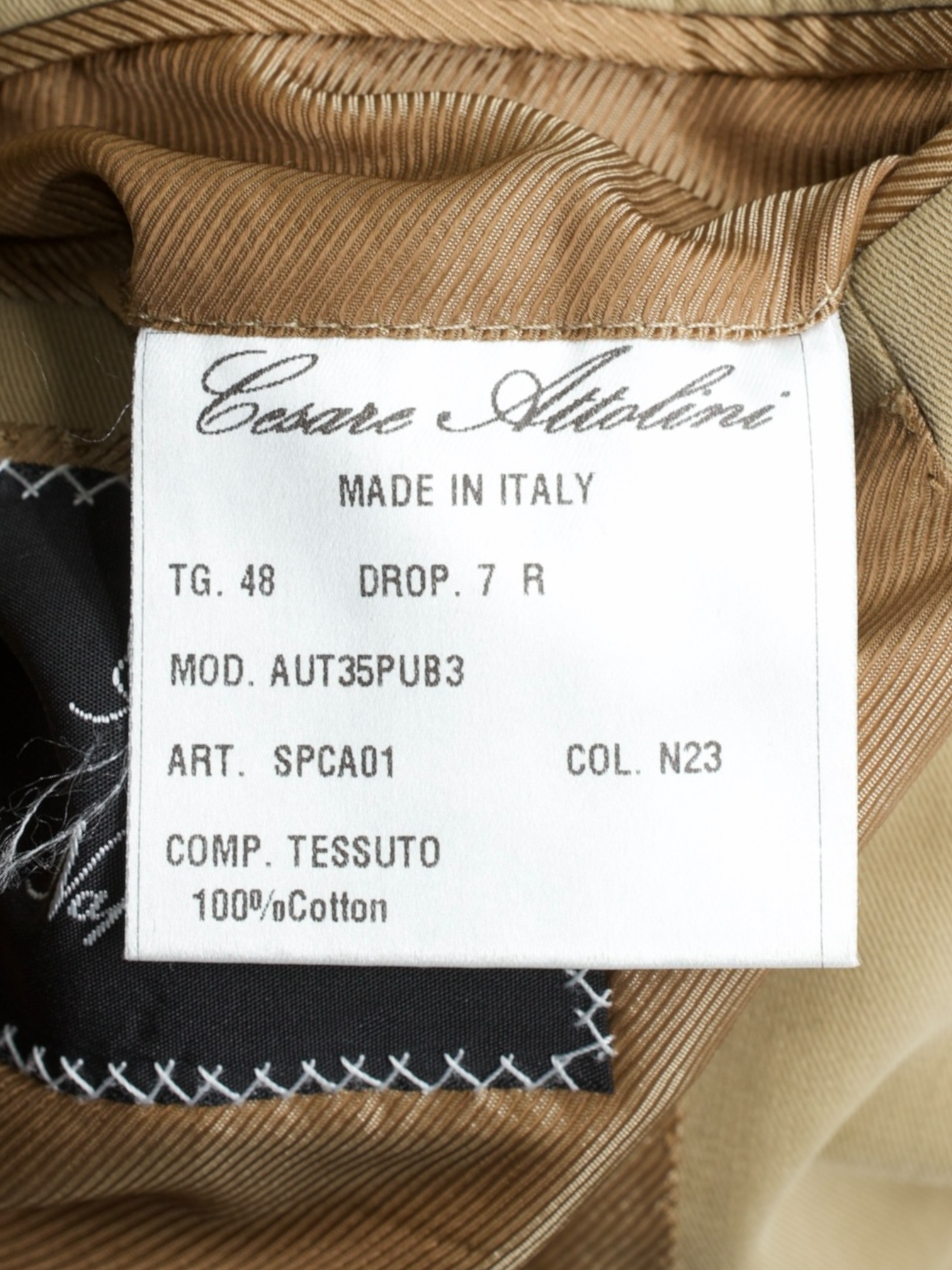
size
48 IT / 38 US / Medium
