
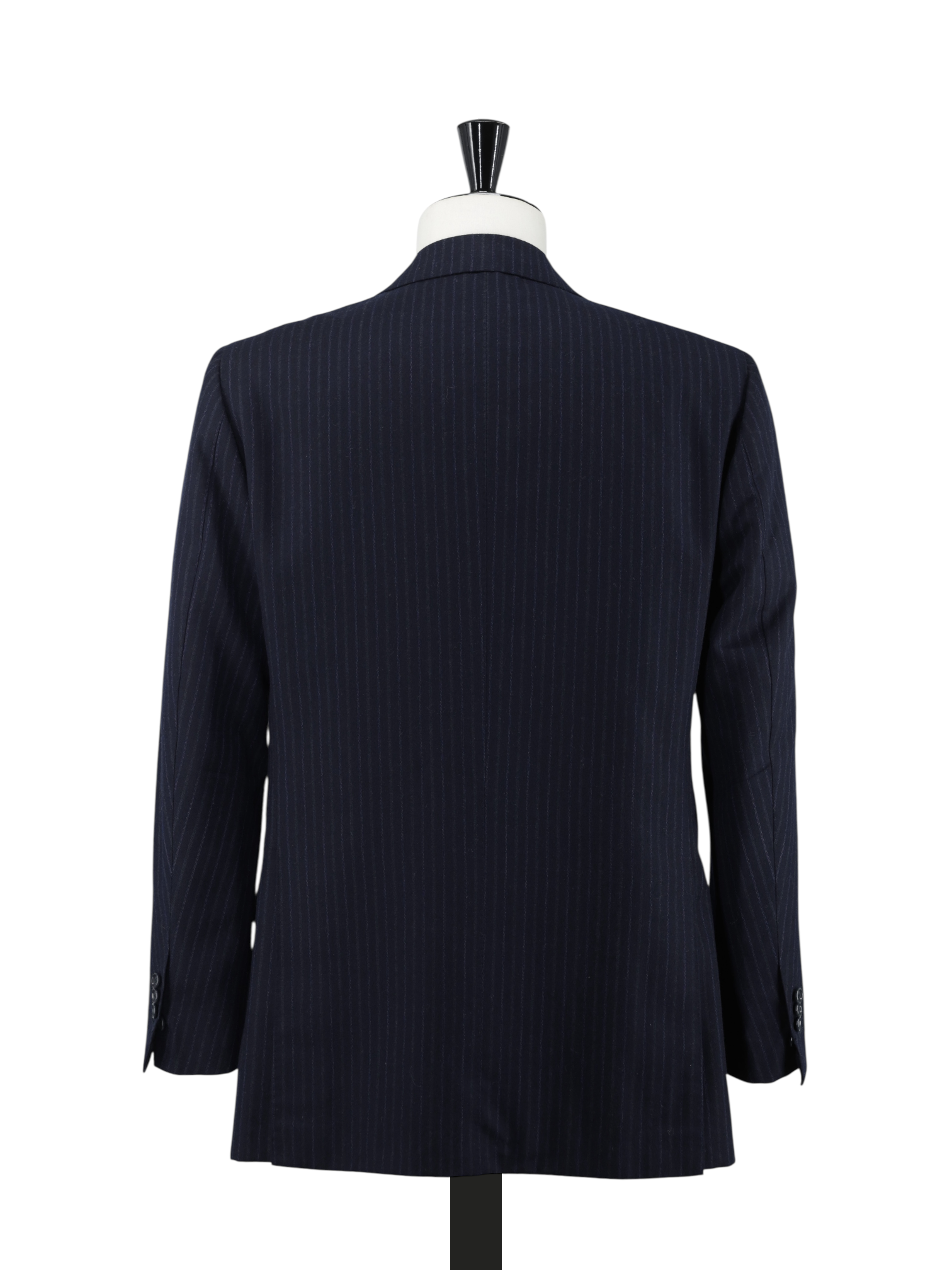
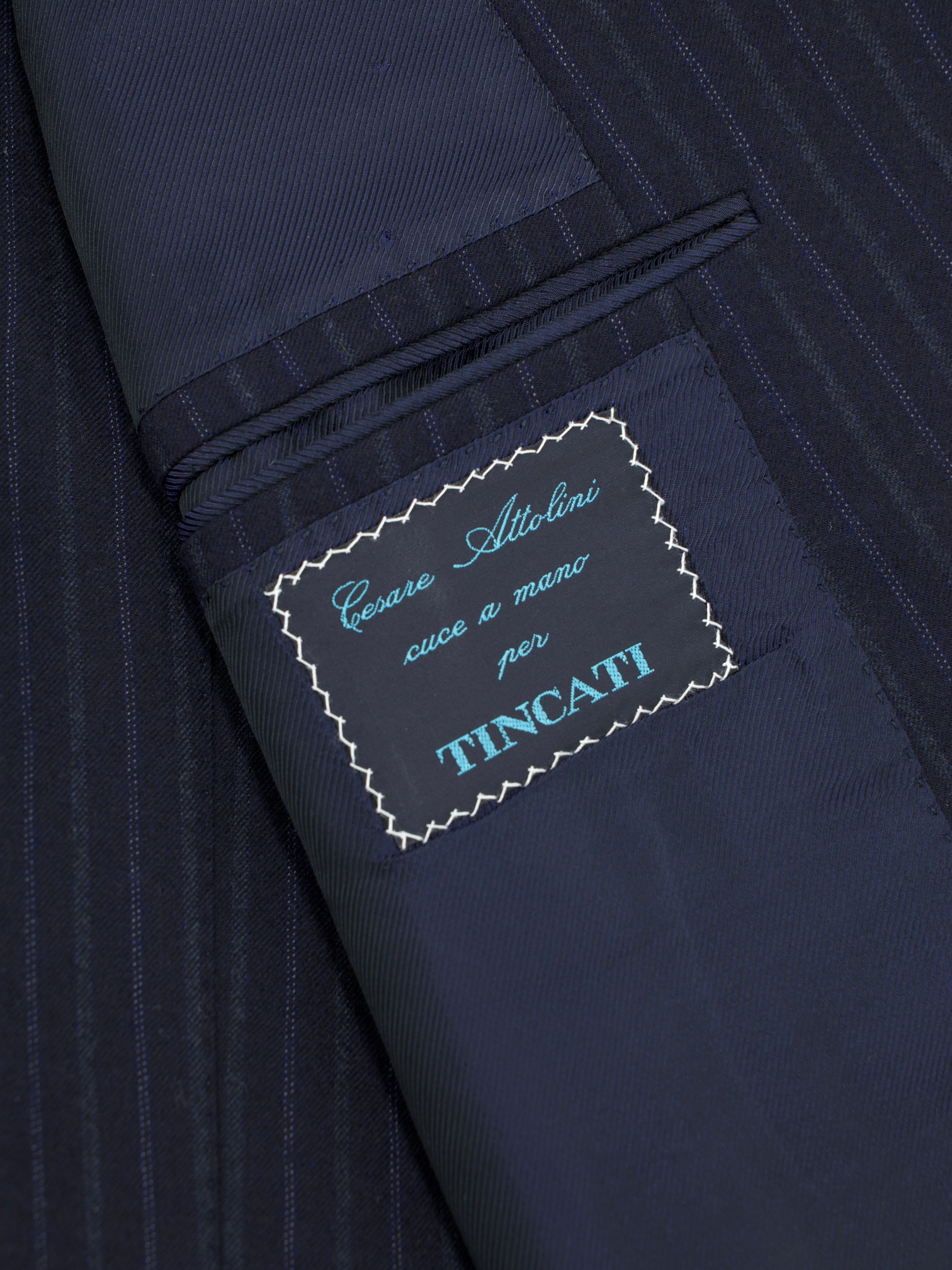
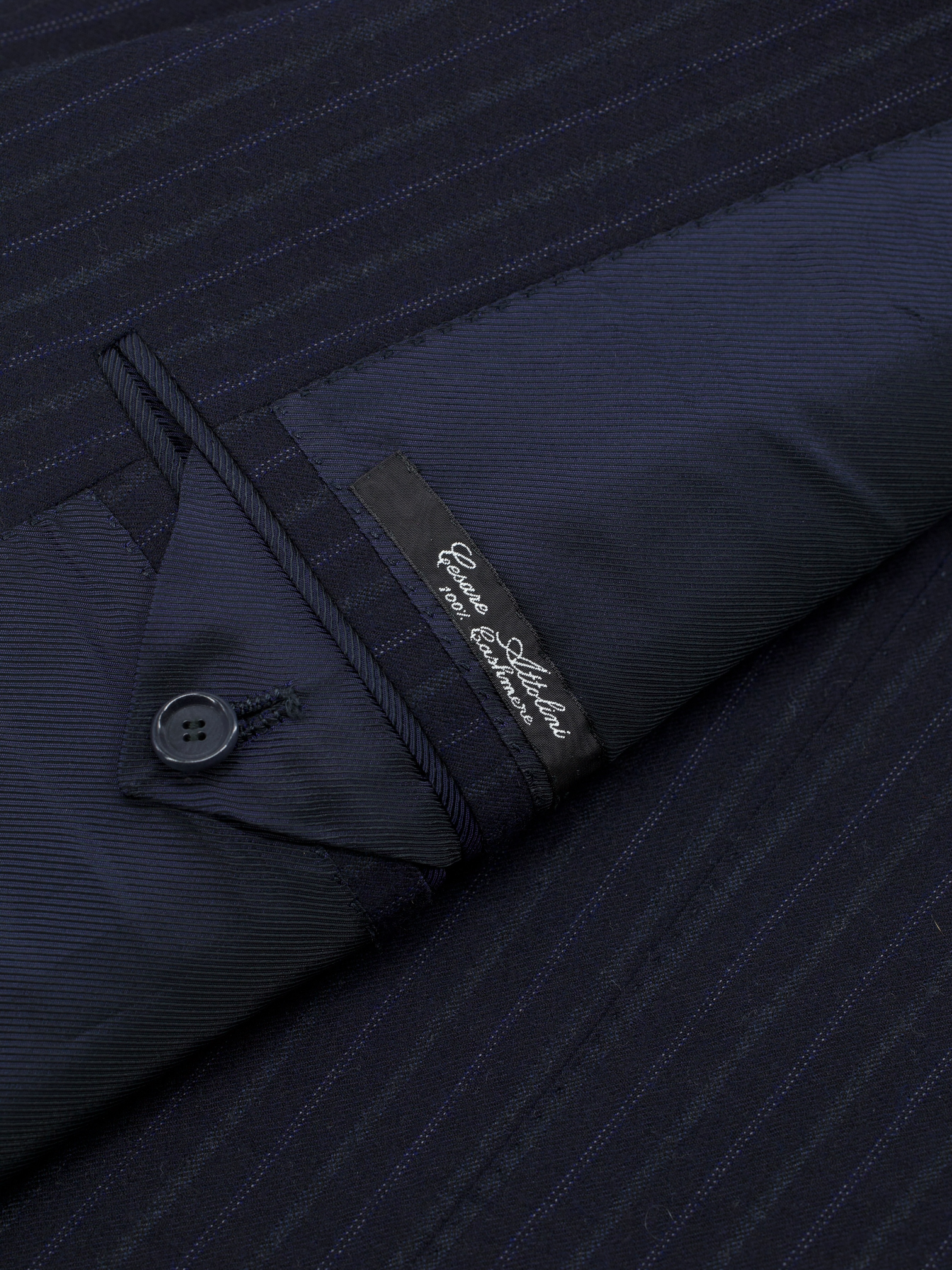
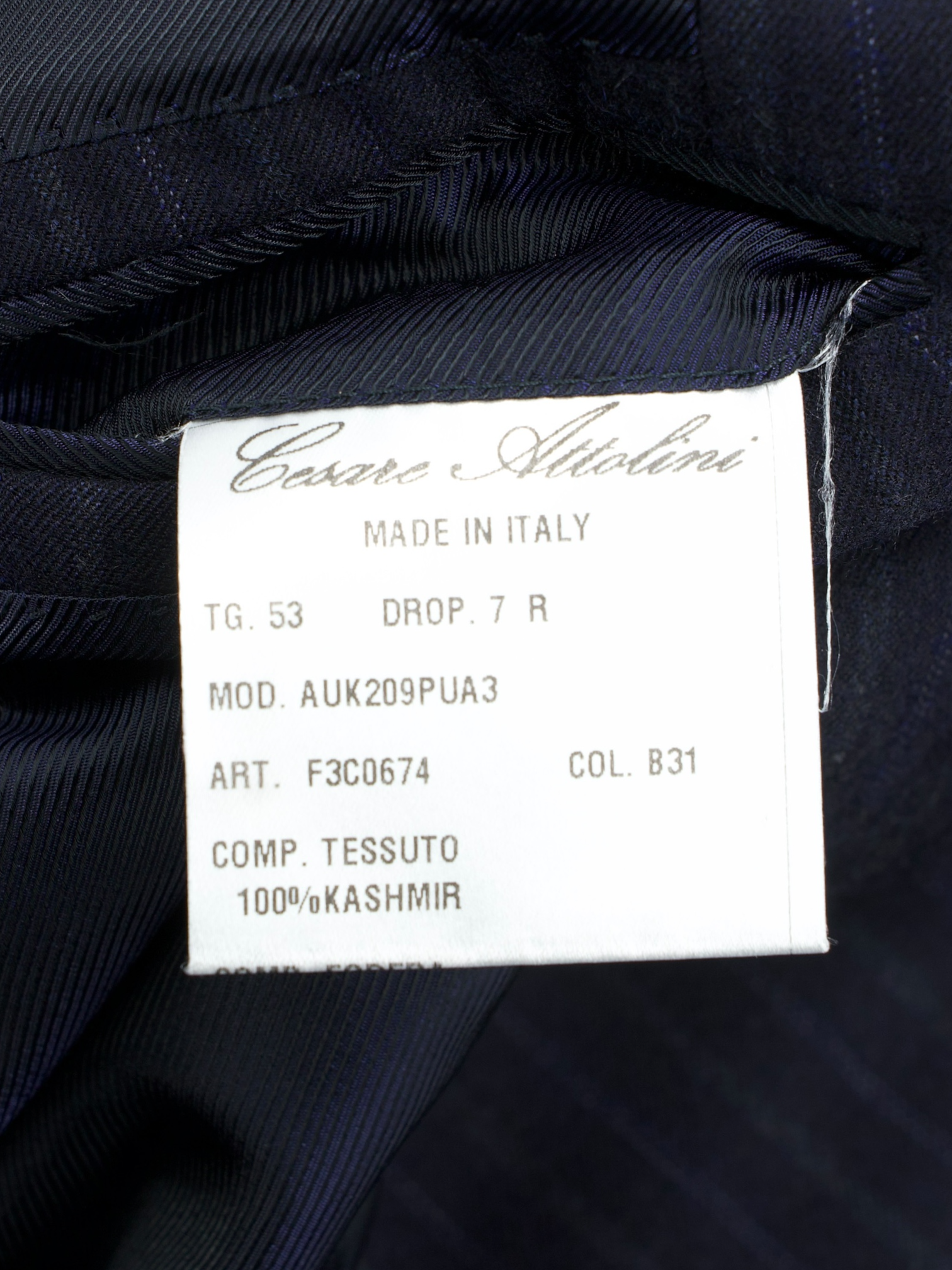
Cesare Attolini Navy Pure-Cashmere Shadow-Stripe Sartorial Winter Suit
53 IT / 43 US / Large
 Curator's Description
 Curator's Description
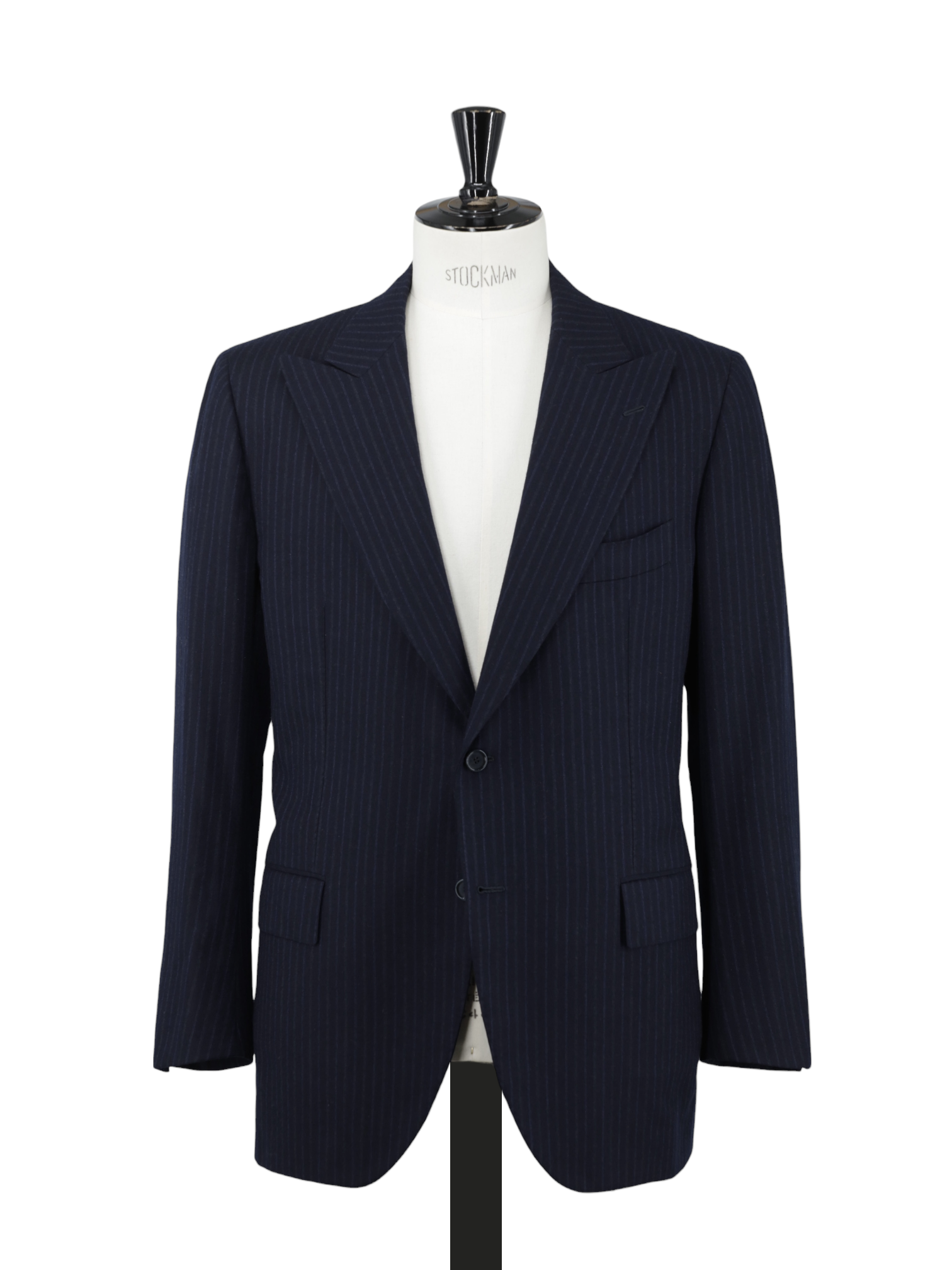
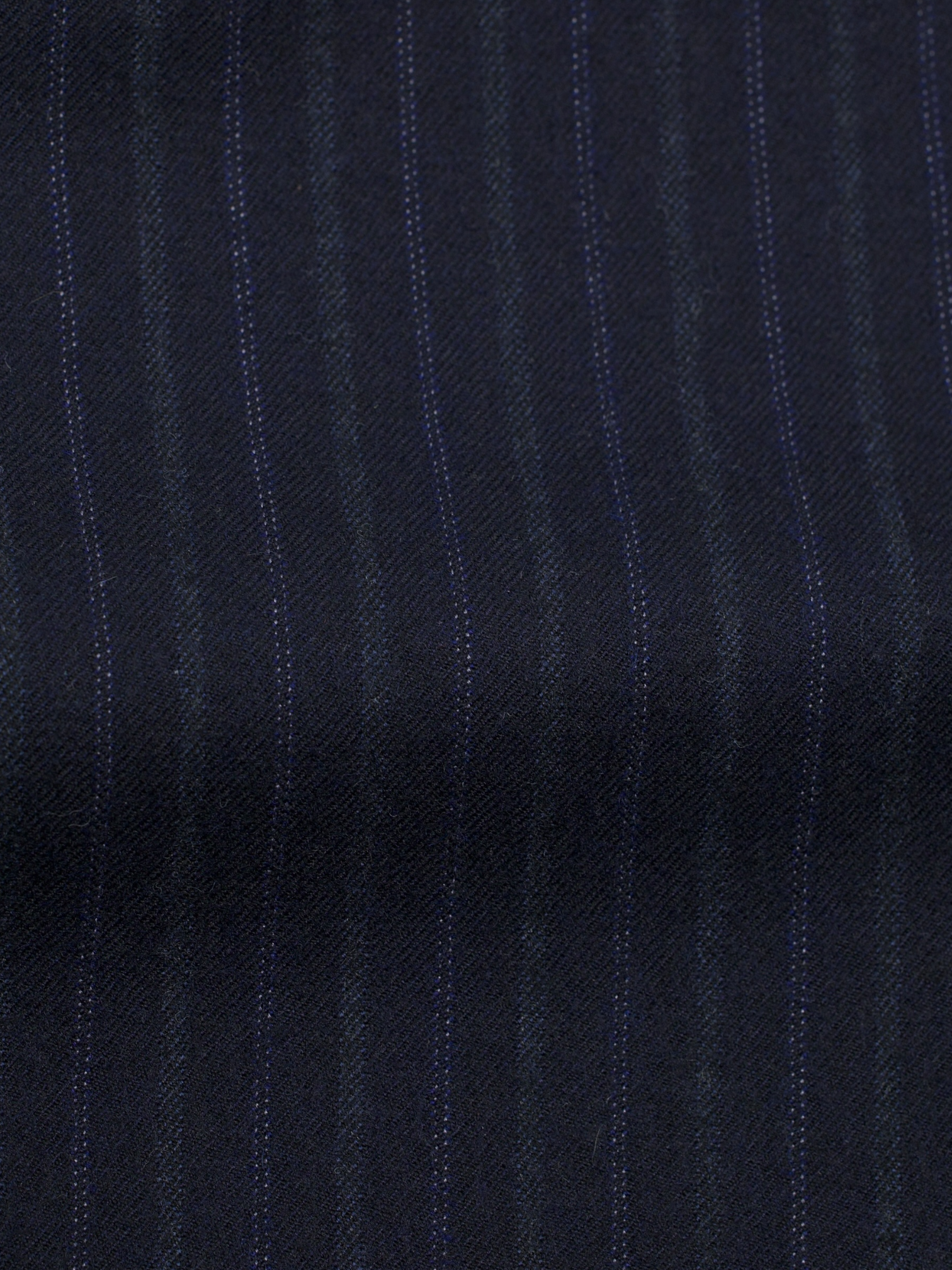
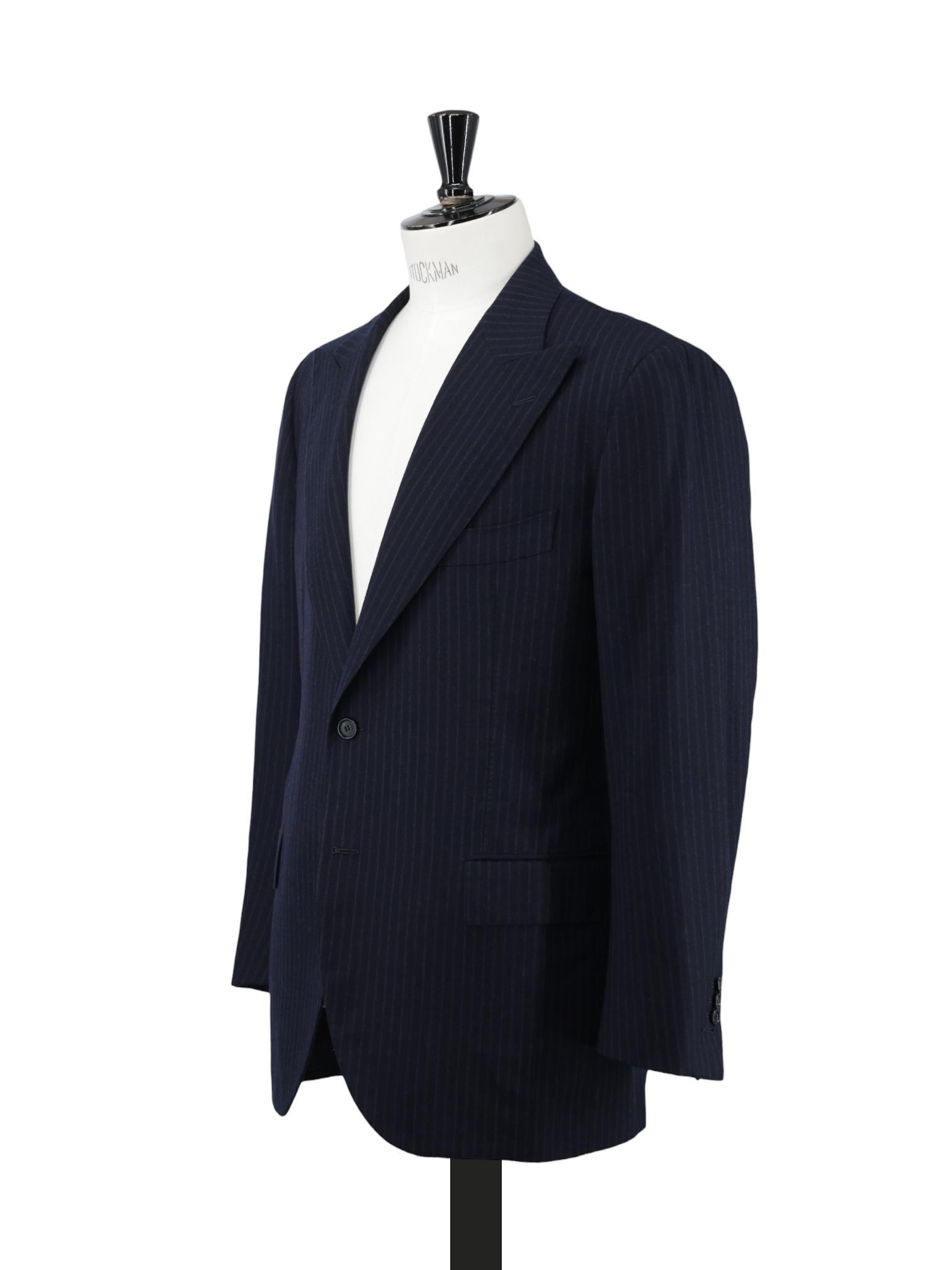
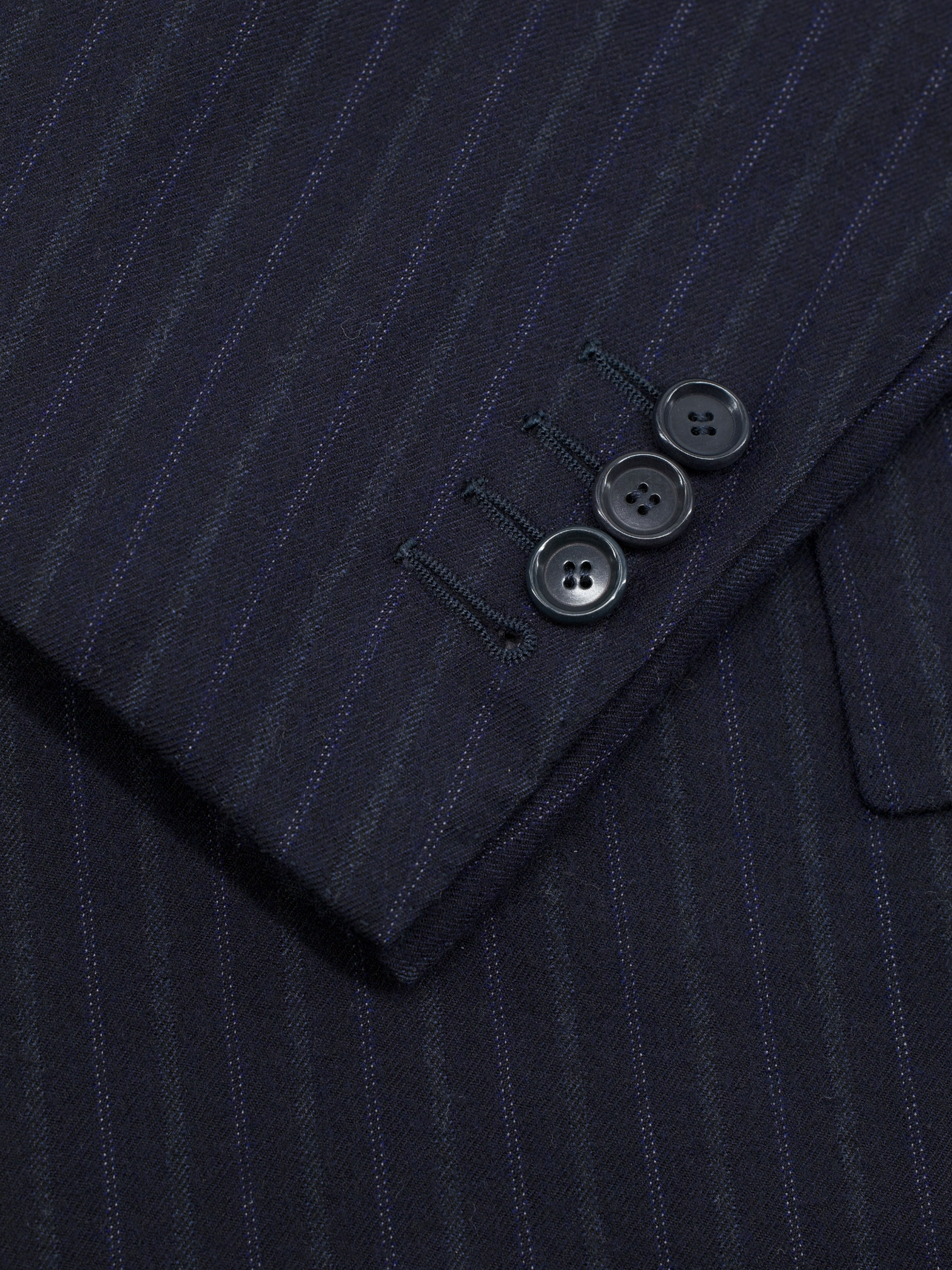
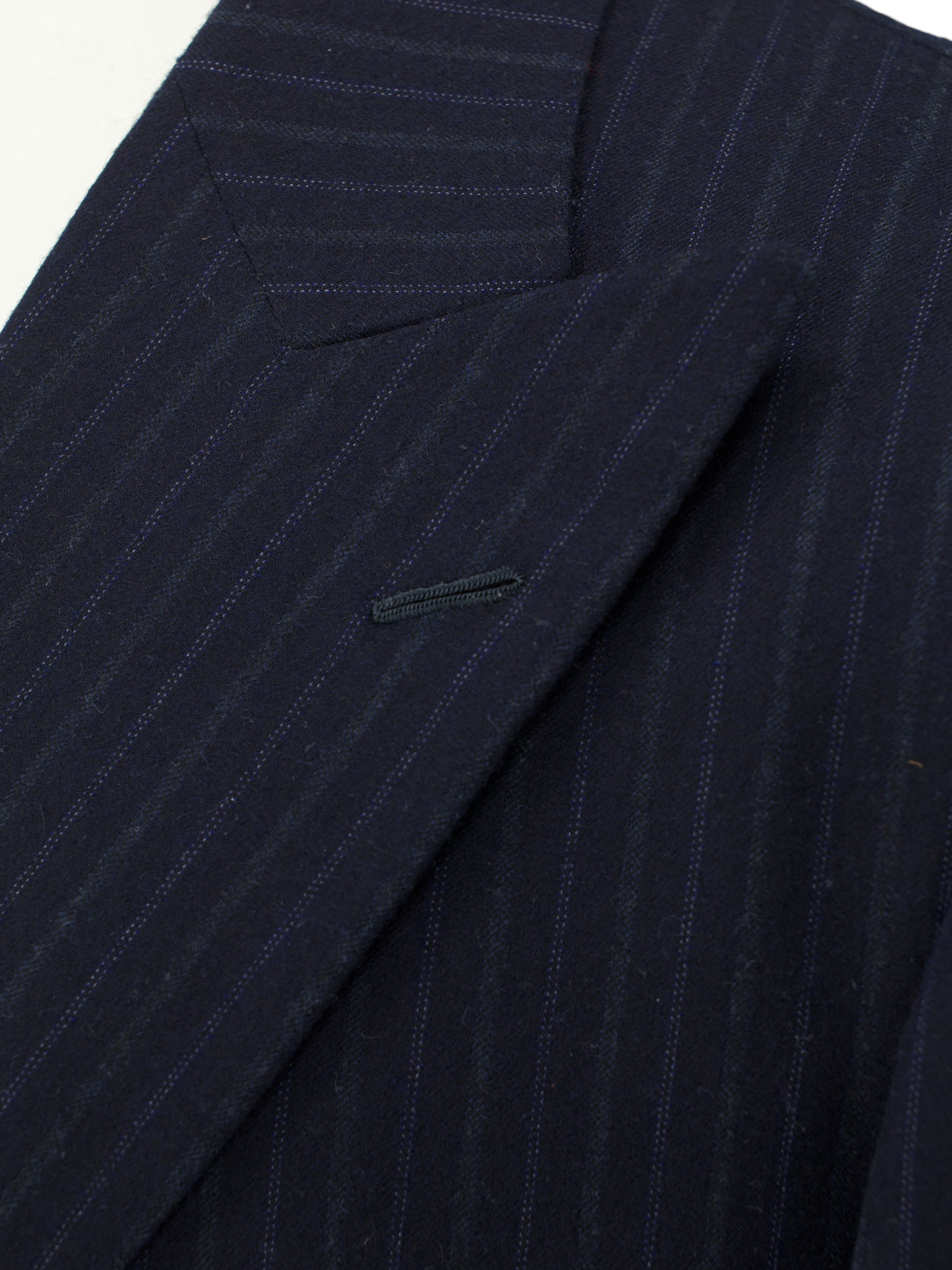
Discover the Cesare Attolini Navy Pure Cashmere Shadow Stripe Sartorial Winter Suit, a commanding cold weather proposition cut from indulgently soft pure cashmere. The deep navy ground is enriched by a subtle shadow stripe that reveals itself gently as the light shifts, lending the suit depth without overt contrast. The jacket is shaped with broad peak lapels and a classic two button closure, balanced by flap pockets and a fully lined interior that provides structure and warmth through the season. Handmade buttonholes add a discreet yet unmistakable sign of true sartorial pedigree.
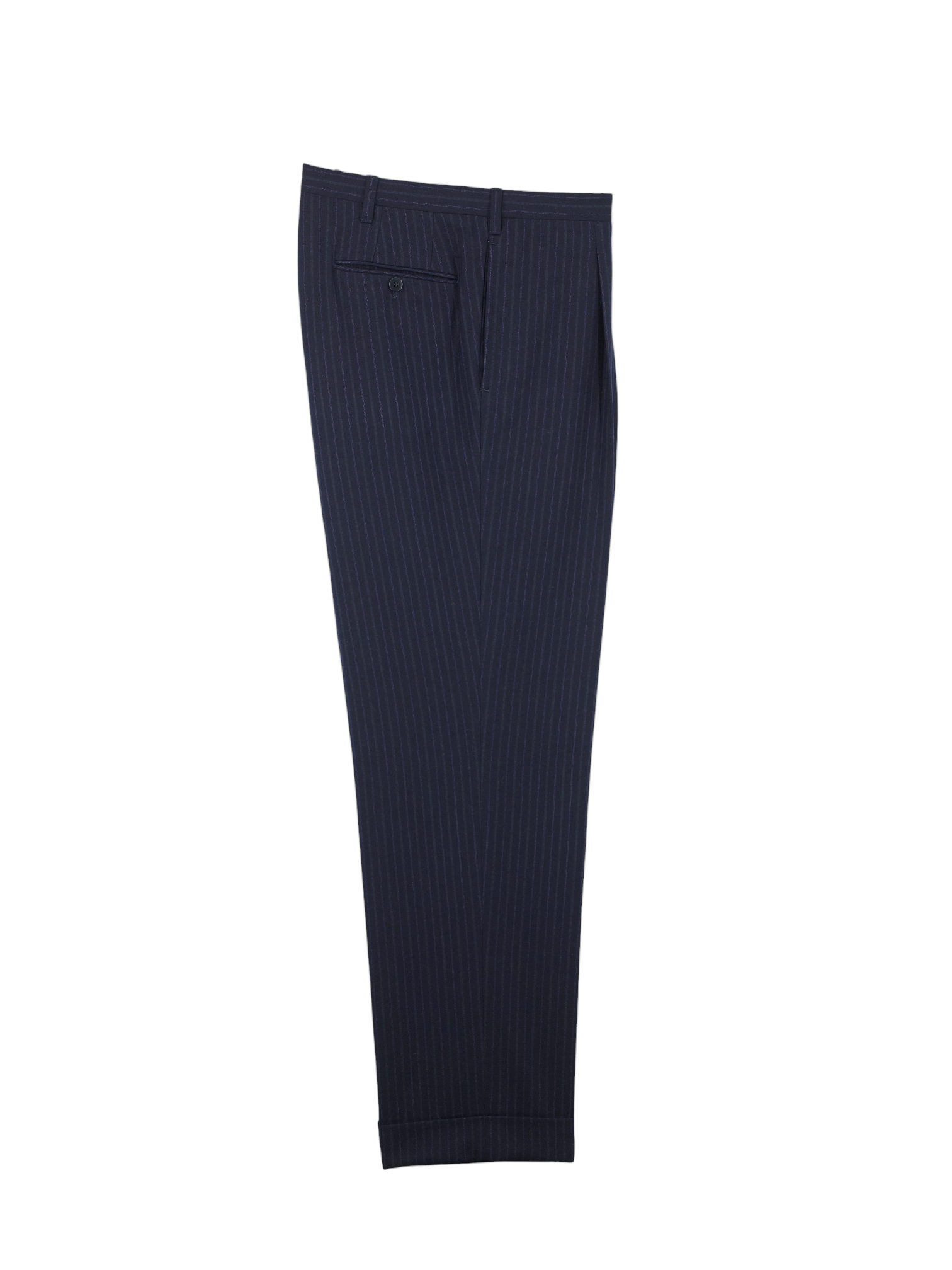
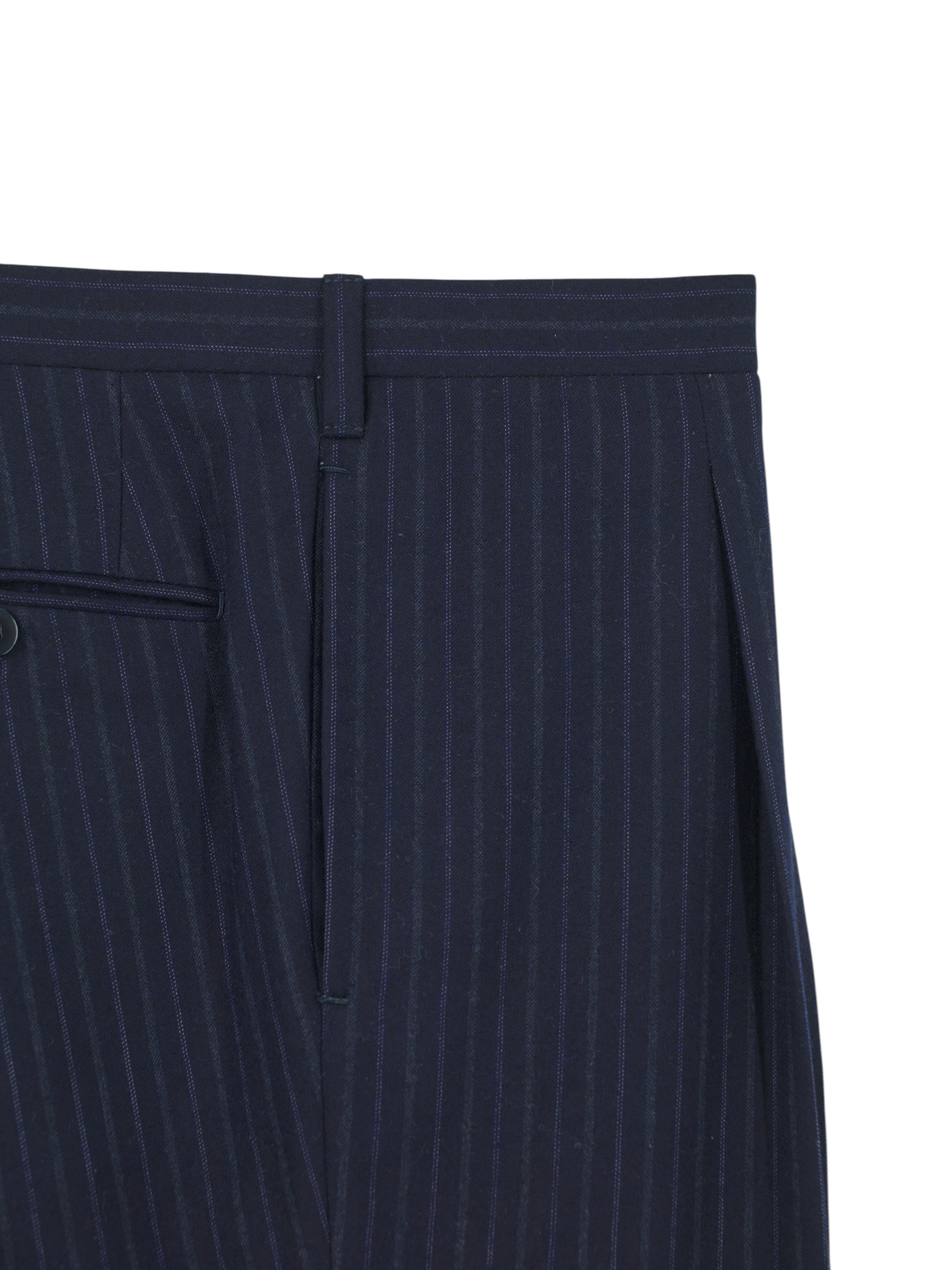
The trousers are tailored with a single pleat and a straight fit, finished with a traditional button rise closure and a wide leg opening with turn ups that enhances the suit’s elegant drape. Originally purchased through Tincati, the piece reflects the discerning eye of a retailer known for championing uncompromising Neapolitan craftsmanship. As with all Cesare Attolini tailoring, it is handmade in Naples, where master artisans dedicate hours to shaping the canvas, refining proportions and ensuring the soft shoulder and fluid line that define the house. The result is winter tailoring at its most assured and quietly luxurious. Discover the elaborated sartorial details below.
 Materialen
 Materialen
Composition: 100% Cashmere
Color: Navy
Pattern: Pin-Stripe
 Afmetingen
 Afmetingen
See how we measure our sartorial items
Discover the customization possibilities by visiting our tailor alteration guide
Gratis verzending voor bestellingen boven de 200€ in Nederland, 500€ in de EU en 1000€ buiten de EU.
Verzendkosten voor bestellingen onder de minimumprijs zijn afhankelijk van je land.
General Note: While we inspect each item to ensure its quality, please note that minor imperfections may be present due to the preloved nature of the garments. We strive to represent every item accurately, but subtle signs of wear may sometimes go unnoticed. We appreciate your understanding and commitment to sustainable luxury.
Opties kiezen
Ontdek de
Sartoriale Details
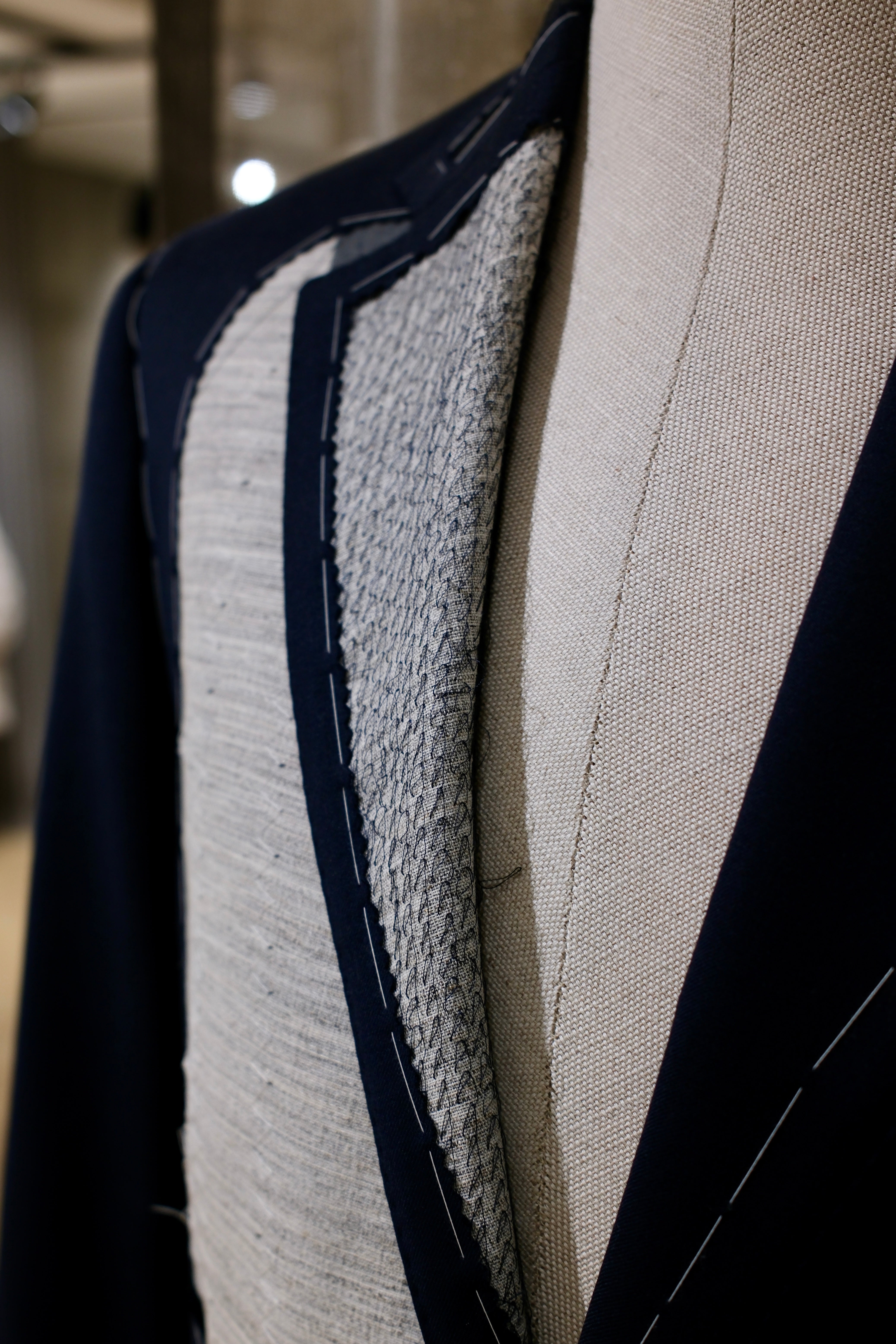
Full Canvas Constructie
Een sartoriale jas - of mantel - heeft een tussenvoering nodig die helpt om de vorm te geven en het te modelleren. Canvas geeft het item een op maat gemaakte en ambachtelijke uitstraling. Kortom, het brengt leven in het kledingstuk. Technisch gezien is canvas gemaakt van paardhaar, wol, mohair of kamelenhaar. Het kan ook een mix van deze materialen zijn, met variërende dikte en gewicht. De canvas wordt aan de jas gestikt, vaak met de hand, waardoor de canvasstukken 'zweven' tussen de binnen- en buitenstof. Dit geeft de jas extra flexibiliteit. De canvas loopt van de bovenste delen helemaal door tot het einde van de jas. Nadat je je canvasjas een tijd hebt gedragen, zal deze beginnen de vorm van je lichaam aan te nemen en er ongelooflijk natuurlijk uitzien.
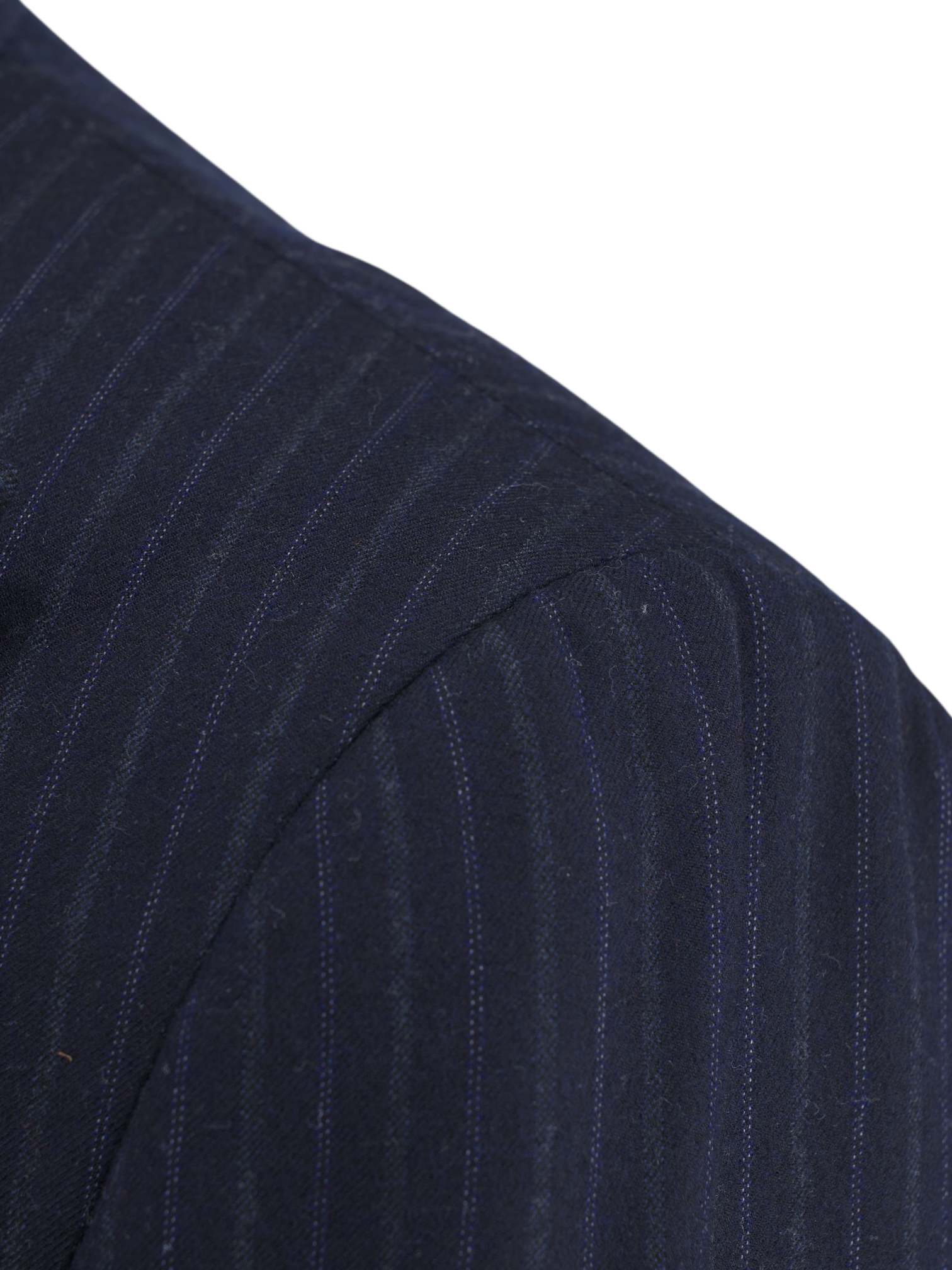
La Spalla Camicia
"Spalla Camicia" vertaalt zich ruwweg naar 'overhemd mouw' in het Italiaans en is een schouderstijl gecreëerd en populair gemaakt door Neapolitaanse kleermakers. De naam 'overhemdmouw' werd zo genoemd vanwege het karakteristieke gerimpelde effect dat te vinden is bij de kop van de mouw, waar de volheid van de grotere mouw in elkaar zakt. In plaats van de kop van de mouw naar achteren te vouwen en binnenstebuiten te stikken, wordt de kop ondergeschoven en langs de bovenkant gestikt.
Handgemaakt Knoopsgat
Handgemaakte knoopsgaten worden gemaakt met behulp van een ketting van geknoopte lussen, genaamd festonsteken, die ze sterk en visueel onderscheidend maken. Het duurt ongeveer vijf seconden om met een machine een normaal knoopsgat te naaien - een enkel handgemaakt knoopsgat kost ongeveer 10 minuten om te naaien.
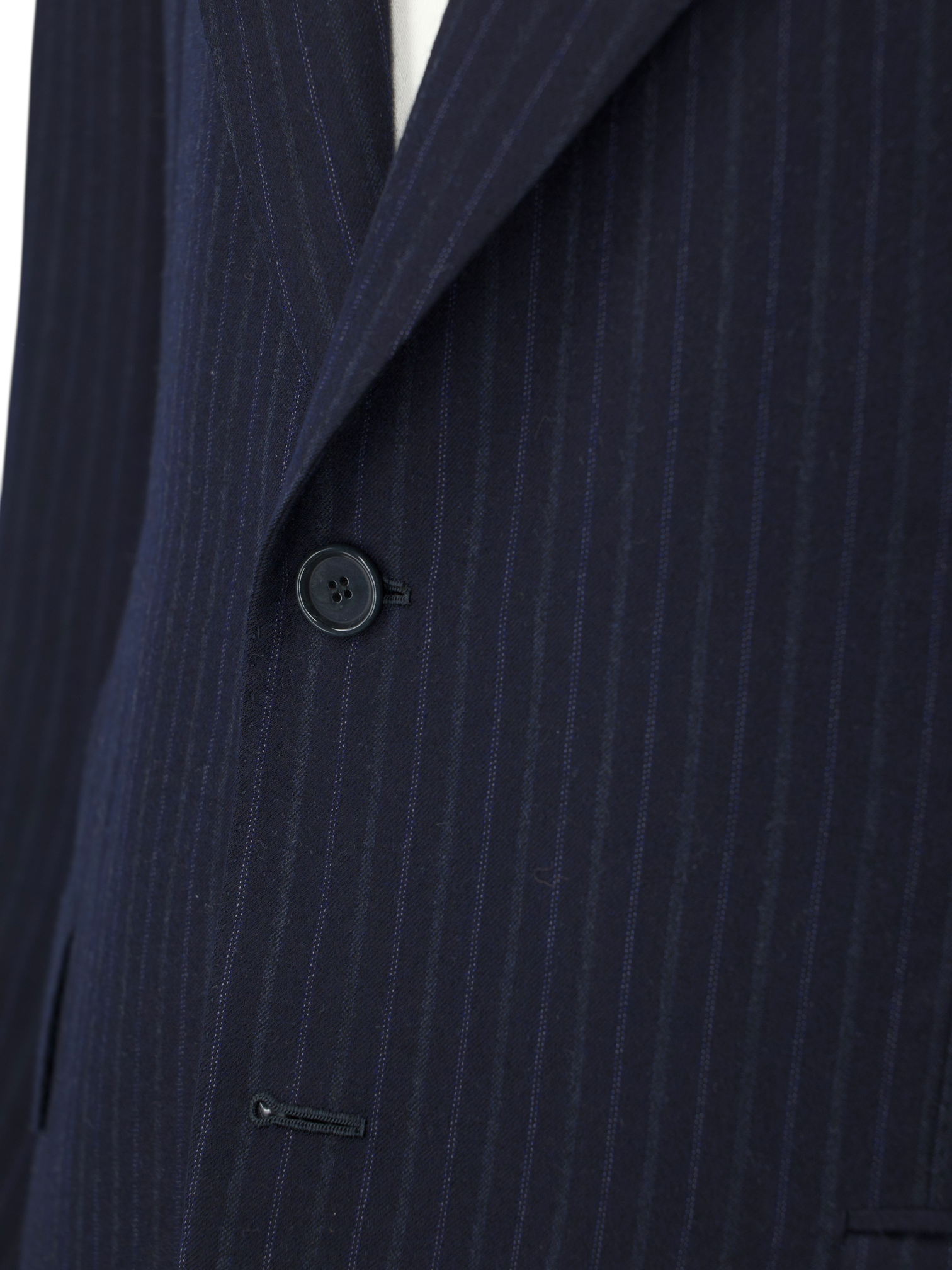
Tweeknoops Sluiting
Het jasje heeft een sluiting met twee knopen waardoor het profiel strak blijft.
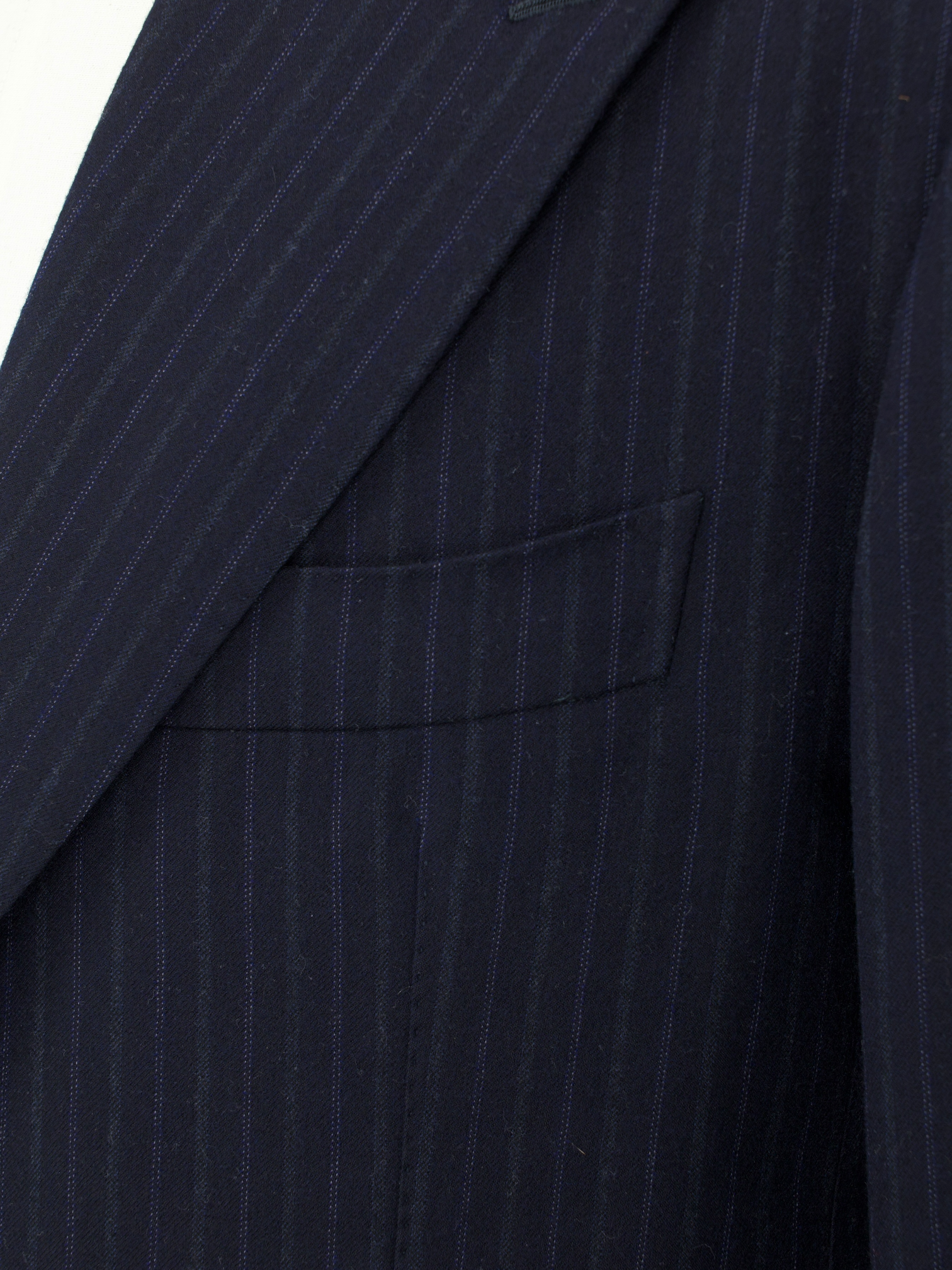
Barchetta Borstzak
De barchetta-zak wordt vaak beschouwd als een kleermakersdetail dat exclusief uit Italië komt. Het woord "barchetta" is Italiaans voor "bootje". Het beschrijft hoe de zak op de borst zweeft, lichtjes omhoog gericht, zoals de boeg van een zeilboot.
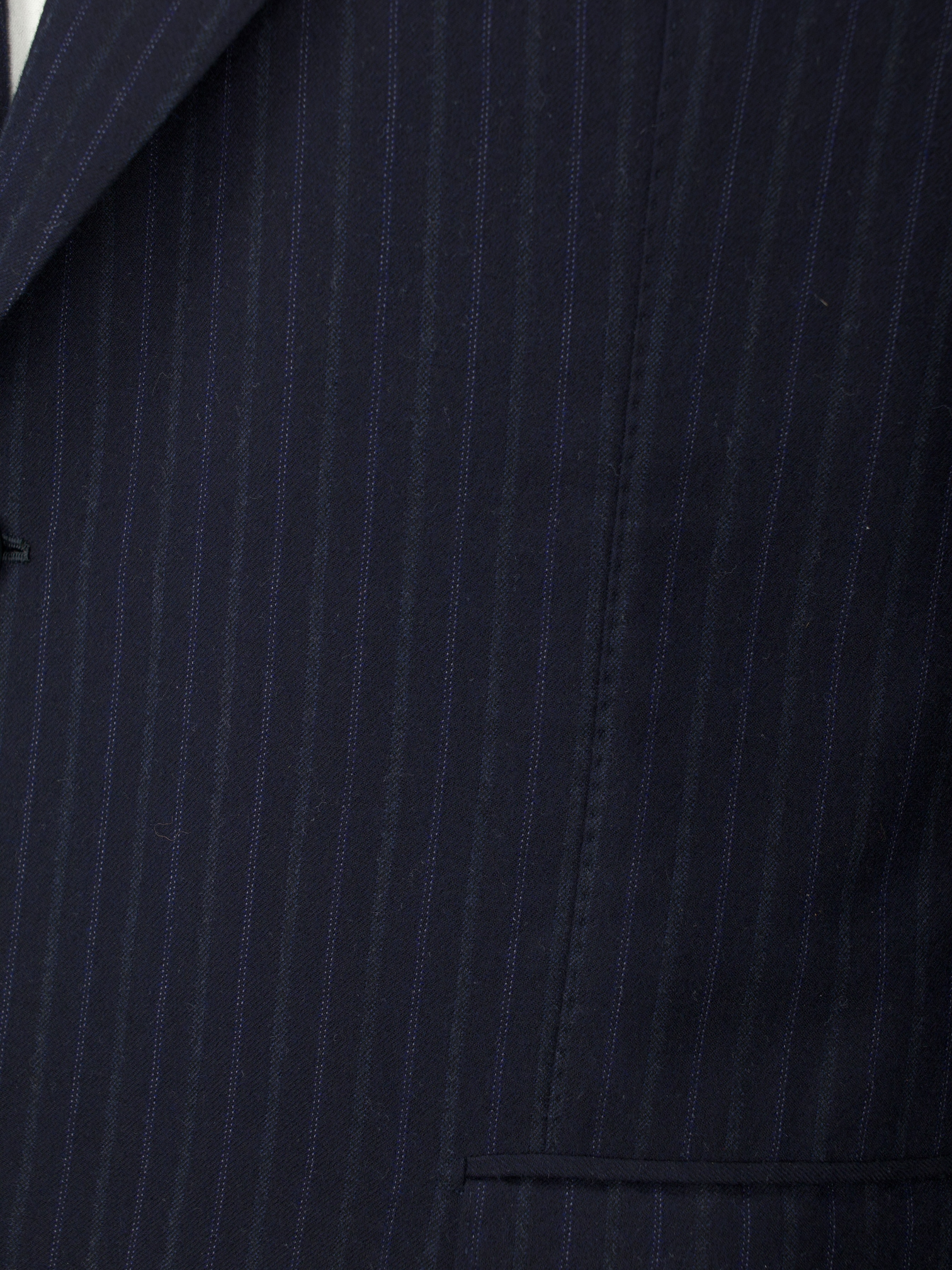
Napolitaanse Naden
Napolitaanse meestervakmannen voegen twee figuurnaden toe - denk aan ze als ingeknepen naden - om ervoor te zorgen dat het lichaam van het jasje een slank silhouet krijgt. Het proces, genaamd "mezzo punto riprese", wordt volledig met de hand uitgevoerd.
Imitation Buttonholes
Pre-owned, nog niet gedragen. De knopen moeten worden vastgezet en de knoopsgaten moeten worden gemaakt door uw lokale kleermaker. De (hoorn) knopen zijn bijgevoegd binnenin de linker binnenzak.
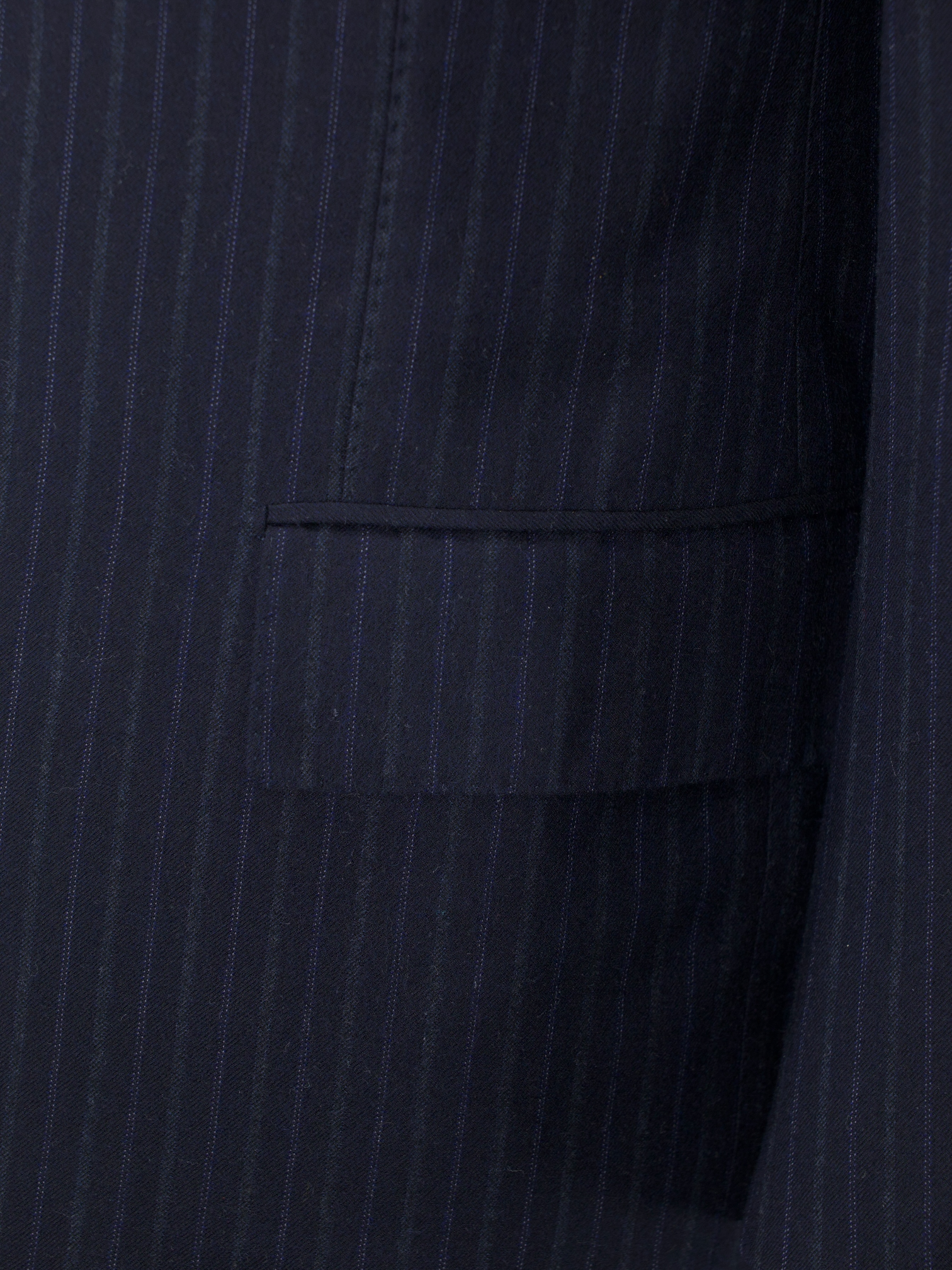
Klepzakken
Dit was oorspronkelijk bedoeld om te voorkomen dat vuil in de jaszakken terechtkomt wanneer deze op het platteland wordt gedragen. Klepzakken bevinden zich min of meer in het midden wat betreft formaliteit: ze zijn een voor de hand liggende keuze voor zakelijke pakken, maar ze kunnen ook voorkomen op blazers als eerbetoon aan hun informele oorsprong.
de details van
de broek
Single Pleated Front
Single-pleat trousers are a great mix of style and comfort. They became fashionable in the early 20th century and really took off after World War II. With a single pleat, these trousers offer a bit more room without losing that sharp look. They’re ideal for both formal and semi-formal occasions, providing a classic yet slightly modern appearance. Perfect for professional settings, they offer a comfortable fit while keeping things polished and elegant, balancing tradition with a touch of modern flair.
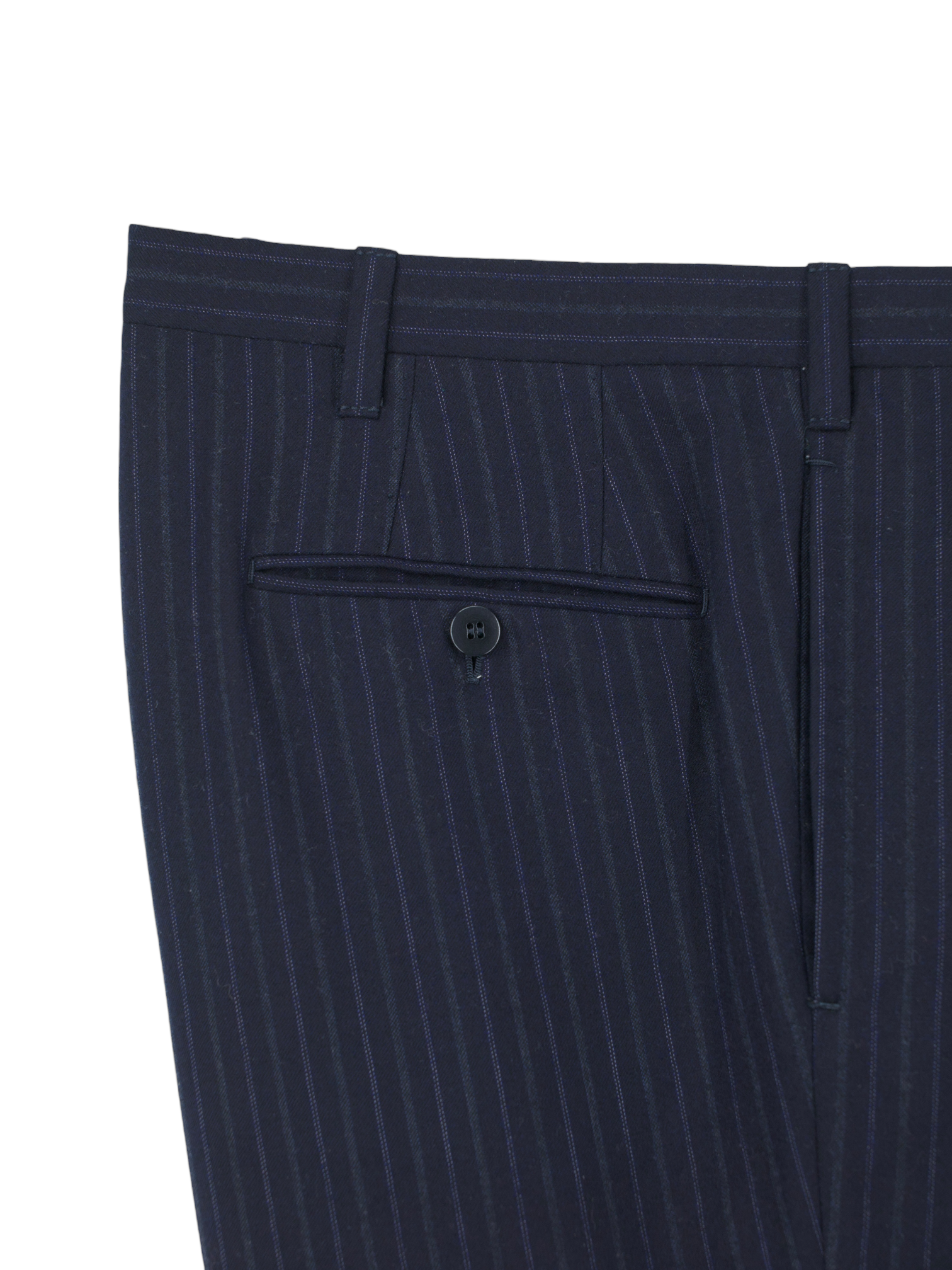
Belt Loops
Belt loops are the most common type of waistband found on trousers, providing the option to wear a belt for both style and practicality. Typically spaced evenly around the waistband, belt loops are a versatile feature that can accommodate a wide range of belt styles and sizes. This traditional waistband design is found in everything from casual jeans to formal dress pants, making it a timeless and adaptable option for any wardrobe. Belt loops offer the flexibility to customize your look while ensuring a secure fit.
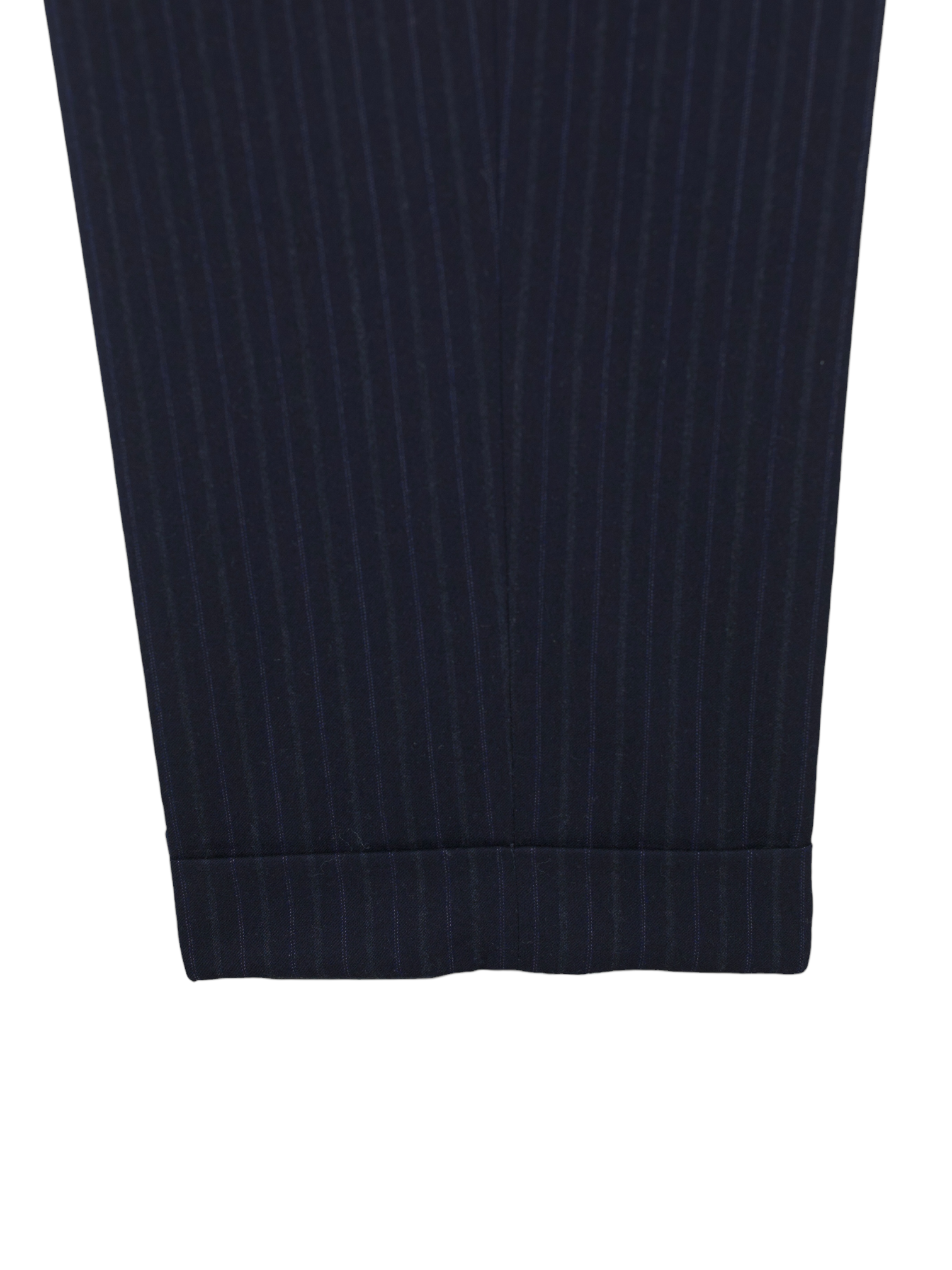
Turn-Up (Cuffed) Hem
The turn-up hem, or cuffed hem, is a classic style where the fabric at the bottom of the trousers is folded outward to create a visible cuff. This style originated with Edward VII in the late 19th century, who had his trousers tailored with cuffs to prevent them from getting muddy, sparking a trend among the fashionable elite. In the 1920s and 1930s, turn-ups became a symbol of wealth and sophistication, as having extra fabric was seen as a luxury. This association continued after World War II when wearing turn-ups subtly indicated affluence in an era of fabric rationing. Today, turn-up hems are a nod to their historical roots, offering a touch of classic elegance and enhancing the overall appearance of formal and tailored trousers.
maat
53 IT / 43 US / Large
