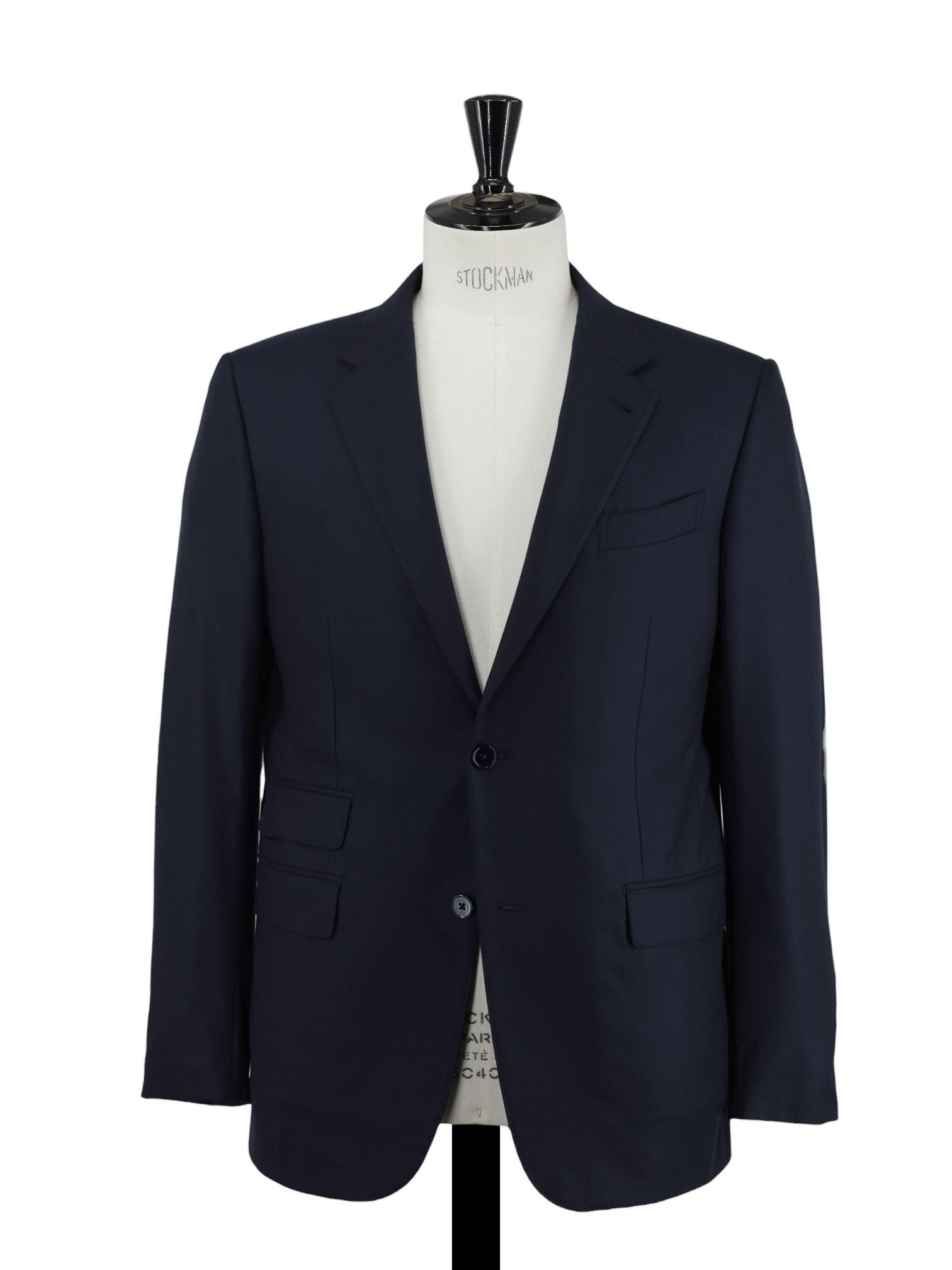
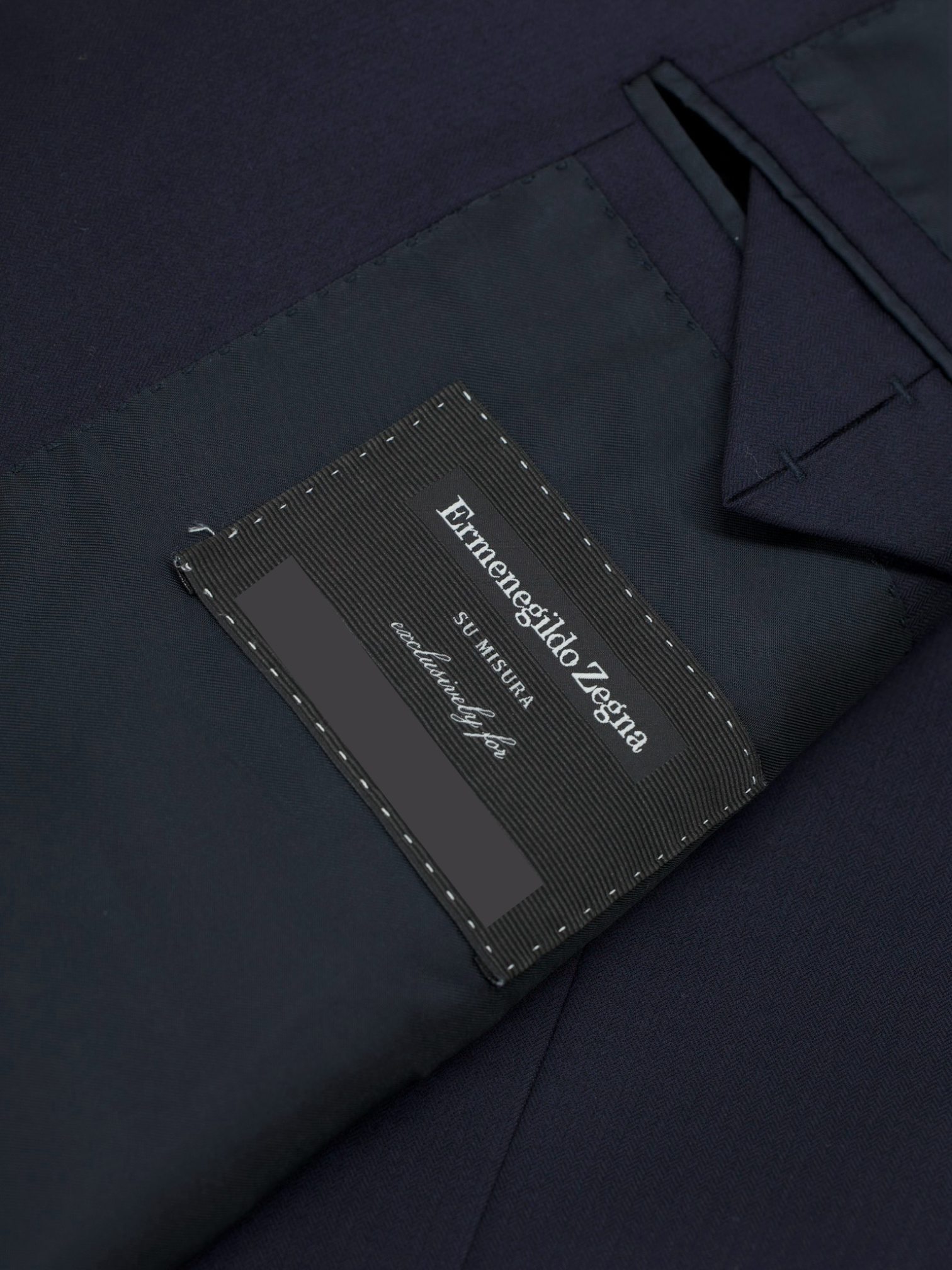
Ermenegildo Zegna Navy 12milmil12 Micro-Herringbone Suit
50 IT / 40 US / Large
 Curator's Description
 Curator's Description
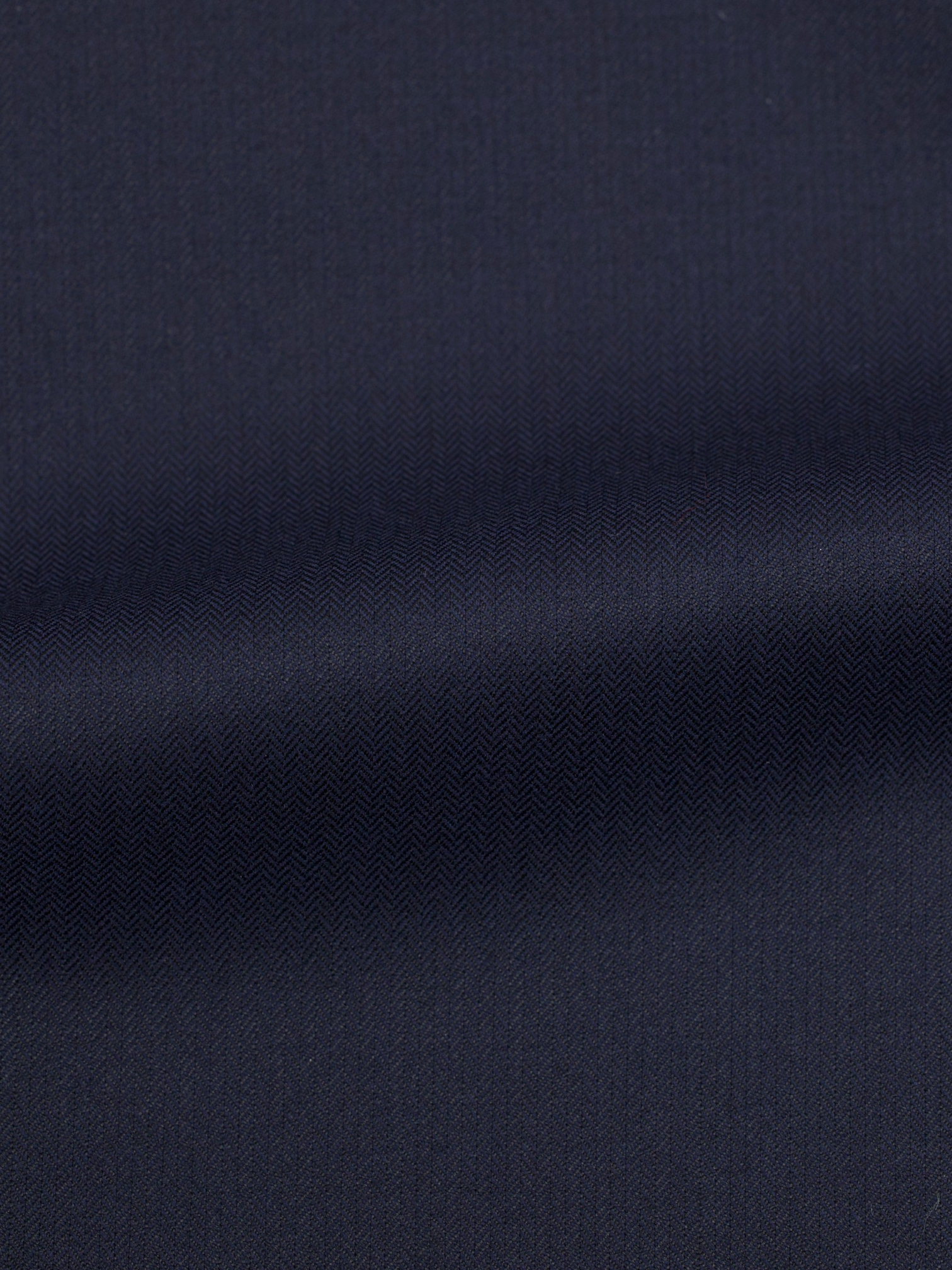
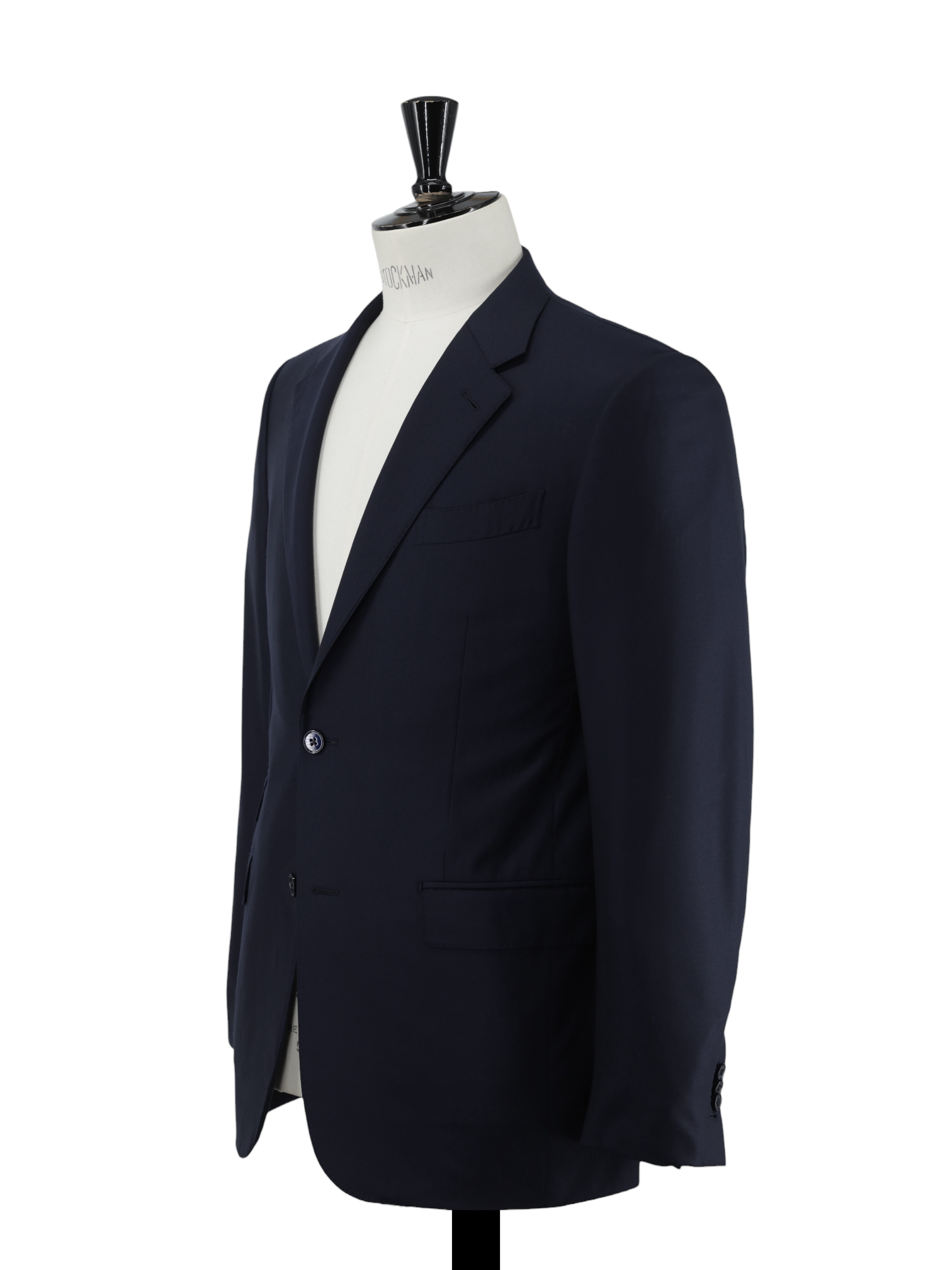
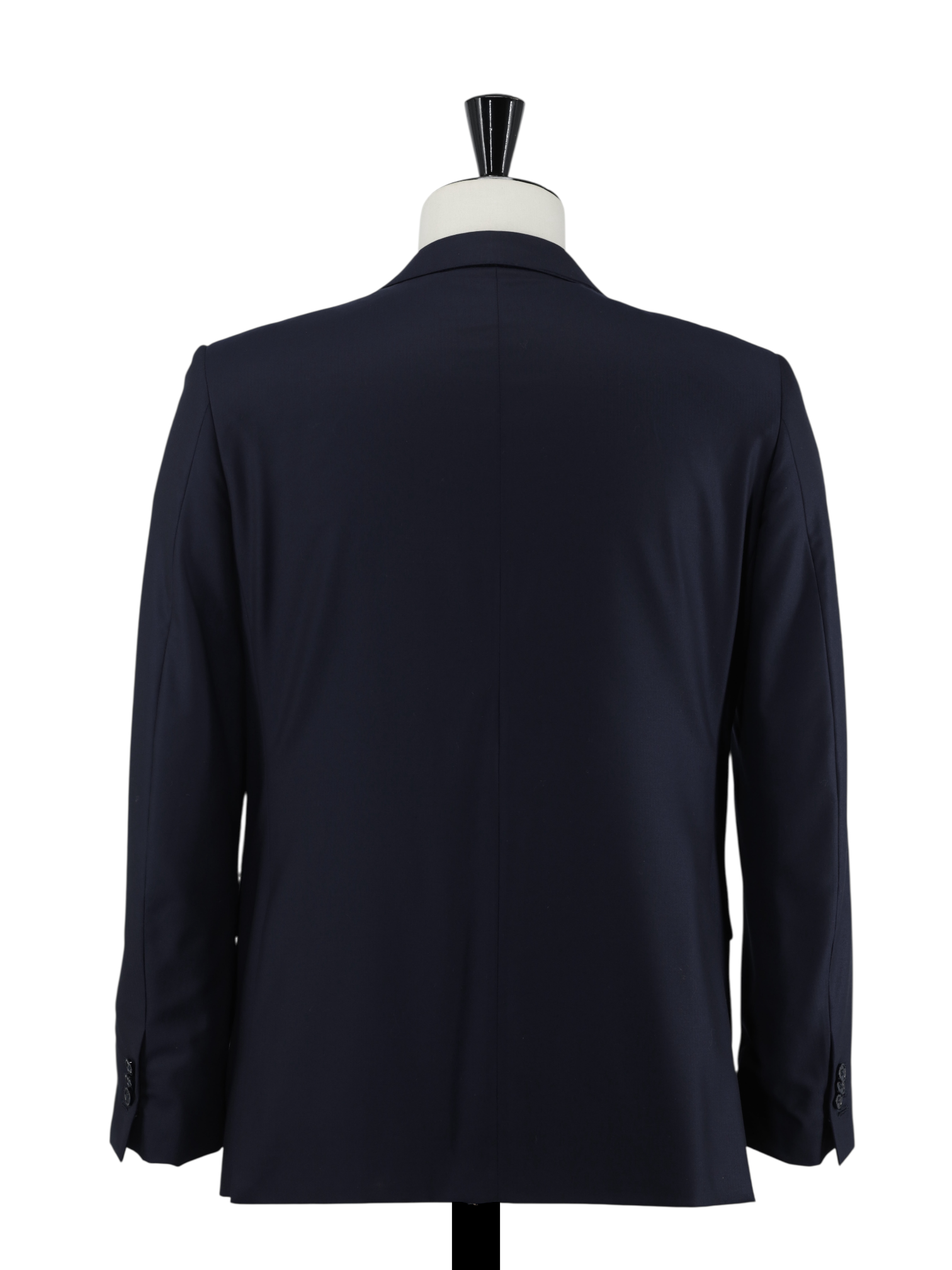
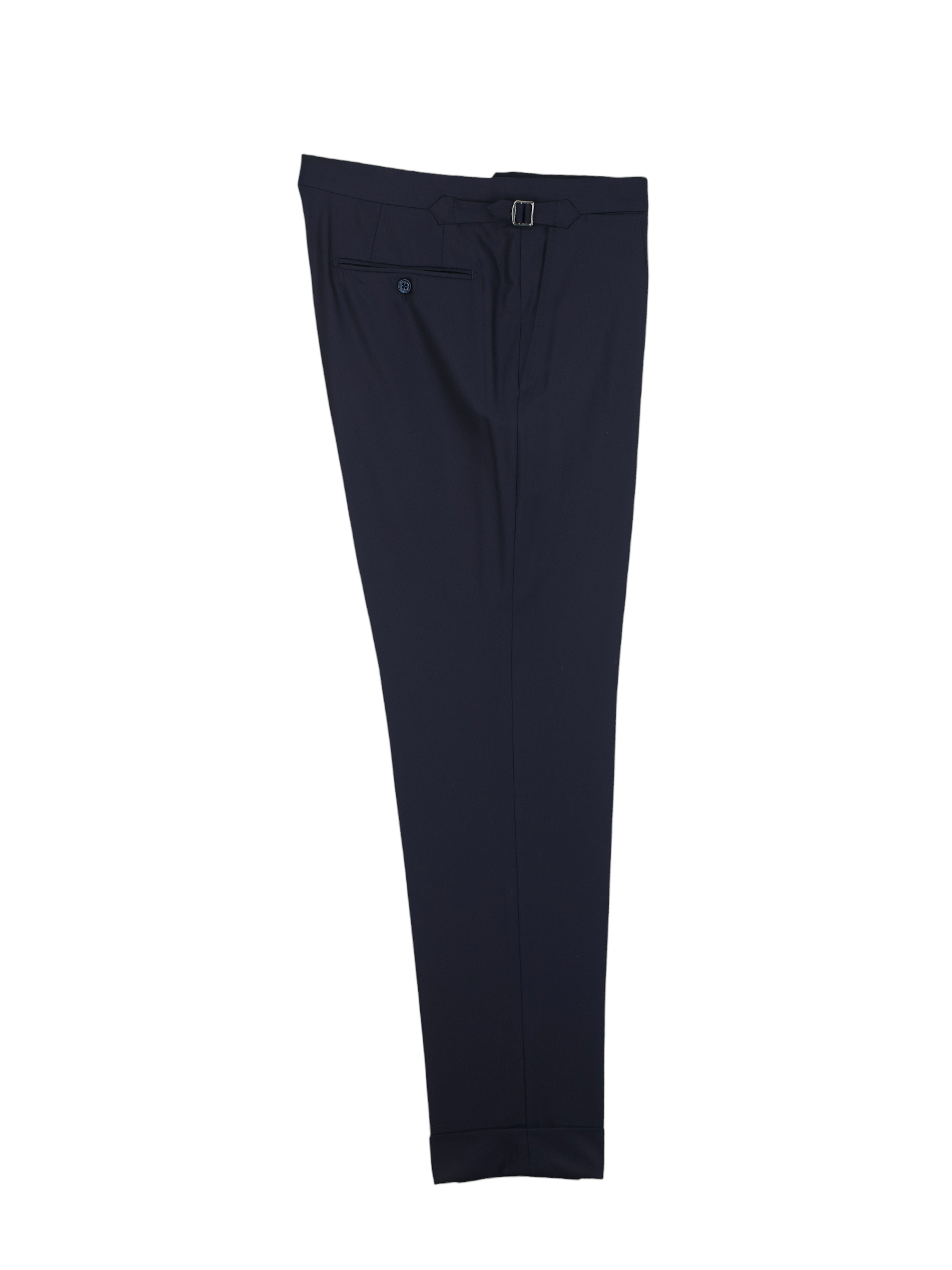
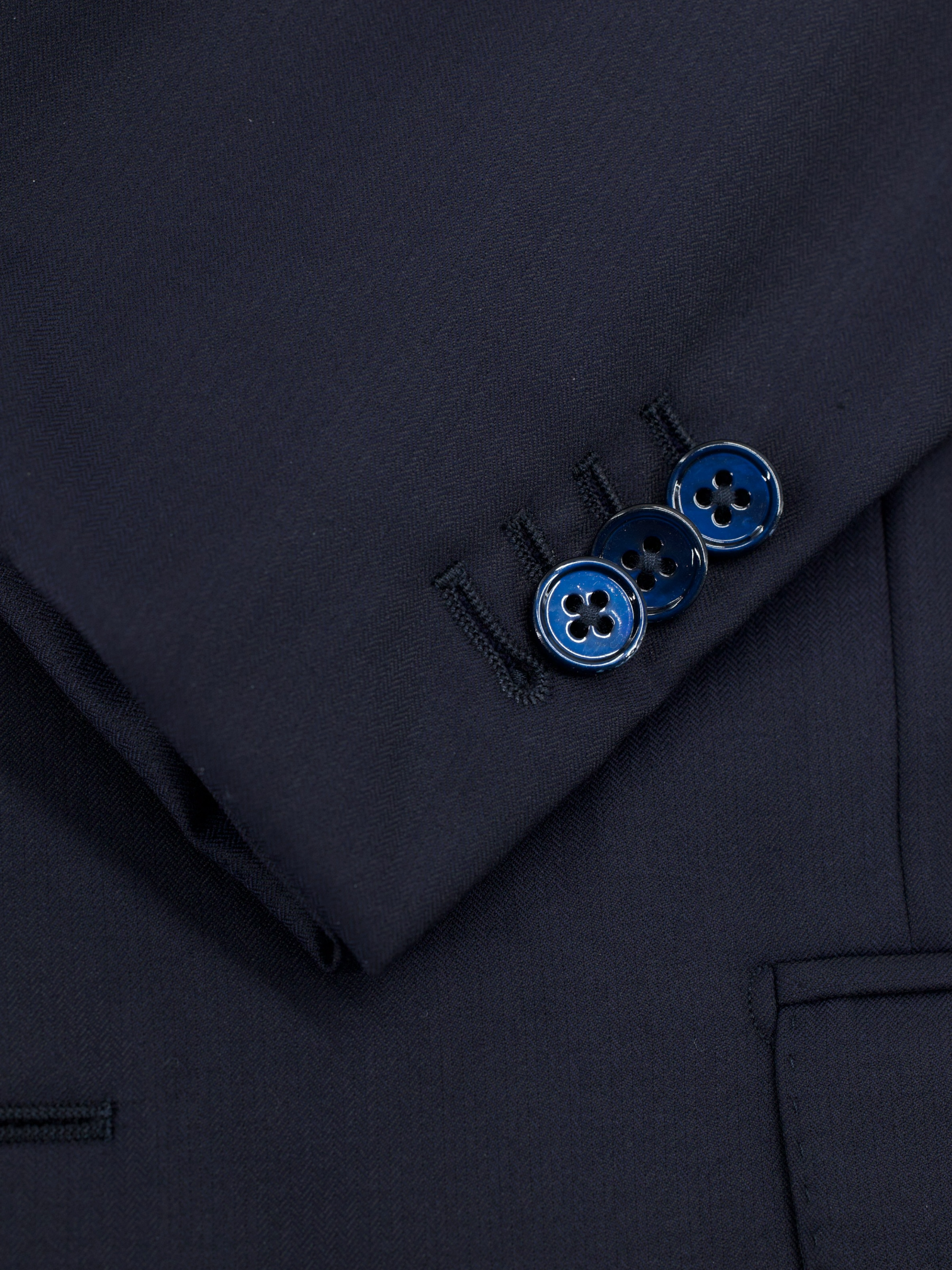
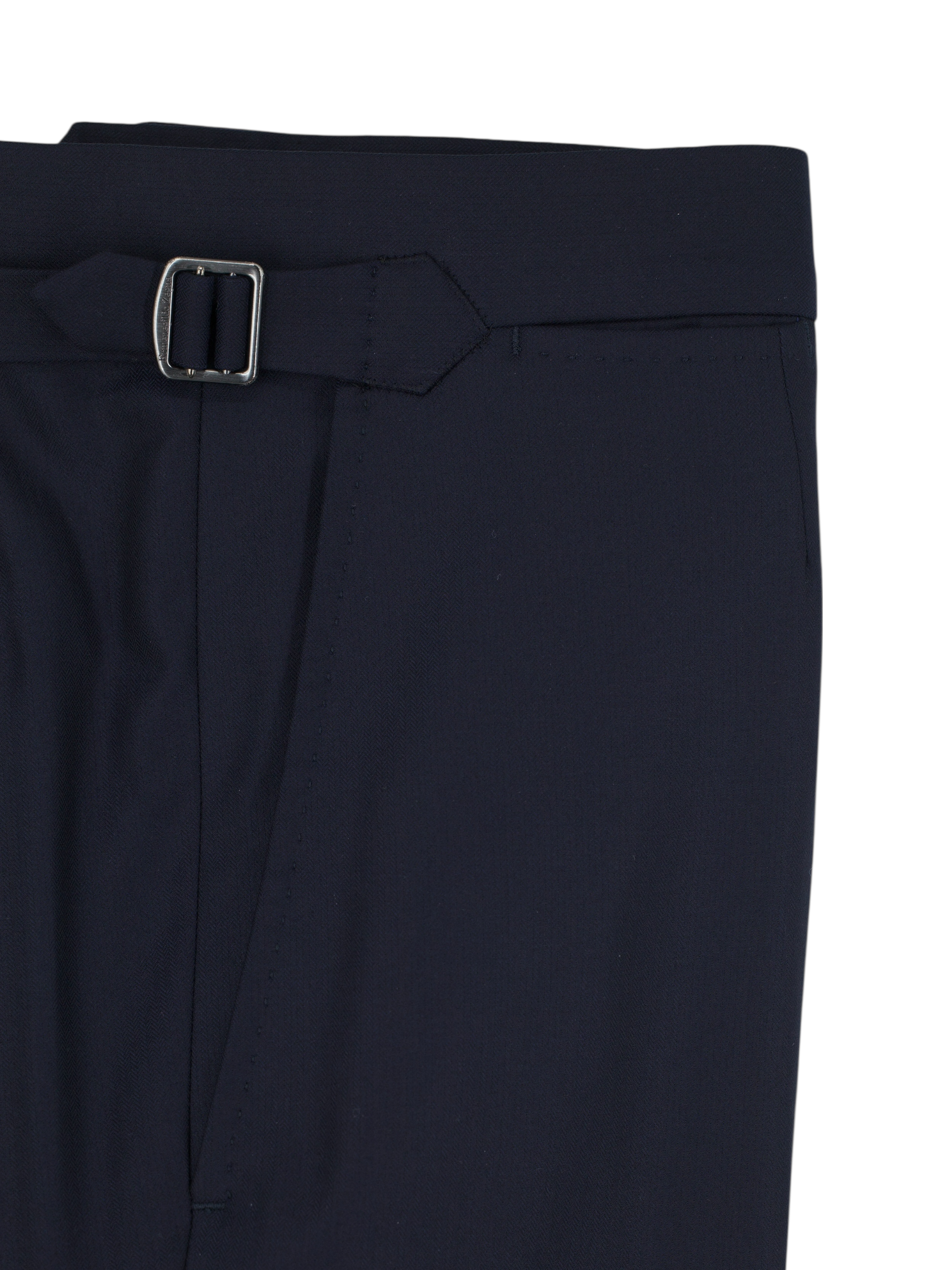
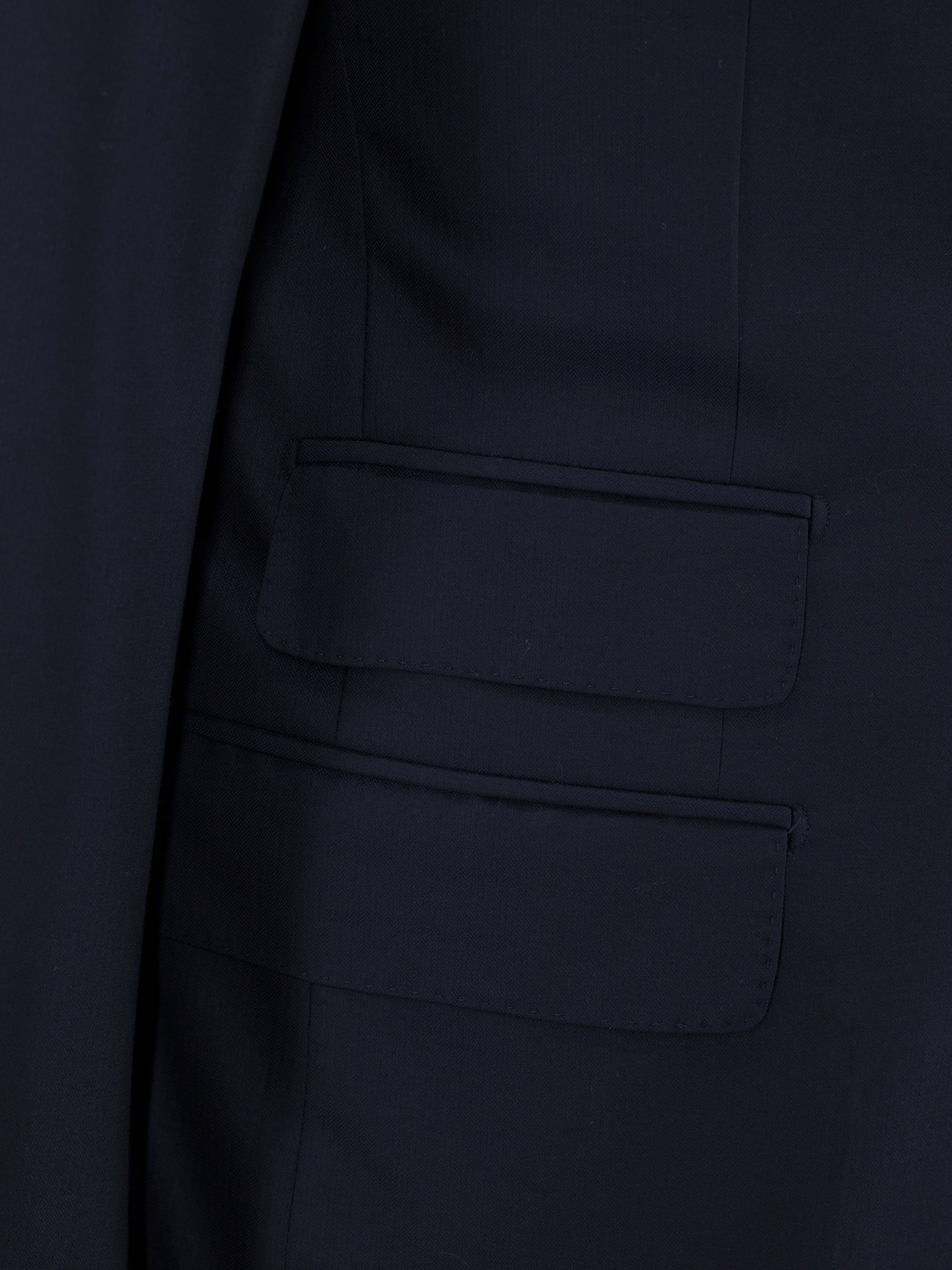
Discover the Ermenegildo Zegna Navy 12milmil12 Micro Herringbone Suit, a piece that speaks softly but carries serious credentials. From a distance, the navy reads clean and authoritative; up close, the micro herringbone weave introduces a layer of quiet texture that rewards attention. The jacket is cut with notch lapels and finished with flap pockets and a traditional ticket pocket, while rare navy mother of pearl buttons add a subtle, tonal point of difference. Tailored in the Mila fit, it offers a streamlined silhouette that feels sharp without trying too hard. The trousers are equipped with side adjusters for a clean waistband and finished with turn ups that lend weight and elegance to the break.
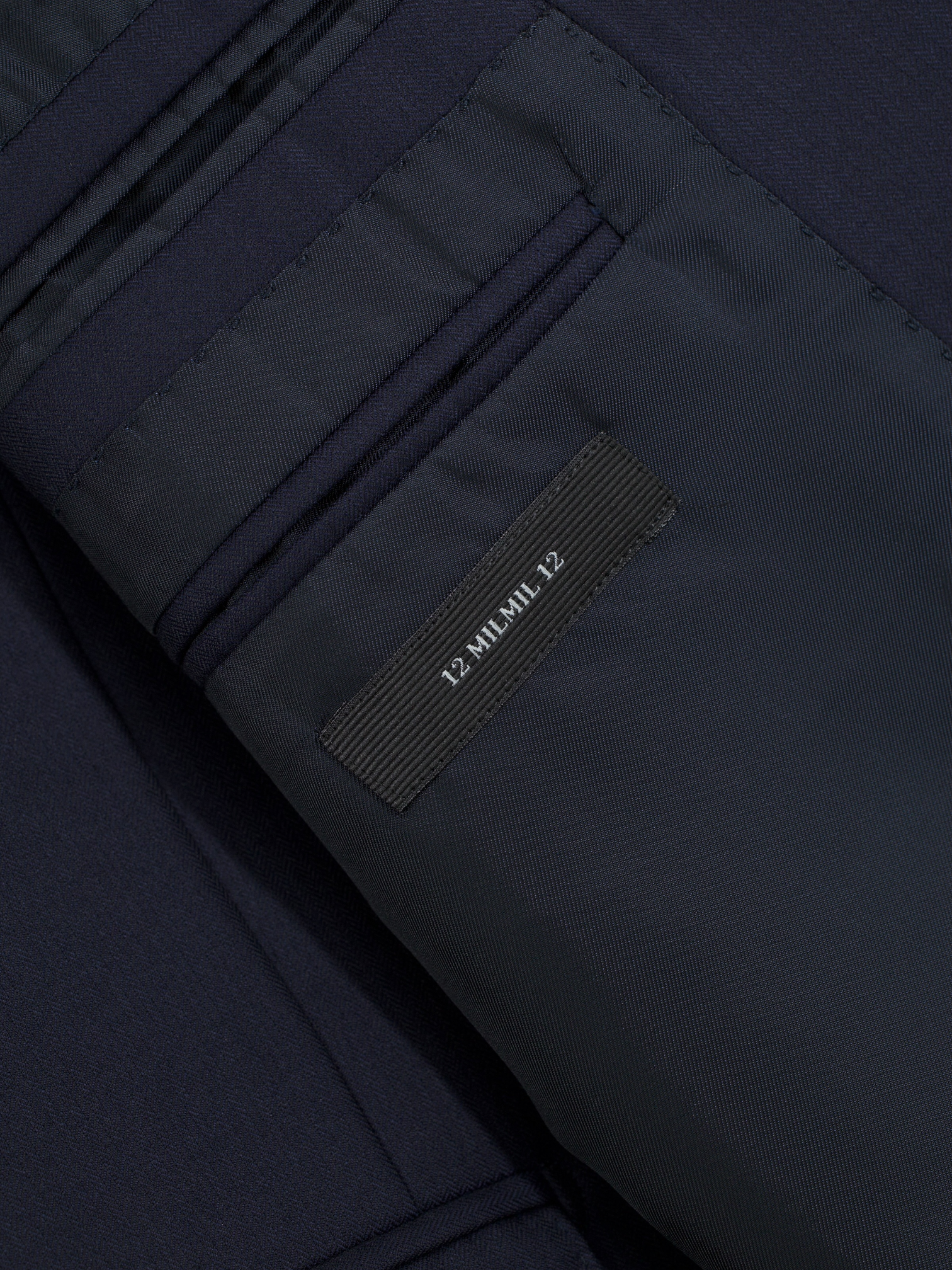
The real story, however, lies in the cloth. Zegna’s 12milmil12 fabric is crafted from extraordinarily fine Merino wool measuring around 12 microns in diameter, placing it among the rarest fibres used in suiting. For context, most fine tailoring fabrics sit several microns higher, making this an outlier in terms of fineness and handle. Only a minute portion of the wool clip meets the necessary standard, and working with fibres this delicate requires exceptional control in spinning and weaving to preserve strength while enhancing softness. The result is a fabric that feels almost impossibly smooth, with a natural elasticity and a subtle lustre that seasoned collectors recognise instantly. It is the sort of cloth chosen not for show, but for the quiet satisfaction it delivers every time it is worn.
The Mila fit reflects Zegna’s contemporary approach to tailoring, clean through the shoulders with gentle shaping at the waist for a balanced, modern line. Careful internal construction ensures the lightweight cloth drapes properly and retains its structure over time. It is a suit for those who understand that true luxury often reveals itself in texture and proportion rather than overt statement, and who appreciate the difference a remarkable fabric can make. Discover the elaborated sartorial details below.
 Materialen
 Materialen
Composition: 100% Zegna 12MilMil12 Wool
Color: Navy
Pattern: Herringbone
 Afmetingen
 Afmetingen
See how we measure our sartorial items
Discover the customization possibilities by visiting our tailor alteration guide
Gratis verzending voor bestellingen boven de 200€ in Nederland, 500€ in de EU en 1000€ buiten de EU.
Verzendkosten voor bestellingen onder de minimumprijs zijn afhankelijk van je land.
General Note: While we inspect each item to ensure its quality, please note that minor imperfections may be present due to the preloved nature of the garments. We strive to represent every item accurately, but subtle signs of wear may sometimes go unnoticed. We appreciate your understanding and commitment to sustainable luxury.
Opties kiezen
Ontdek de
Sartoriale Details
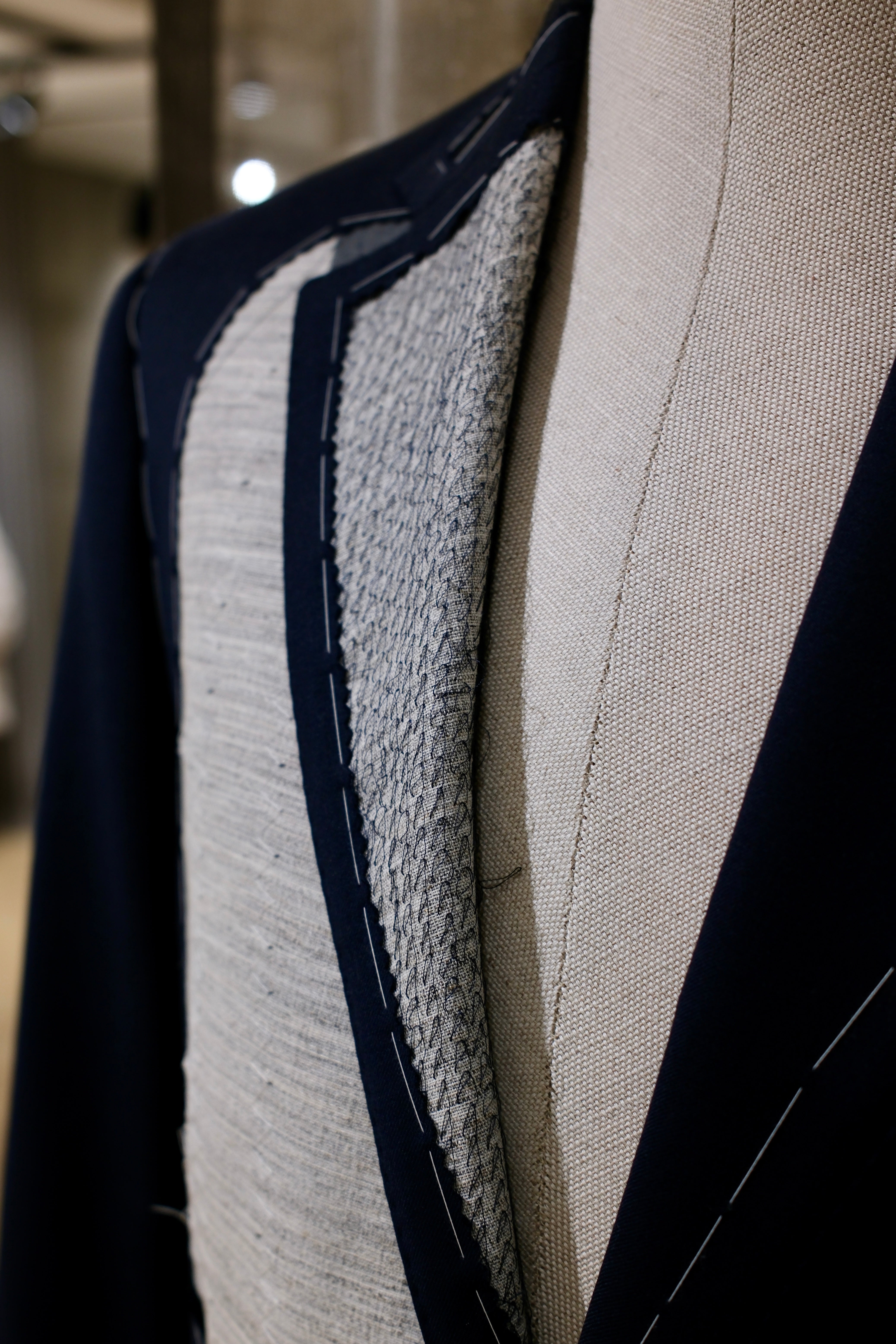
Full Canvas Constructie
Een sartoriale jas - of mantel - heeft een tussenvoering nodig die helpt om de vorm te geven en het te modelleren. Canvas geeft het item een op maat gemaakte en ambachtelijke uitstraling. Kortom, het brengt leven in het kledingstuk. Technisch gezien is canvas gemaakt van paardhaar, wol, mohair of kamelenhaar. Het kan ook een mix van deze materialen zijn, met variërende dikte en gewicht. De canvas wordt aan de jas gestikt, vaak met de hand, waardoor de canvasstukken 'zweven' tussen de binnen- en buitenstof. Dit geeft de jas extra flexibiliteit. De canvas loopt van de bovenste delen helemaal door tot het einde van de jas. Nadat je je canvasjas een tijd hebt gedragen, zal deze beginnen de vorm van je lichaam aan te nemen en er ongelooflijk natuurlijk uitzien.
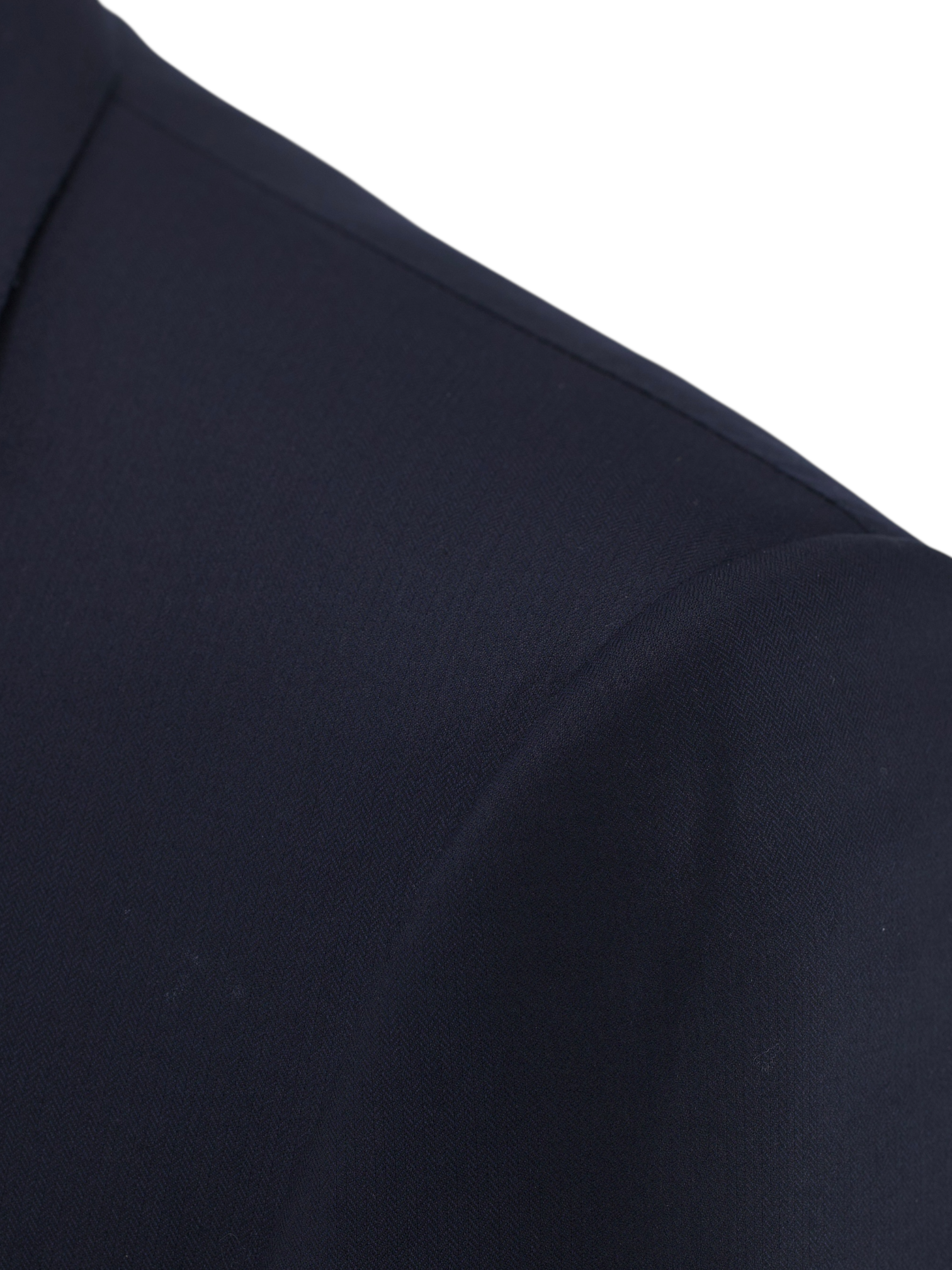
Gerolde Schouders
Een "gerolde" schouder - of mouwkop - beschrijft de verhoogde vorm of richel van de bevestiging van de mouw aan de schouder. Hoe hoger het is, hoe imposanter de schouderlijn lijkt. Dit kan vaak worden gevonden in iconisch Brits kleermakerswerk.
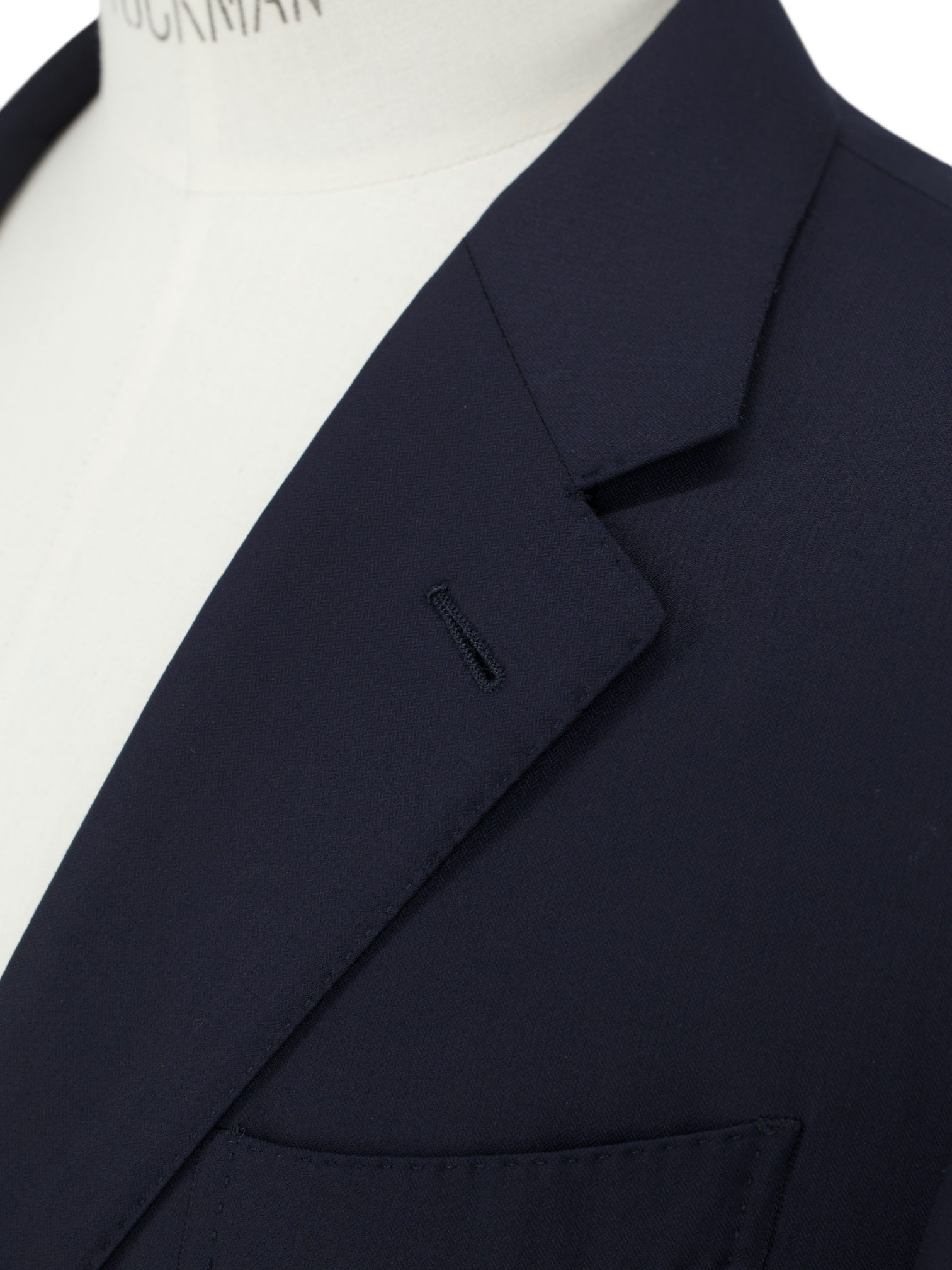
Handgemaakt Knoopsgat
Handgemaakte knoopsgaten worden gemaakt met behulp van een ketting van geknoopte lussen, genaamd festonsteken, die ze sterk en visueel onderscheidend maken. Het duurt ongeveer vijf seconden om met een machine een normaal knoopsgat te naaien - een enkel handgemaakt knoopsgat kost ongeveer 10 minuten om te naaien.
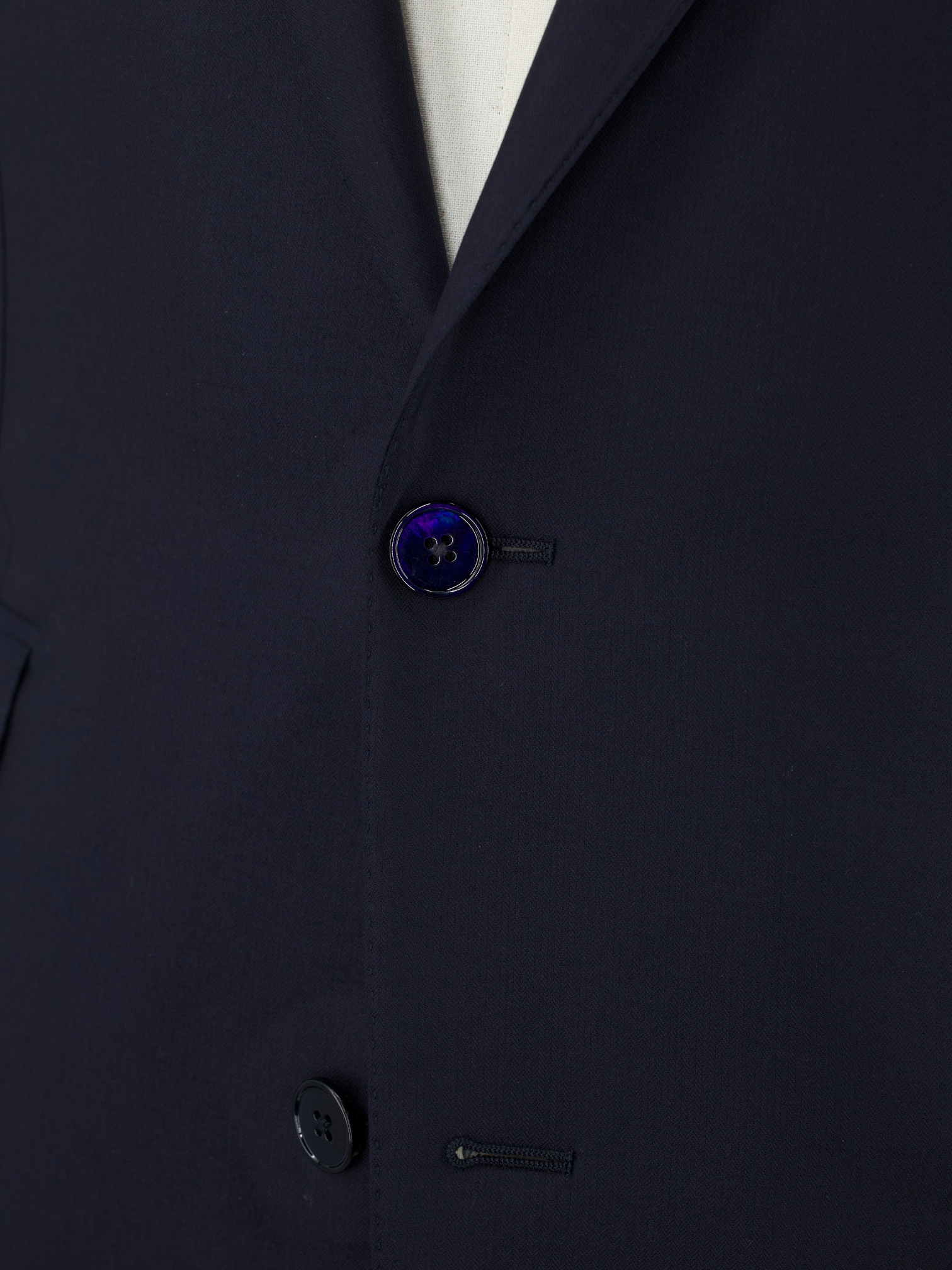
Tweeknoops Sluiting
Het jasje heeft een sluiting met twee knopen waardoor het profiel strak blijft.
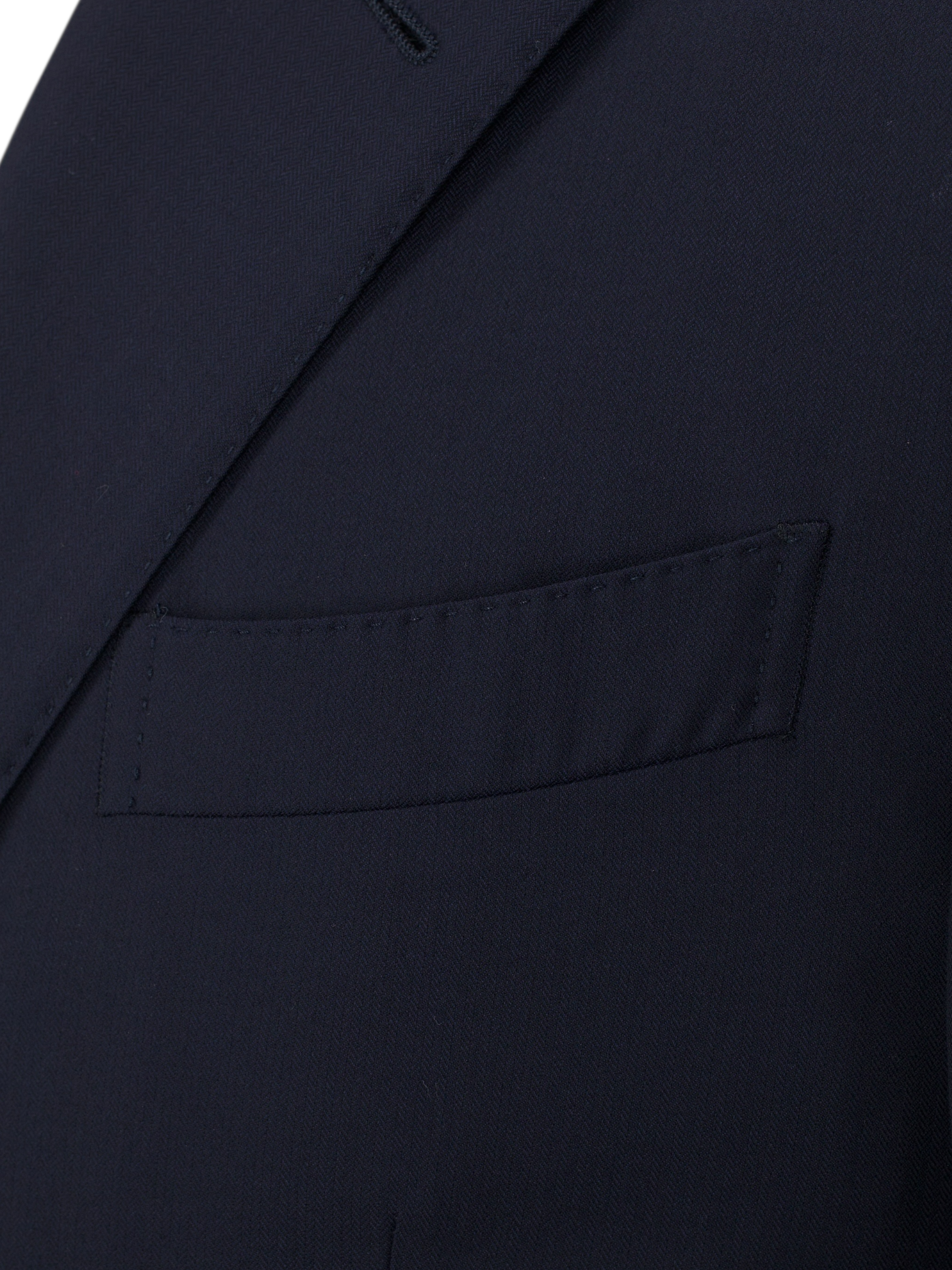
Borstzak - Afgeronde Paspelzak
Ook bekend als 'barchetta', Italiaans voor 'bootje', wordt het zo genoemd omdat deze zak zweeft op de borst, lichtjes schuin omhoog, net als de boeg van een zeilboot. Deze zakken echoën de levendige rol van een revers die de veerkracht van canvas en natuurlijke wol draagt, in tegenstelling tot machinaal gemaakte borstzakken die een meer platte, rechthoekige vorm hebben en minder leven.
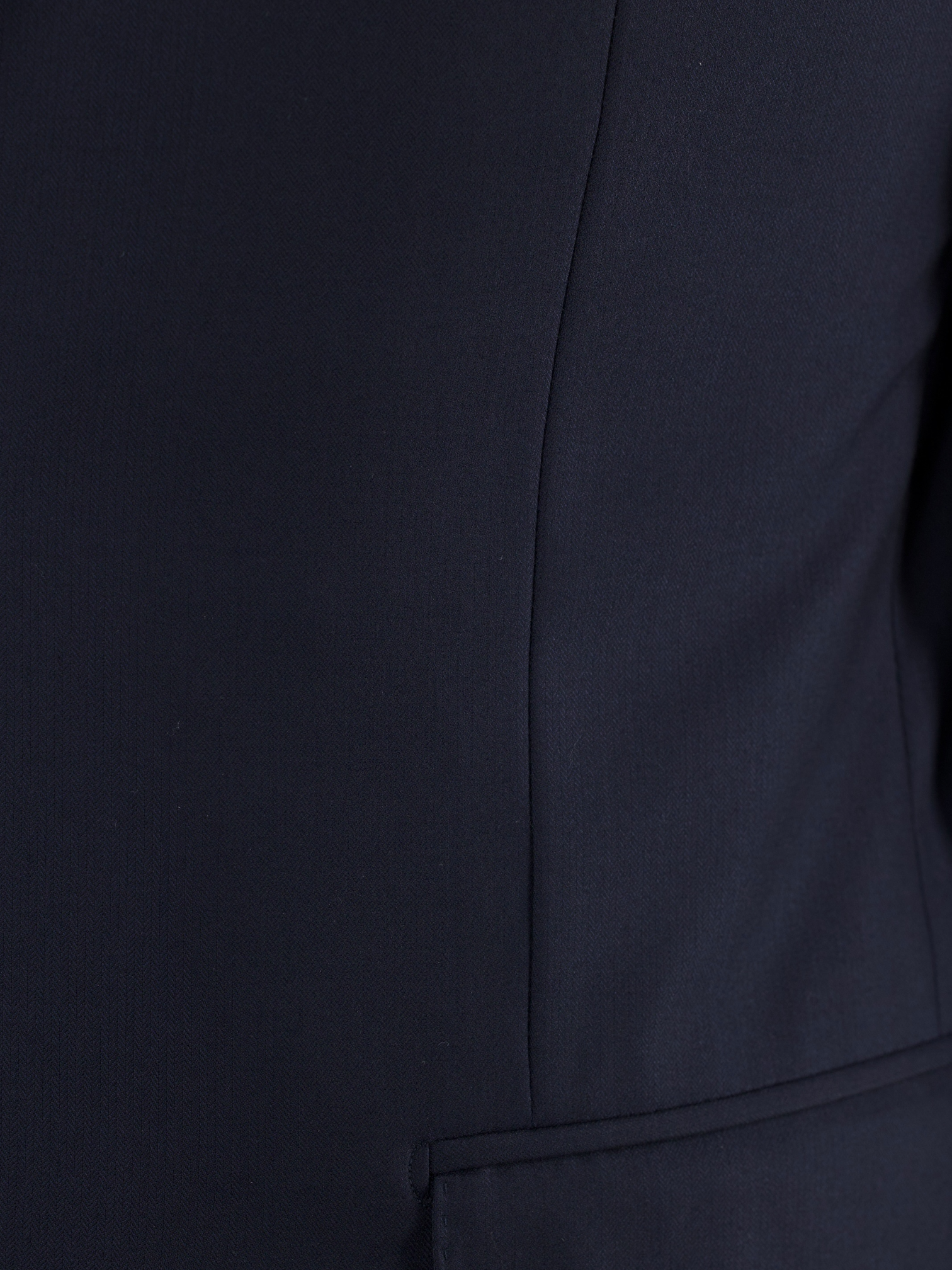
Naden
De kleermaker voegt twee figuurnaden toe - denk aan ze als ingeknepen naden - om ervoor te zorgen dat het lichaam van het jasje een slank silhouet krijgt. Het proces, genaamd "mezzo punto riprese", wordt volledig met de hand uitgevoerd.
Parelmoer Knopen
Parelmoer knopen zijn iriserende knopen gemaakt van de binnenste laag van bepaalde schelpen, met name schelpen van oesters en mosselen die parelmoer bevatten, de minerale substantie die parels vormt. Wat deze knopen zo iconisch maakt, is hun onnavolgbare parelachtige afwerking.
Ticket Zak
De ticketzak, ook bekend als wisselgeldzakje, heeft een oude Britse geschiedenis. In eerste instantie werd het niet eens gebruikt om een ticket in op te bergen, zoals de naam vandaag de dag aangeeft. Het werd handig voordat de spoorwegen enorm populair werden, omdat het werd geplaatst op de jassen van ruiters die snel toegang nodig hadden tot munten bij tolpunten. Door heren in staat te stellen hun jassen dichtgeknoopt te houden, hield deze externe zak contant geld op een uiterst handige manier vast. Ticketzakken waren een vast onderdeel van stevige landelijke kostuums voor mannen voordat ze werden aangepast voor de stedelijke kostuums die mannen dagelijks droegen om te pendelen.
de details van
de broek
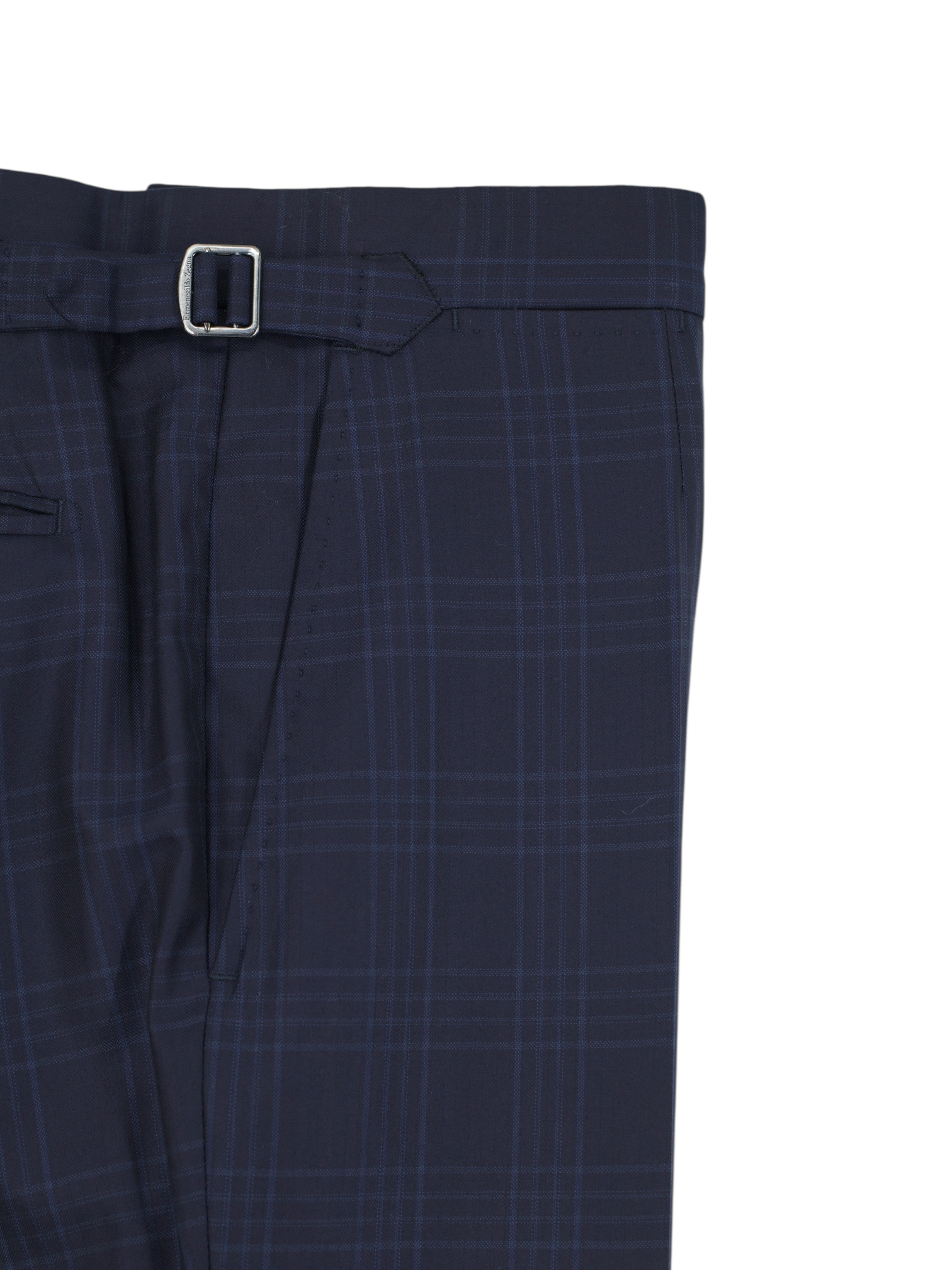
Flat Front
Flat-front trousers are a go-to for a modern, clean look. They became popular in the 1960s and 1970s when fashion started leaning towards simpler, more streamlined styles. Unlike pleated pants, flat fronts have no extra fabric at the waist, giving them a sleek appearance that's perfect for a slimmer silhouette. They fit right into both casual and business casual settings, making them incredibly versatile. As a result, they are a favorite for anyone looking to maintain a contemporary vibe in their wardrobe.
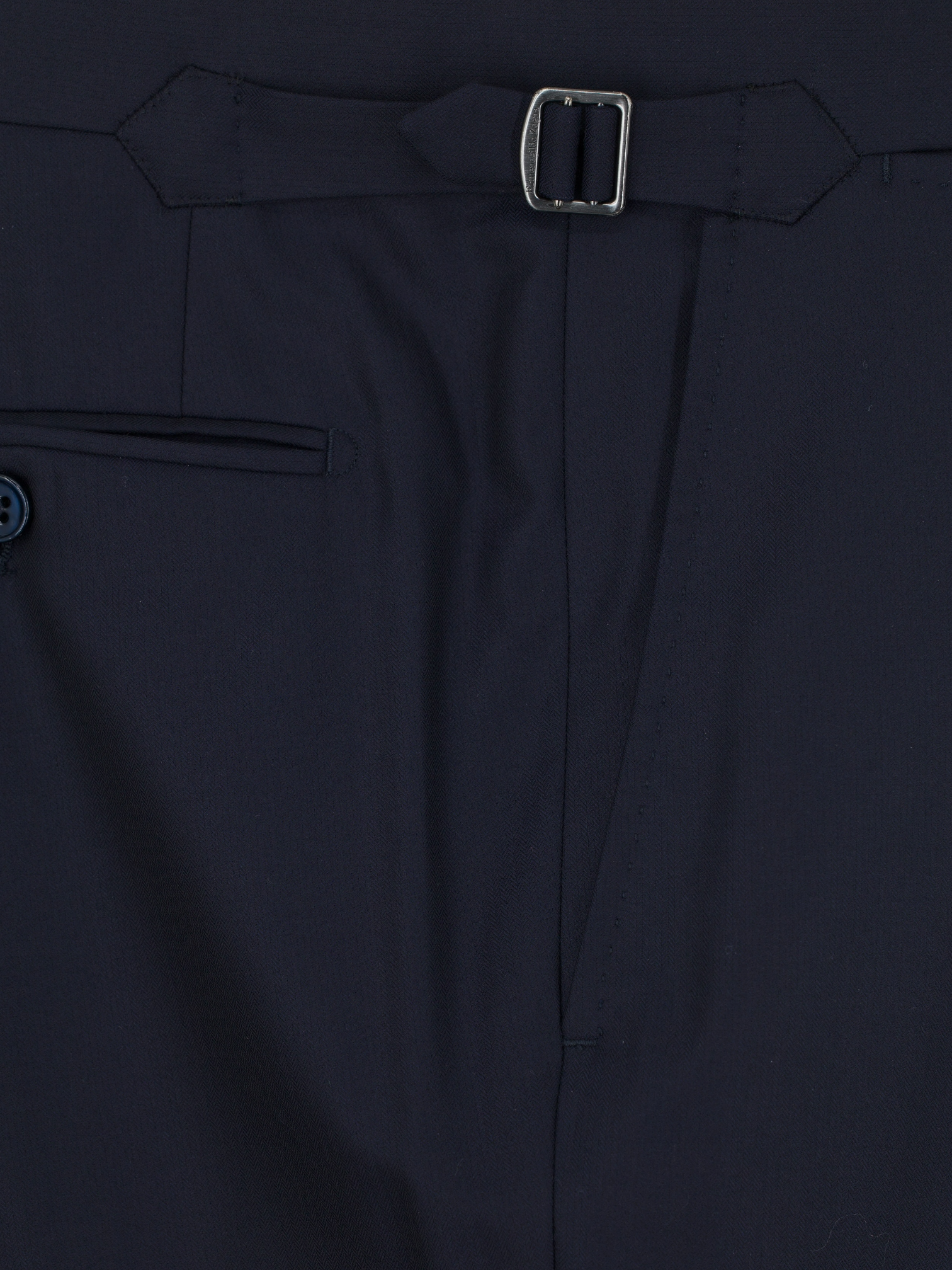
Side Adjusters
Side adjusters are a stylish alternative to belts, offering a clean look without the need for additional accessories. These adjusters are typically small buckles or tabs located on each side of the waistband, allowing you to tighten or loosen the trousers for a perfect fit. Popular in bespoke tailoring and high-end menswear, side adjusters provide a sleek and polished appearance. They are particularly favored in formal and semi-formal settings, as they maintain the silhouette of the trousers without the bulk of a belt.
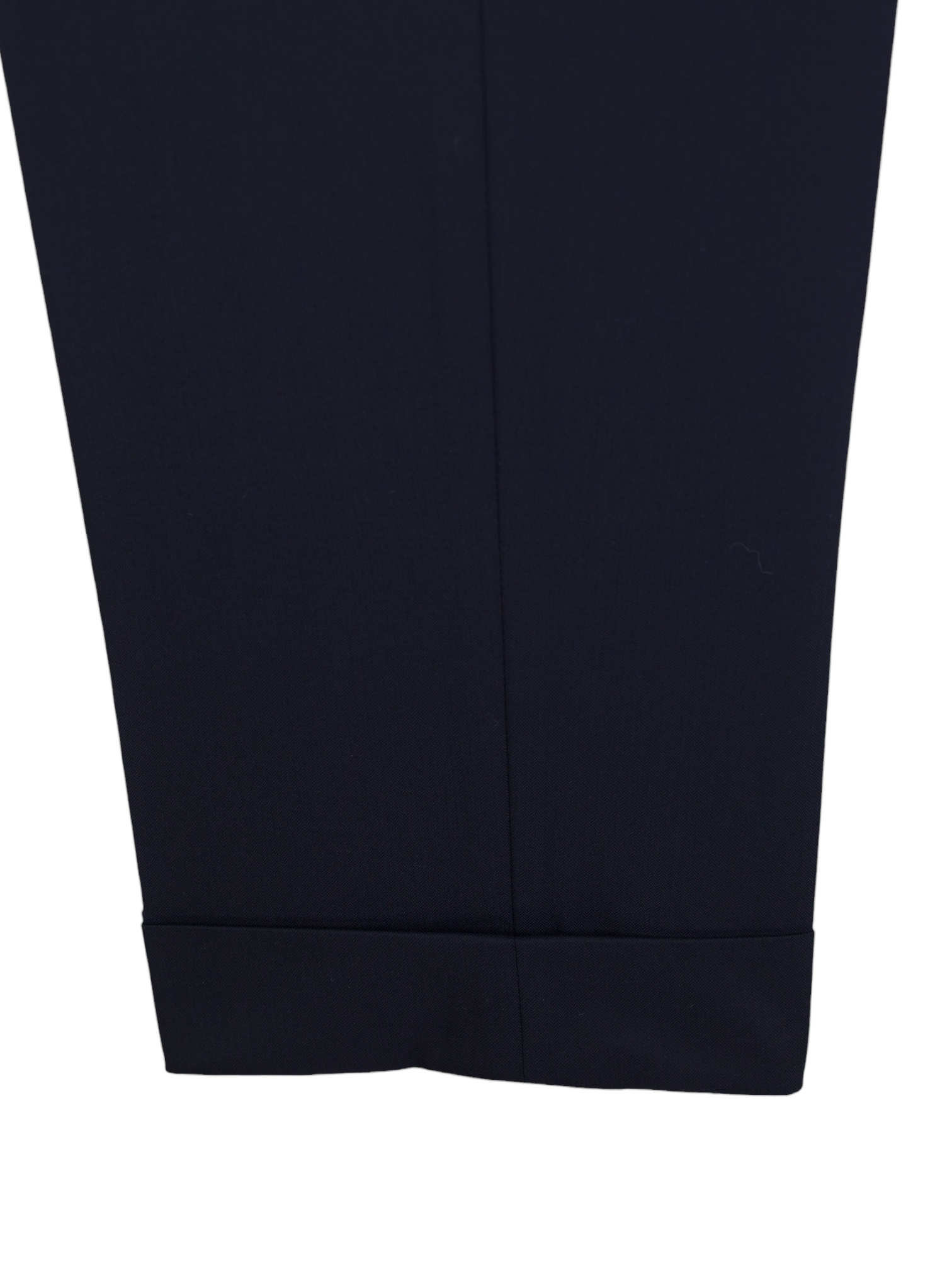
Turn-Up (Cuffed) Hem
The turn-up hem, or cuffed hem, is a classic style where the fabric at the bottom of the trousers is folded outward to create a visible cuff. This style originated with Edward VII in the late 19th century, who had his trousers tailored with cuffs to prevent them from getting muddy, sparking a trend among the fashionable elite. In the 1920s and 1930s, turn-ups became a symbol of wealth and sophistication, as having extra fabric was seen as a luxury. This association continued after World War II when wearing turn-ups subtly indicated affluence in an era of fabric rationing. Today, turn-up hems are a nod to their historical roots, offering a touch of classic elegance and enhancing the overall appearance of formal and tailored trousers.
maat
50 IT / 40 US / Large