

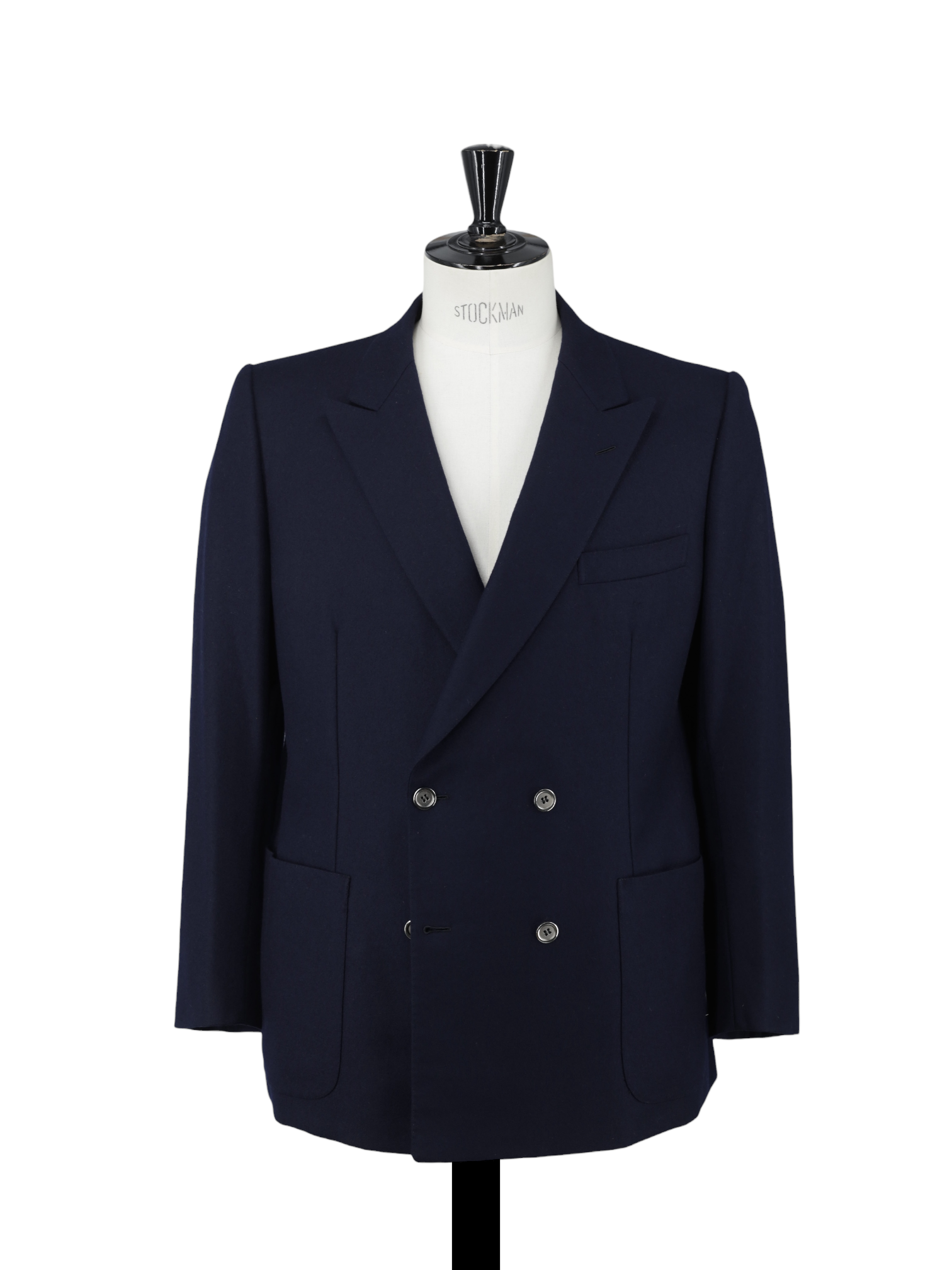

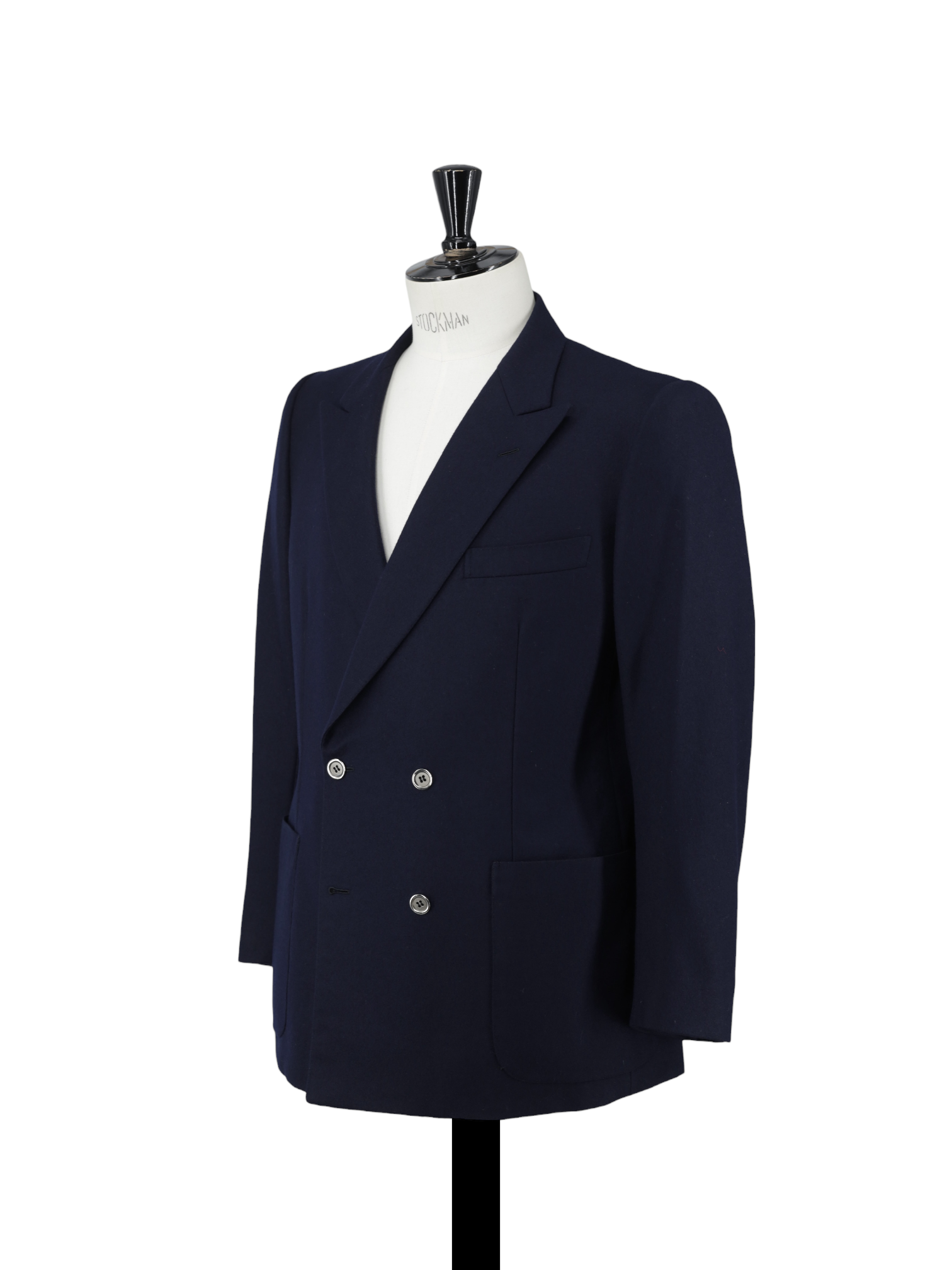
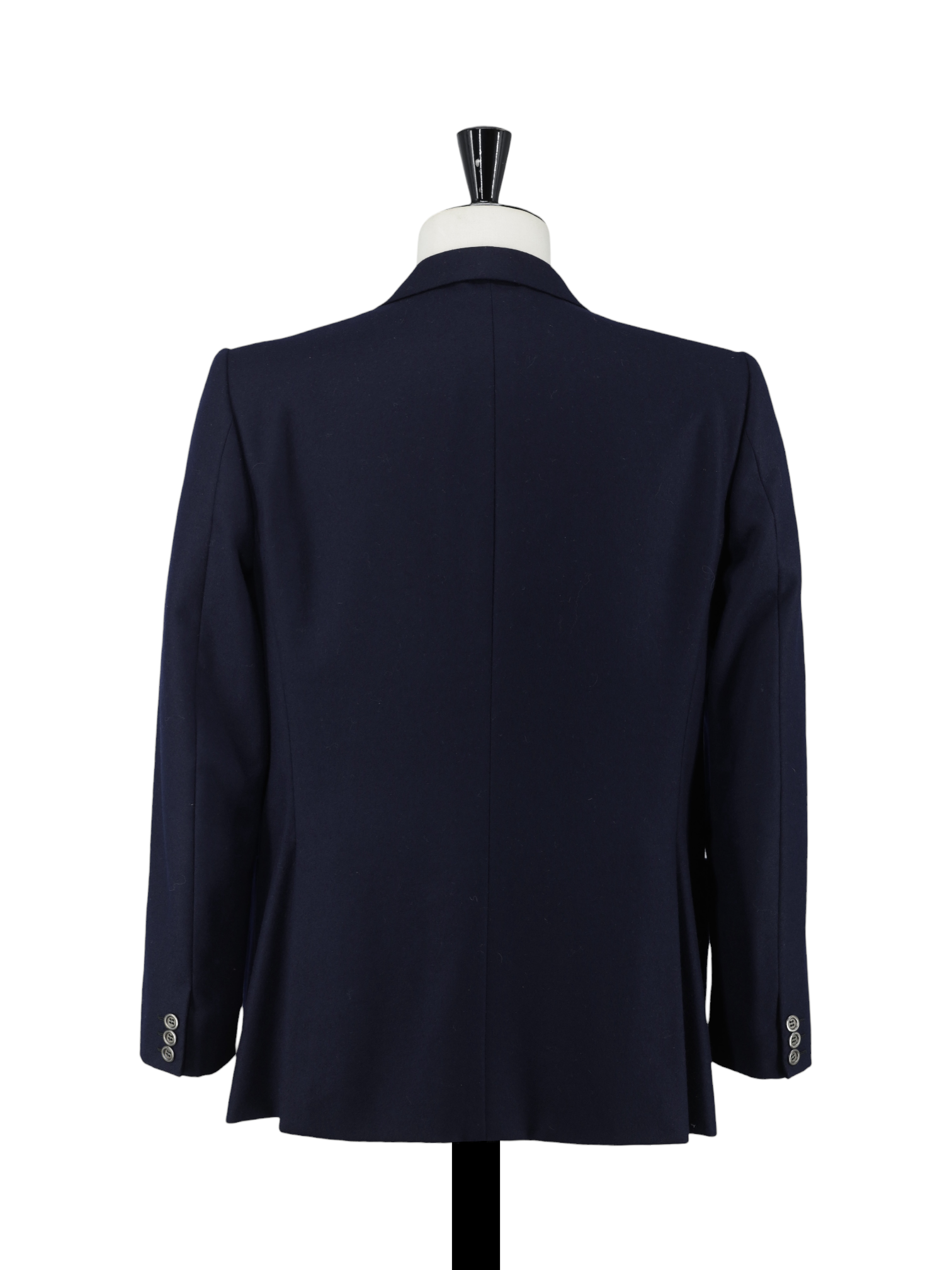
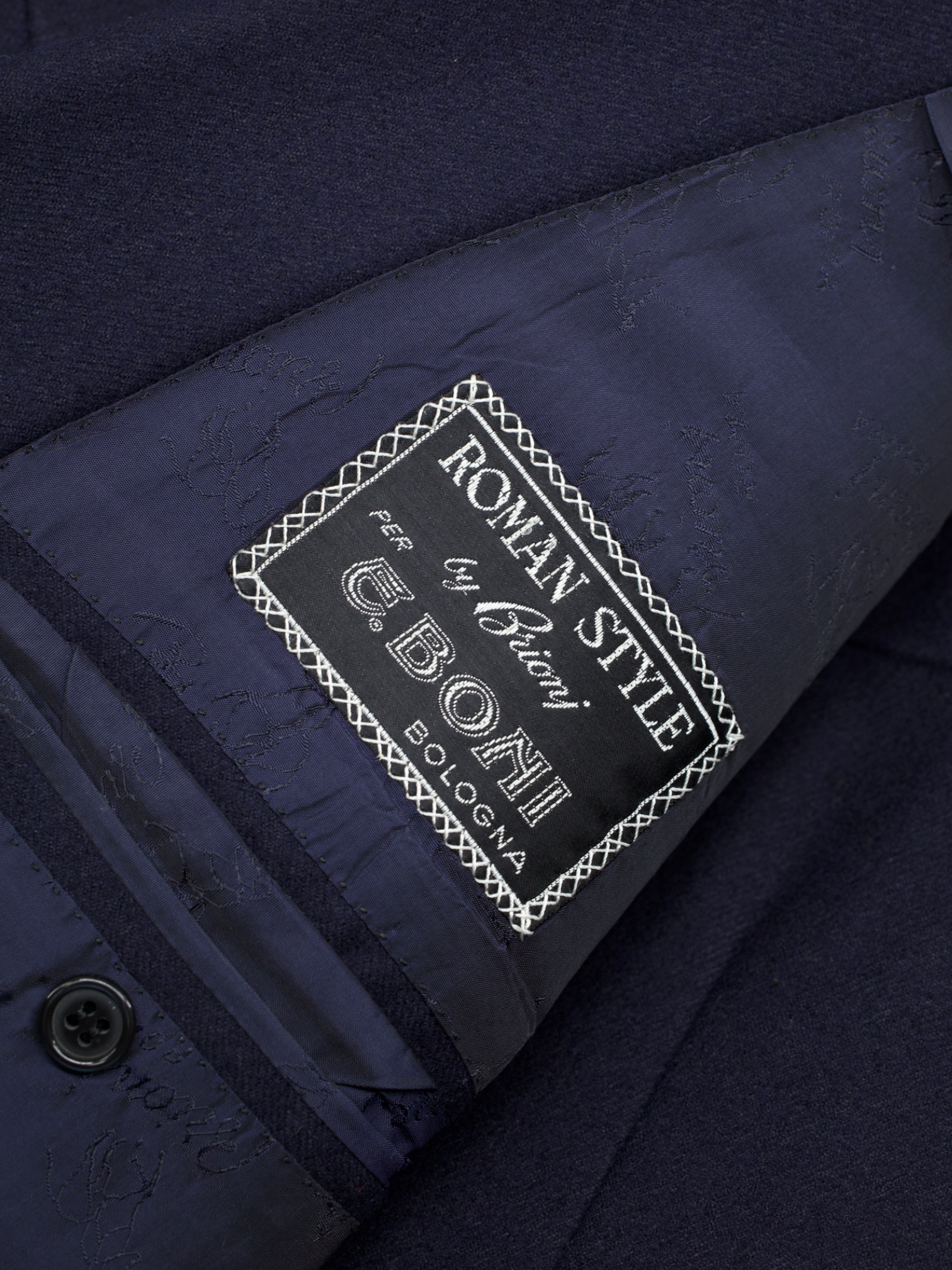
Brioni Dark Blue Vintage Double-Breasted Wool & Cashmere Jacket
52 IT / 42 US / Large
 Measurements
 Measurements
See how we measure our sartorial items
Discover the customization possibilities by visiting our tailor alteration guide
General Note: While we inspect each item to ensure its quality, please note that minor imperfections may be present due to the preloved nature of the garments. We strive to represent every item accurately, but subtle signs of wear may sometimes go unnoticed. We appreciate your understanding and commitment to sustainable luxury.
 Curator's Description
 Curator's Description
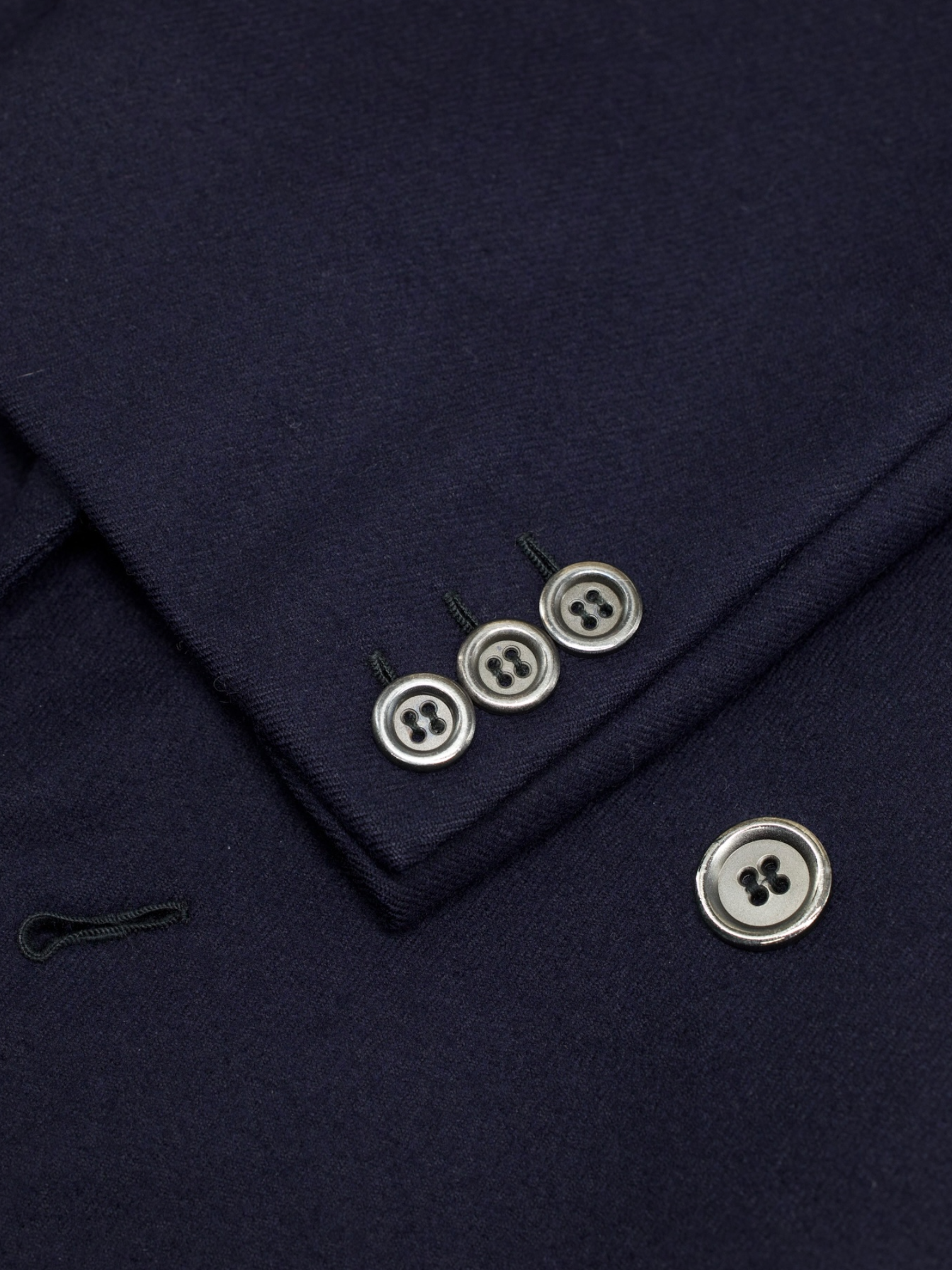
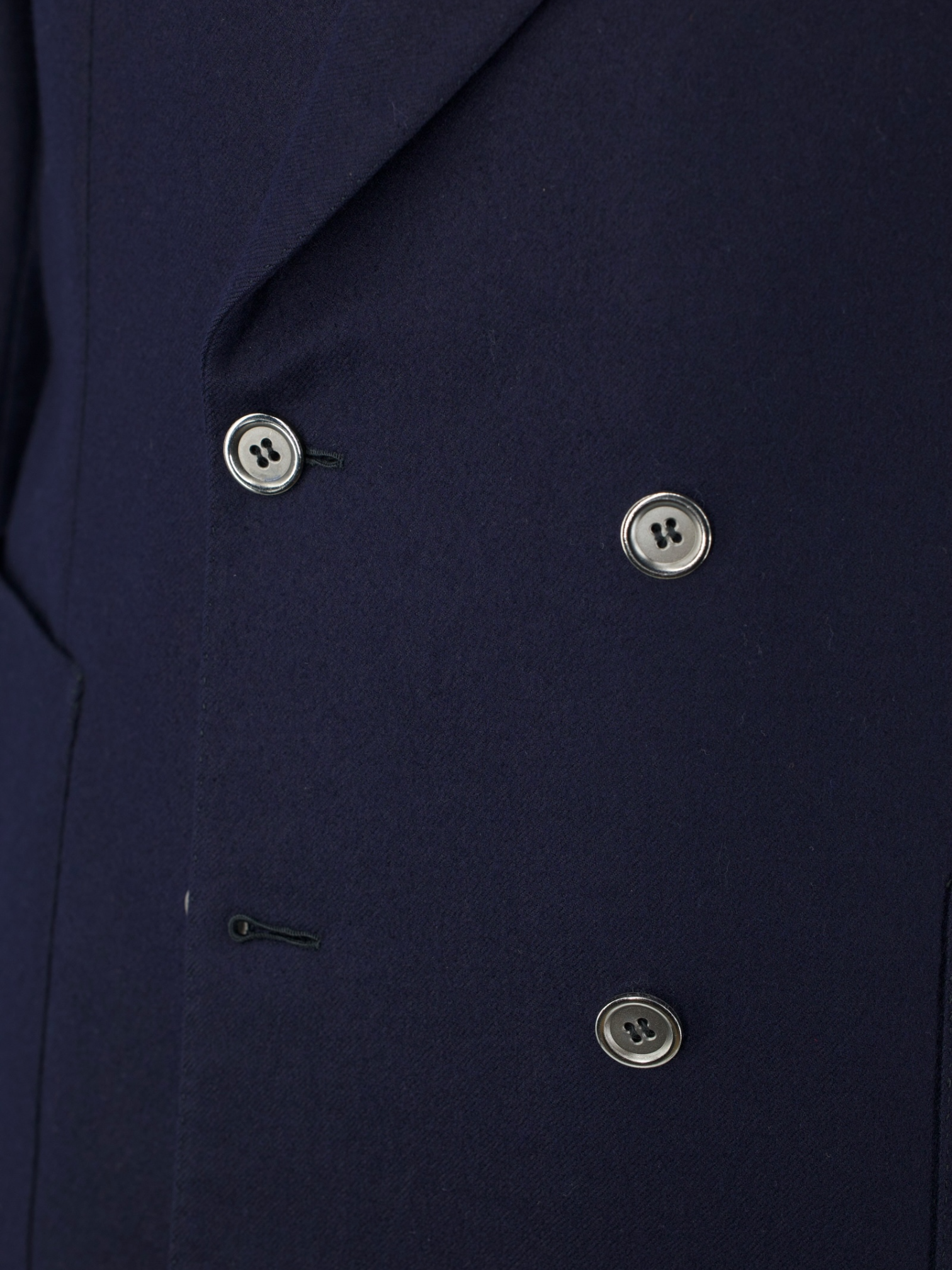
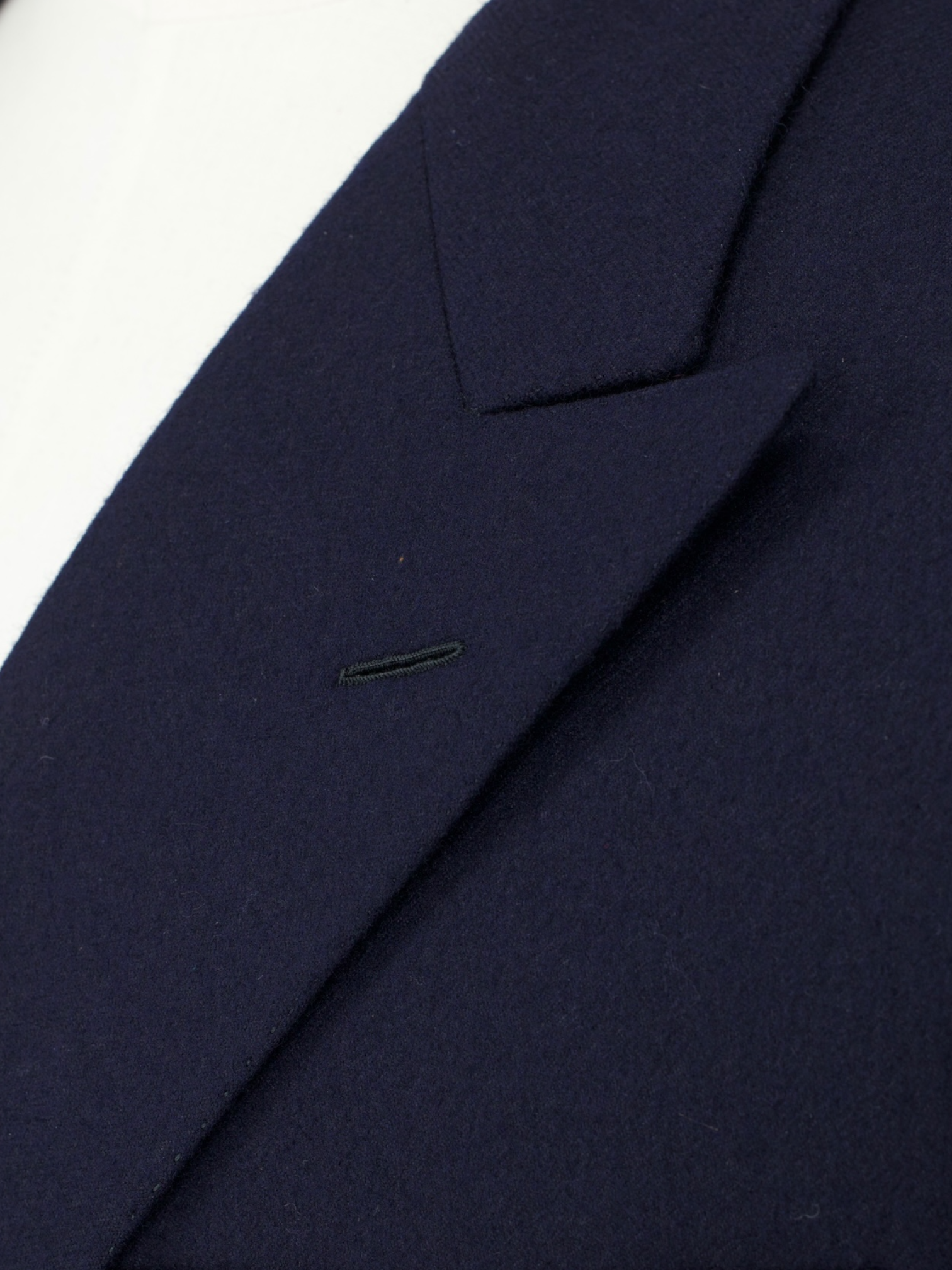
Discover the Brioni dark blue vintage double-breasted wool and cashmere jacket, a refined piece that captures the elegance of classic Roman tailoring with a softer, more fluid touch. Crafted from a wool and cashmere flannel, the fabric offers a rich, brushed surface and a beautifully natural drape, giving the deep navy tone both warmth and depth. The 4-button double-breasted front and peak lapels create a confident, structured line, while mother-of-pearl buttons introduce a subtle, elevated contrast.
Discover the craftsmanship behind Brioni, where vintage pieces often reflect a more expressive balance between structure and ease. The fluidity of the flannel allows the jacket to move naturally, softening the formal nature of the double-breasted silhouette. At the same time, precise construction and careful proportion ensure it retains its shape and presence. The result is a jacket that feels both timeless and relaxed, combining the authority of Roman tailoring with a quiet, lived-in elegance. Discover the elaborated sartorial details below.
 Materials
 Materials
Composition: 90% Wool / 10% Cashmere
Color: Dark Blue
Pattern: Plain
Shipping
• Complimentary shipping on orders over €200 (Netherlands), €500 (EU), and €1,000 (rest of world
• Orders below these thresholds are charged based on destination
• All items ship directly from Amsterdam, The Netherlands
• Customs duties and import fees outside the EU are the customer’s responsibility
Returns
EU customers have the right to withdraw within 14 days of delivery.
• Return shipping is at the customer’s expense
• Items must be returned unworn and in original condition
• Any use beyond indoor fitting may result in a diminished refund
Orders outside the European Union are exported goods and considered final sale (no returns).
Altered or tailored items are final sale.
Please review measurements and quality control comments carefully before ordering. As a small independent boutique we encourage thoughtful purchasing. For any questions, feel free to contact us before placing your order.
Choose options
Discover the
Sartorial Details
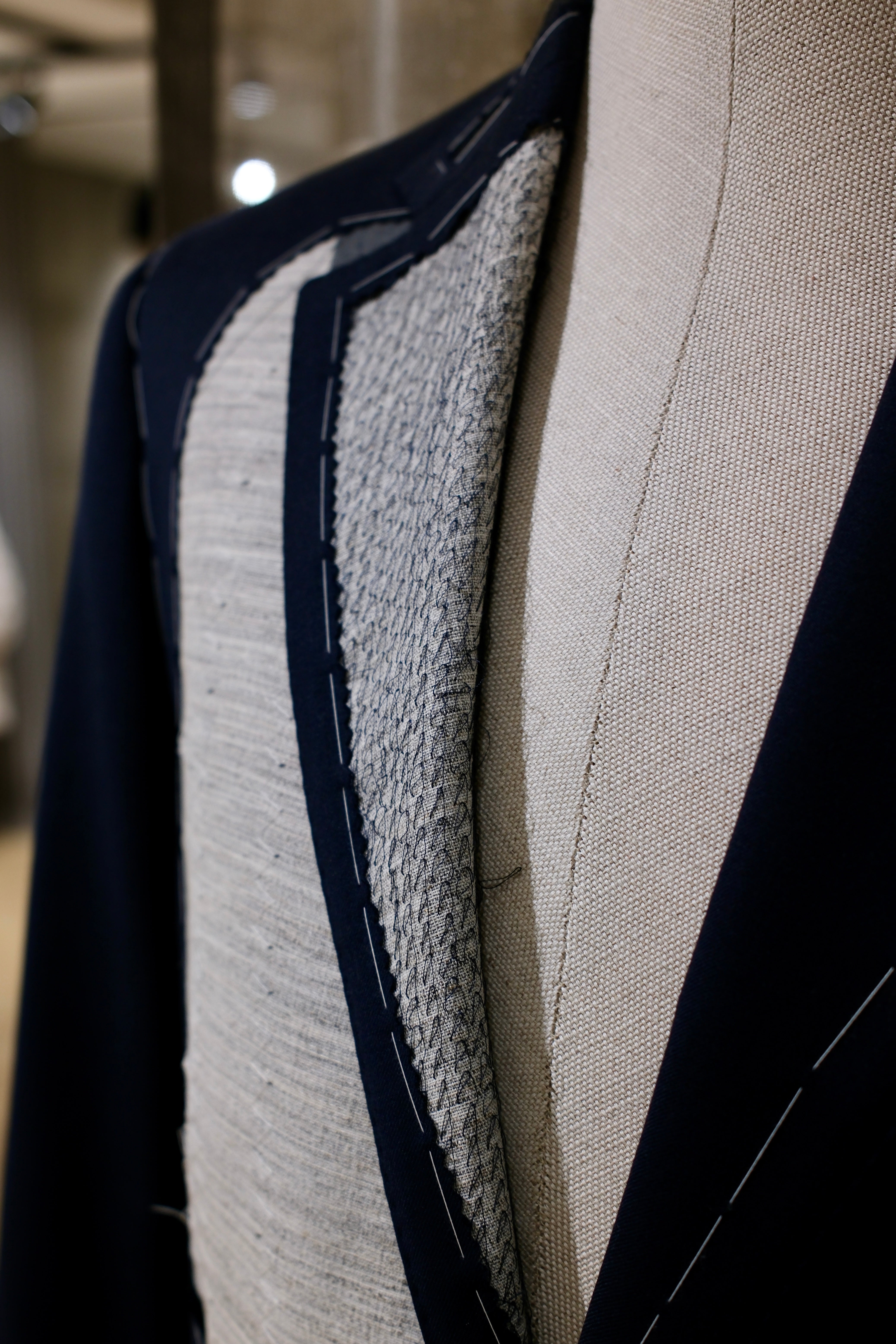
Full Canvas Construction
A sartorial jacket - or coat - needs an interlining that will help give it shape and mold it. Canvas gives the item a tailored and crafted look. In short, it breathes life into it. Purely technical, canvas is made from either horsehair, wool, mohair or camel hair. It could also be a mix of them all, with varying thickness and weight. The canvas is stitched to the jacket, often by hand, thus making the canvas pieces 'floating' in the middle of the inner and outer cloth. This gives the jacket added flexibility. The canvas runs from the upper parts, all the way down to the end of the jacket. After you wear your canvassed suit for a while, it will begin to take your shape and look incredibly natural.
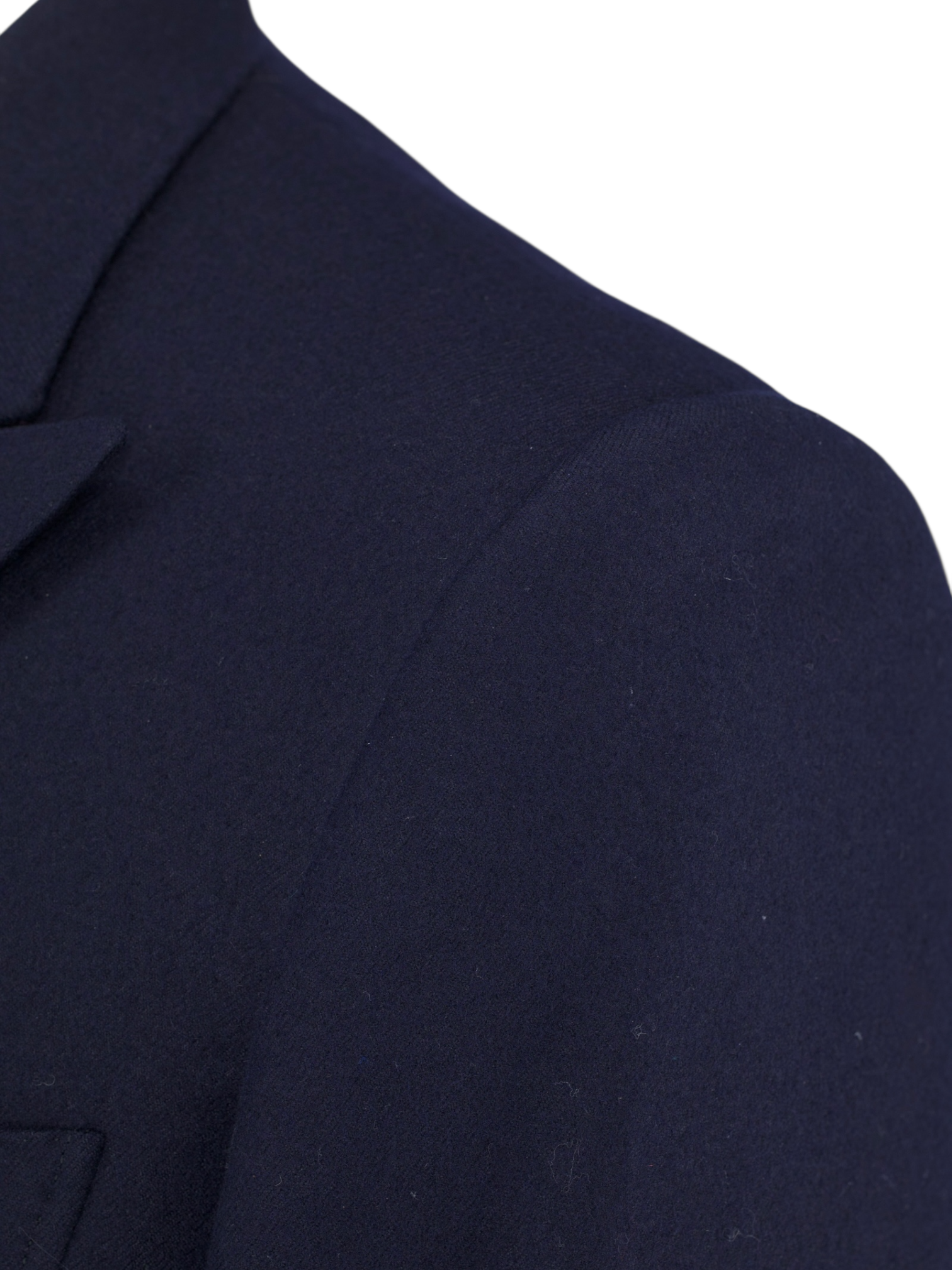
Roman Style Shoulders
Characterised by a clean, strong silhouette, the Roman style has its origins in the military and equestrian style on Savile Row. While the heavily structured, military-inspired suits with strong shoulders and stiff canvassing were fitting of English nobles, the staid style was not an adequate reflection of the Italian way of life. As Italian tailoring grew into its own, though, different styles began to develop. In Naples unstructured whimsical Neapolitan suiting took hold. In Rome, where Brioni was born, the style evolved more subtly. The structured British style was made more voluminous, body conscious, and free-flowing without losing too much of the signature Saville Row shape.
Handmade Buttonhole
Handmade buttonholes are made using a chain of knotted loops called purl stitches that make them strong and visually distinctive. It takes about five seconds to sew a regular buttonhole with a machine – a single handmade buttonhole takes about 10 minutes to sew.
Double Breasted Closure
Contrary to popular belief, the double-breasted jacket originated as casual wear in the early 19th century, also known as the reefer jacket. It was considered very casual and was worn by people at sporting and national events.
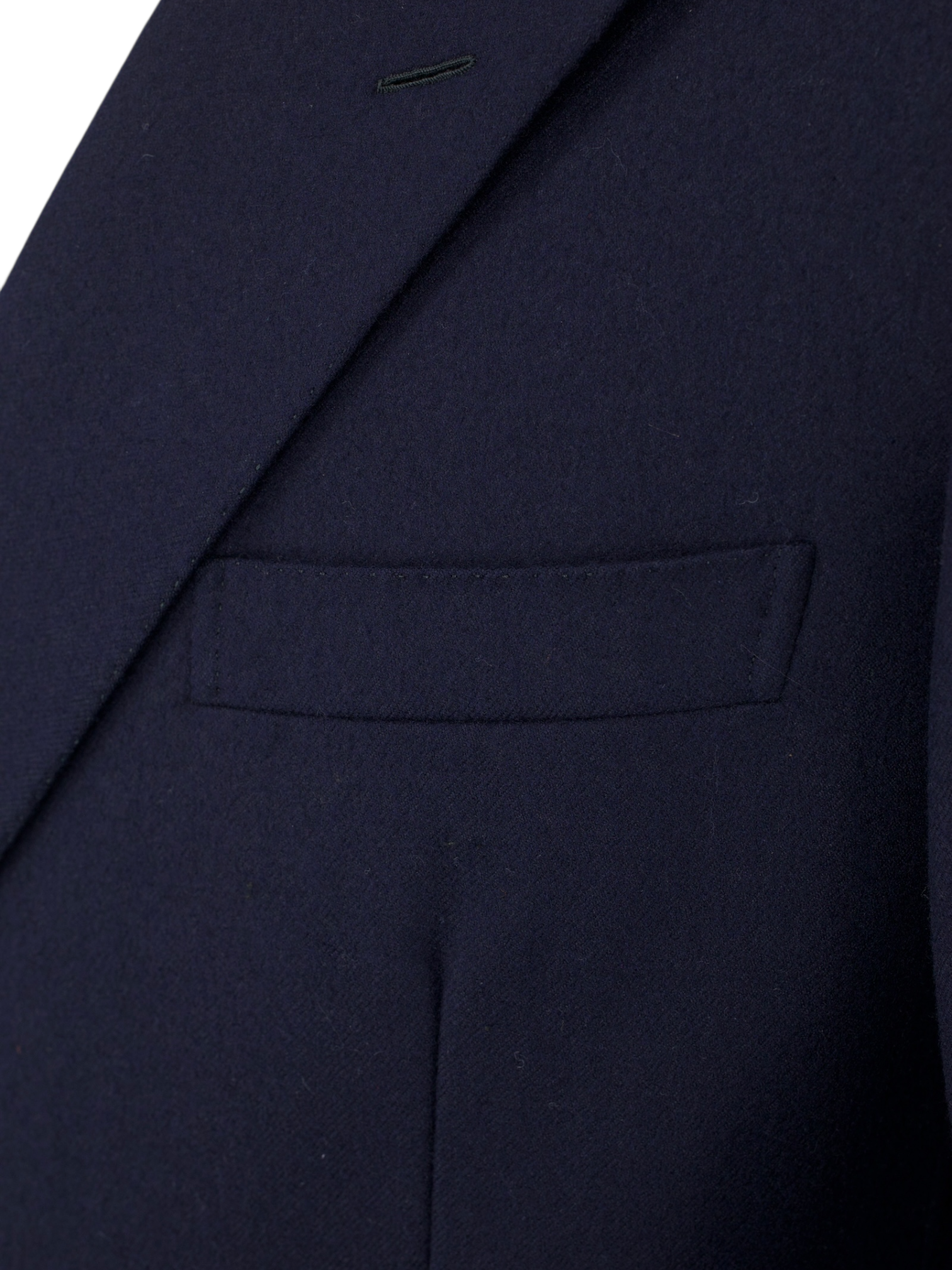
Chest pocket - Rounded welt pocket
Also known as ‘barchetta’ Italian for ‘little boat’, it is so named because this pocket floats on the chest gently angled upward, just like the bow of a sailboat. These pockets echo the lively roll of a lapel that carries the spring of canvas and natural wool, unlike machine-made chest pockets that have a more stamped-out, rectangular shape and less life.
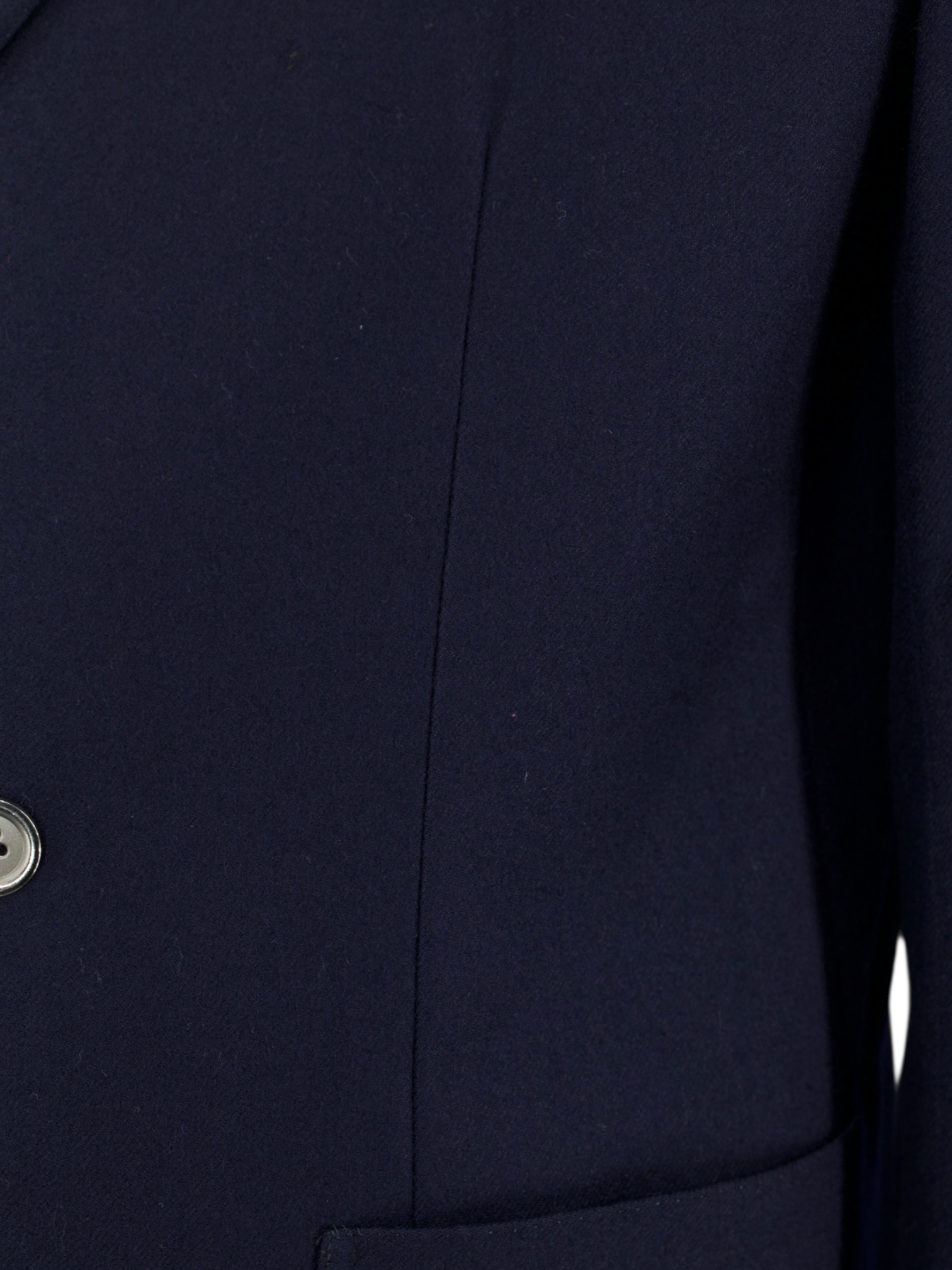
Darts
The tailors adds two darts - think of them as pinched seams - to ensure the jacket’s body achieves a slim silhouette. The process, called mezzo punto riprese, is done entirely by hand.
Horn Buttons
Horn buttons are prized for their quality. They are made with the finest genuine horn material, improving the appearance of the suit. And because they are so strong, you don't have to worry about them cracking or breaking.
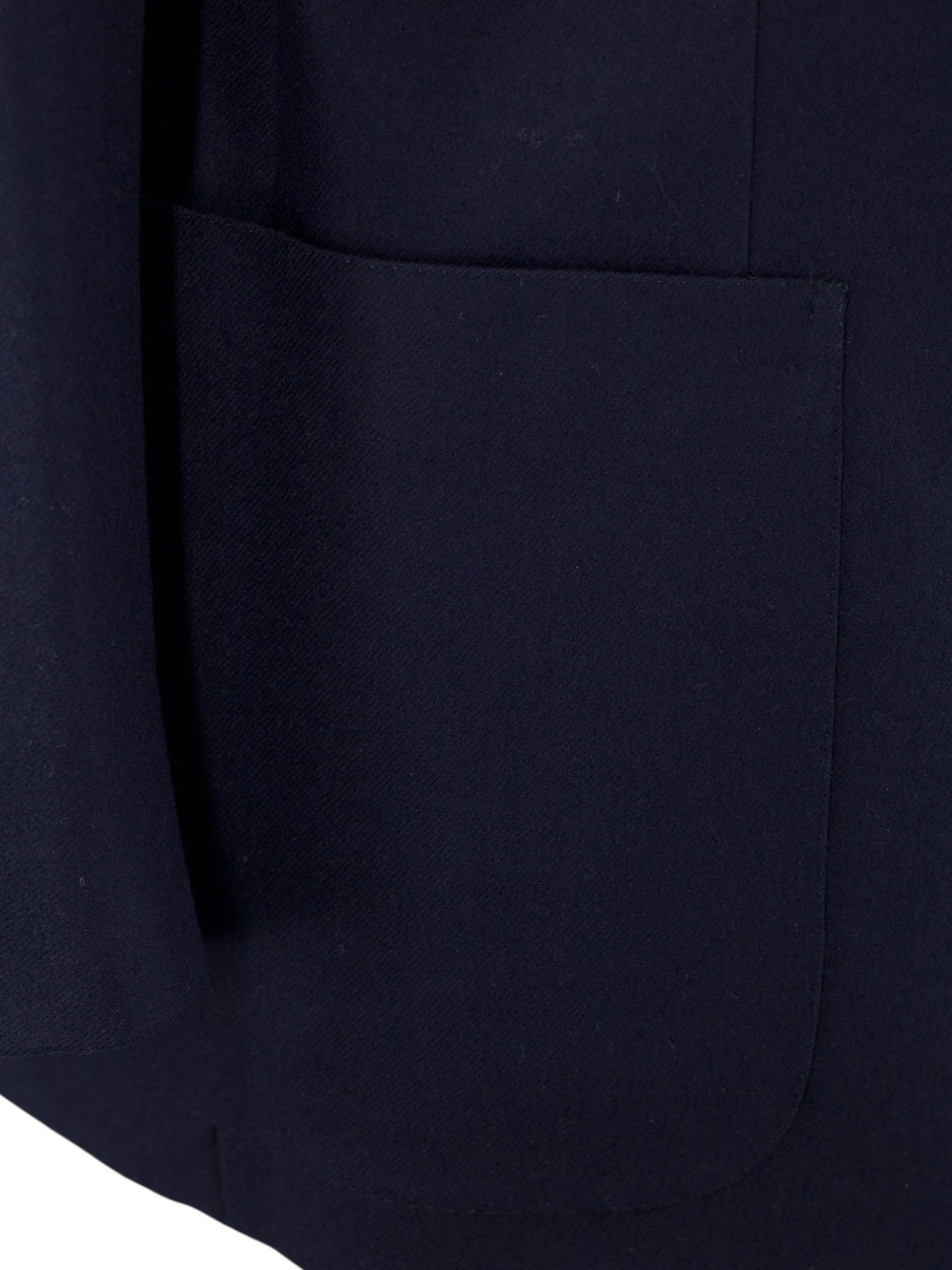
Flap Pockets
This was originally supposed to keep debris from getting into jacket pockets when worn in the country. Flap pockets occupy a sort of middle ground in terms of formality: they are the main choice for business suits, but they can also appear on sport coats as a testament to their casual origins.
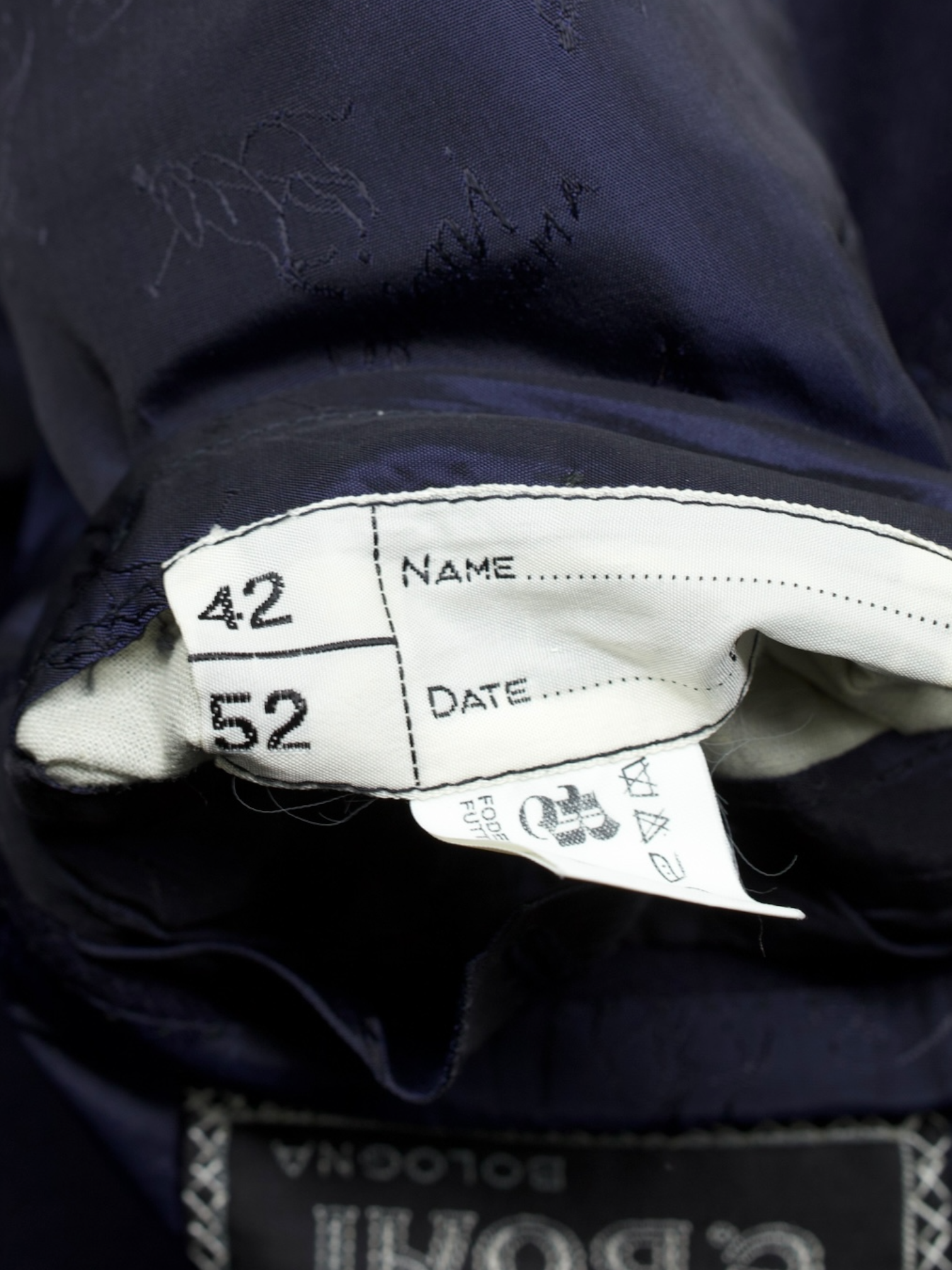
size
52 IT / 42 US / Large